No Kings seeks to turn anti-Trump protests into votes ahead of November 3
Saturday's rallies in Wisconsin and Michigan put early voting at the center of the protests. The movement's next phase will test whether it can turn attendance at demonstrations into electoral participation.
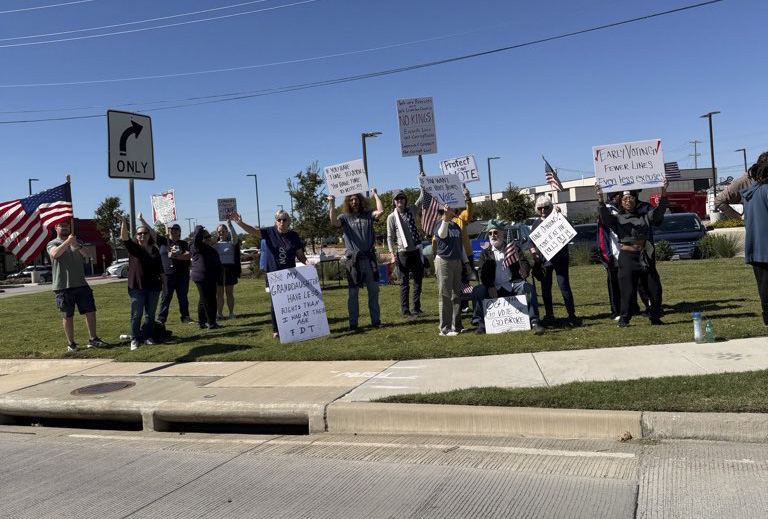
The No Kings movement shifted part of its protest against Donald Trump toward a more concrete task on Saturday: getting participants to vote in the November 3 midterm elections. Rallies held on October 17 in Wisconsin and Michigan combined opposition to the president with early-voting information and election preparation activities, according to local news reports.
The shift comes as voting begins in more states. For those able to cast their ballots early, the national Election Day in November is no longer the only decisive date. Organizers face the challenge of keeping supporters engaged after the marches and translating that commitment into turnout—something images of crowds alone cannot establish.
From marching in Madison to preparing to vote
Wisconsin Public Radio reported that hundreds of demonstrators gathered in Madison. The march made its way from the state Capitol to the municipal building, where a voter information fair was held. The format brought together a protest and a practical activity: explaining how to take part in the elections.
The station described dozens of events across Wisconsin and reported that some participants wanted Congress to exercise greater oversight of the presidency. That demand helps explain the change in emphasis. The immediate focus is on the institutions being elected in November, even as Trump remains the main target of the protests.
Local gatherings show that intent, but they do not measure the views of the electorate as a whole. People who choose to attend a protest are not a representative sample of voters. Nor does attendance reveal how many have already voted, how many will do so, or whether they will change their party preference.
In Michigan, Michigan Advance documented events in Lansing, Ferndale and Grand Rapids. Alongside signs opposing Trump and his immigration policies were calls to prepare to vote and opportunities to sign up for election observation roles. Political organizations, including the Ingham County Democratic Party, were also present in Lansing.
The report also described advice to check election information with officials and reliable sources. Some speakers raised hypothetical problems that could arise at polling places; they were not describing incidents that had already occurred there. That distinction matters at events where protecting the election process was also part of the discussion.
A movement that describes itself as nonpartisan
Organizers describe No Kings as a nonpartisan, nonviolent movement. Their public guidelines stress avoiding weapons, using de-escalation and acting within the law. Those rules set out how the organizers say events should be conducted; they do not replace verification of what happened in each location.
At the same time, the movement openly opposes what it sees as Trump's concentration of presidential power. The presence of Democratic groups and the hopes for a change in congressional control reported by the press show that some participants also have partisan goals. The organizers' description of the movement and participants' motivations will not necessarily align in every case.
After Saturday, the movement's website is emphasizing the defense of voting and nonviolent responses to potential obstacles to counting or certifying ballots. These are preparations announced by its leaders, not evidence that such obstacles have occurred. The impact of those activities will have to be assessed through subsequent events and results.
Voting dates vary by state
In-person early voting in Texas begins on Monday, October 19, and runs through Friday, October 30, according to the secretary of state's office. The general election is on Tuesday, November 3. The official calendar also sets October 23 as the deadline for receipt of applications to vote by mail, a method with its own eligibility requirements.
In Michigan, in-person early voting will generally begin on October 24, according to Michigan Advance, although some localities may start earlier. Those dates illustrate why a national campaign needs local information: opening dates, available polling locations and requirements are not identical across states.
Voting deadlines should also be distinguished from registration deadlines. In Texas, the deadline to register for this election was October 5. The opening of early-voting locations this week does not mean a new registration period is beginning as well.
What the midterms will decide
The midterm elections will fill all 435 seats in the House of Representatives and roughly one-third of the Senate. As the official USAGov website explains, the elections determine which party will hold a majority in each chamber for the next two years. They are not a presidential election, and losing a congressional majority does not remove Trump from office.
That is the institutional outcome the new mobilization is seeking to influence. Opponents of the administration can bring people into the streets, organize volunteers and keep their concerns in the public debate. Their ability to change the balance of power in Washington will ultimately depend on valid votes cast in each election. Saturday demonstrated organized activity; November's result remains open.