Attack on European diplomats in the West Bank increases pressure on Israel
Belgium and France are demanding accountability after an attack on a delegation in Taybeh. The Israeli military condemned the violence and announced an investigation during the olive harvest.
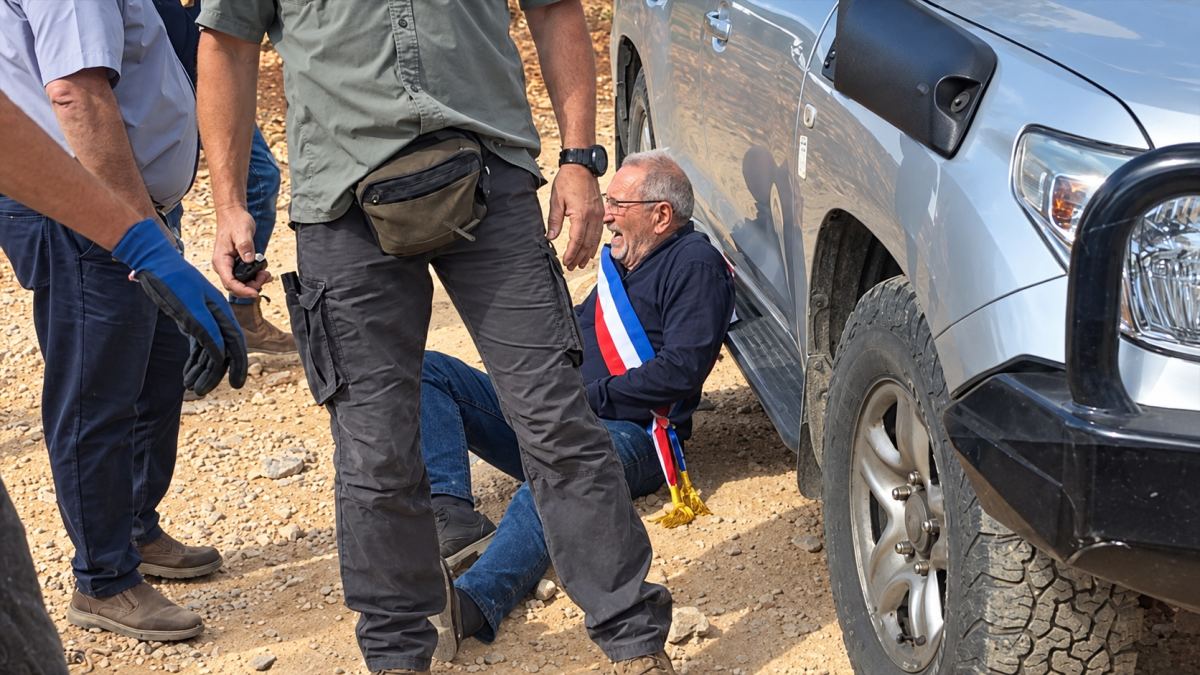
An attack by Israeli settlers on a European delegation in Taybeh, east of Ramallah, has created a new diplomatic challenge for Israel. Belgium confirmed that European representatives and a French mayor were assaulted during a visit on Saturday, October 17. France called for those responsible to be arrested, while the Israeli military condemned the incident and announced an investigation.
The attack took place in the occupied West Bank as the olive harvest once again brings farmers, observers and foreign supporters into rural areas. Its implications extend beyond damaged vehicles or the safety of a single visit: it tests the protection that European governments are demanding for their representatives and for Palestinian civilians.
Belgian Foreign Minister Maxime Prévot said the delegation included his country's consul and French and Polish diplomats. According to his statement, reported by Anadolu, masked people attacked the group, a French mayor was assaulted and a Belgian vehicle had a window smashed. The Belgian team was safe.
European condemnations and a push for sanctions
Prévot called on Israel to protect Palestinian civilians, diplomats and journalists, and to bring those responsible to justice. He also said he would push for sanctions at European Union level. That is an initiative Belgium intends to pursue, not a decision already taken by its European partners.
France, for its part, confirmed that it was in contact with the mayor who had been assaulted and called for arrests and legal action. The Palestinian news agency WAFA reported on Sunday that French Foreign Minister Jean-Noël Barrot had condemned the attack and called for civilians' safety to be guaranteed.
Identifying the people present and the vehicles damaged helps document part of what happened, but it does not establish every individual's responsibility. The announced investigation will need to determine who was involved, how the attack unfolded and how requests for help were handled. Political condemnations do not replace those findings or amount to criminal convictions.
The Israeli military's account
The military described the incident as serious violence and said police entered the area under military escort to gather testimony and evidence, according to The Times of Israel's military correspondent. Its preliminary account says no soldiers were at the scene when the attack took place.
The military also said the visit had not been coordinated and stressed the importance of doing so. It said an Israeli civilian accompanying the delegation called the regional brigade's operations room, a channel reserved for security personnel, and noted that other communication channels are available to civilians.
These are the military's initial explanations of communications and the presence of personnel. It said it is examining the circumstances. Its account does not yet establish that all requests for help were handled properly, nor does it establish that any particular official deliberately failed to act. That remains part of what needs to be clarified.
A separate attack targeted an American photojournalist
International pressure also follows a separate incident: the assault on Friday, October 16, on Heidi Levine, an American photojournalist who works for The Washington Post. WAFA reported that she was beaten while covering attacks on Palestinian farmers, citing accounts from the journalist, witnesses and medical personnel.
The same agency reported that Secretary of State Marco Rubio expressed concern about footage of violence and called on Israel to take action to stop it. His remarks followed the Levine case. The attack on the photographer and the one the next day on the European delegation should not be conflated: they are separate incidents within the same wider climate of insecurity.
The presence of journalists and diplomats increases the international repercussions of these incidents. For families living and working in the affected areas, however, the immediate concern remains being able to travel, gather their harvest and return home without coming under attack.
The harvest in a weakened economy
A report by the UN humanitarian office, OCHA, with a reference date of October 2 had already warned of obstacles facing the olive harvest: restrictions on access to farmland, settler violence, crop theft, the destruction of trees and infrastructure, and higher production costs.
The report placed those difficulties within a broader economic decline. World Food Programme data for the first quarter of 2026, cited by OCHA, showed that 76% of West Bank households reported falling incomes and more than 60% struggled to cover their monthly expenses. Those figures describe the economic backdrop, not losses caused by Saturday's attack.
The International Committee of the Red Cross had called for urgent protection of civilians on September 29. It warned that violence and movement restrictions were harming access to medical care, education and livelihoods. It also recalled Israel's obligations as the occupying power, including protection against settler violence, alongside its right to take security measures.
The next concrete developments will be the progress of the Israeli investigation and European diplomatic efforts. As governments discuss their response, a practical guarantee remains unresolved for those gathering olives: whether protection will translate into safe access to their land.