France reports 1,800 arrests after cost-of-living protests; Macron to address the nation
The provisional toll includes more than 500 injured police officers, gendarmes and firefighters. The violence leaves the government facing a security crisis while also having to address grievances over prices and schools.
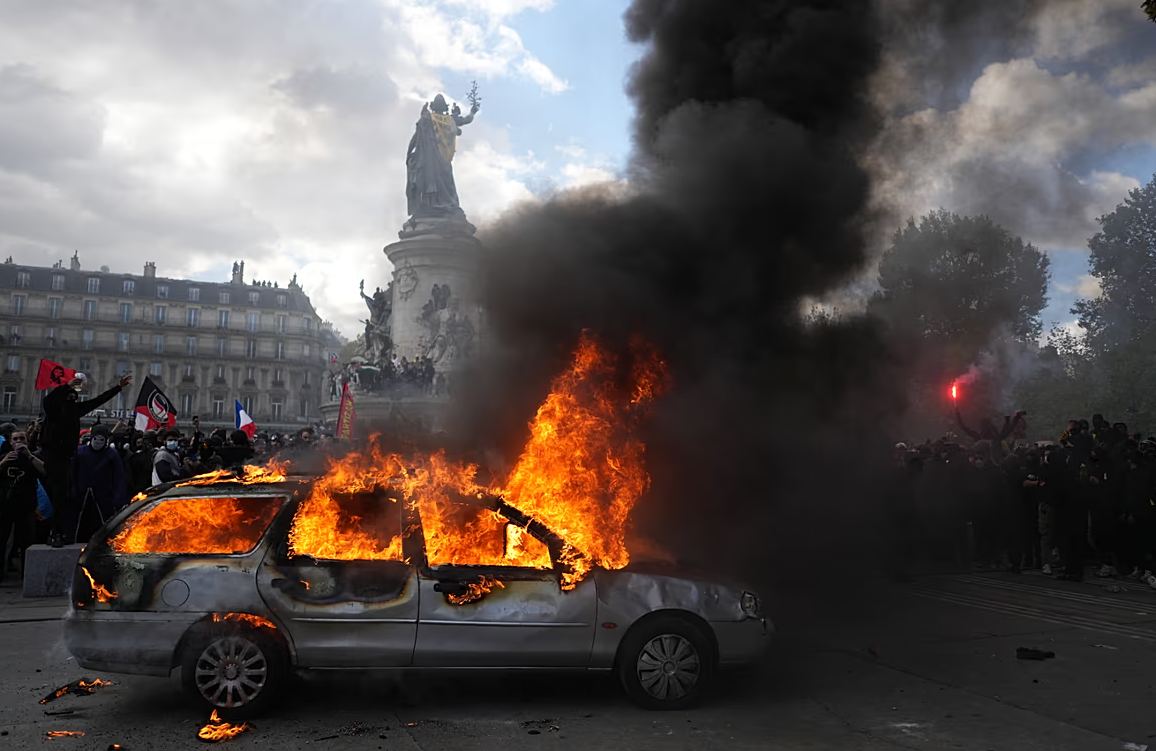
France woke on Sunday to a higher toll from the October 17 protests: 1,800 arrests and more than 500 police officers, gendarmes and firefighters injured, according to Interior Minister Laurent Nuñez. Emmanuel Macron is scheduled to address the nation at 8 p.m. Paris time after a day of demonstrations that ended with looting, fires and attacks on public buildings in several cities.
The still-provisional count increases the figures released the previous evening by Prime Minister Sébastien Lecornu. The Interior Ministry's injury tally covers security and emergency personnel; it is not a complete count of injuries among demonstrators and others. Nor have those arrested been convicted: investigators will have to establish individual responsibility.
The scale of the violence threatens to overshadow the reasons hundreds of thousands of people took to the streets. The cost of living and deteriorating conditions in schools were among the grievances behind a mobilization that brought together different groups and cannot be explained solely by the unrest in its final hours.
Large crowds and a toll that could still change
The Interior Ministry estimated attendance at about 550,000, while the CGT trade union put it above 800,000. Those are estimates from different organizations. Neither allows the damage caused by groups attacking businesses and institutions to be attributed to everyone who took part.
Le Monde's coverage describes peaceful marches as well as subsequent episodes of serious violence. In Limoges, the town hall burned; in Lyon, the tourist office in Place Bellecour was set on fire. Municipal premises in Marseille were also damaged. The combination of protest and destruction leaves mayors with two tasks: supporting residents and restoring affected public services and spaces.
Nuñez said far-left groups began attacking institutions and security forces and were later joined by people who looted shops. That is the minister's account of who was responsible. Actu17 reported his announcement of investigations to identify those involved and his warning that the injury figures could change. The scope of the allegations will need to be established through the legal proceedings.
Justice Minister Gérald Darmanin called for a firm response from prosecutors and requests for pretrial detention in cases involving attacks on officers, firefighters, public buildings and businesses, according to La Dépêche. That is a criminal justice policy instruction, not a judgment on each person arrested. Determining the facts, evidence and responsibility remains a matter for the courts.
Prices help explain the discontent
The pressure on households has a clear statistical basis. France's national statistics institute, Insee, confirmed on October 15 that consumer prices rose 3.1% year over year in September, up from 2.4% in August. Energy, with an annual increase of 21.3%, was a particularly strong source of pressure.
The comparison period matters when reading those figures. Prices fell 0.3% from August in the non-seasonally adjusted monthly series, but remained higher than a year earlier. A monthly decline in the overall index does not mean that filling a fuel tank or paying every bill once again costs the same as before the rise.
Food prices rose 1.4% year over year and services 2.4%, while manufactured goods fell 0.3%. That uneven pattern helps explain why households' experiences can differ from the average: the weight of each expense varies with a family's needs. Headline inflation summarizes a basket of purchases, but it does not describe every household budget on its own.
School grievances had already brought young people into the streets
The student mobilization did not begin this weekend, either. An AFP report on October 6 documented high school blockades dating from late September and demands over teacher shortages, overloaded timetables and deteriorating buildings. Parents and teachers joined some of those protests.
That coverage also reported allegations by students and human rights organizations of disproportionate police responses. Those allegations concern earlier demonstrations and must be investigated on their own facts. They do not automatically explain or justify Saturday's attacks, just as those attacks do not resolve the educational shortcomings young people had raised.
The government is therefore confronting two debates at once. One requires protecting people, businesses and public services, and investigating the violence. The other requires a response to grievances about everyday expenses and education. Treating the entire day solely as a public-order issue would leave those who demonstrated without taking part in attacks without an answer.
Macron's address will come against that backdrop. Until he speaks, no new measures can be treated as announced and no commitments attributed to him. The government's first test will be to explain how it intends to restore security and address social demands without conflating those responsible for crimes with everyone who went out to protest.