Kenya confirms third Ebola case, with no evidence of community transmission
A 65-year-old woman became ill while in quarantine and received care after her diagnosis. Authorities have located 127 of the first patient’s 130 identified contacts; he had returned from the Democratic Republic of the Congo.
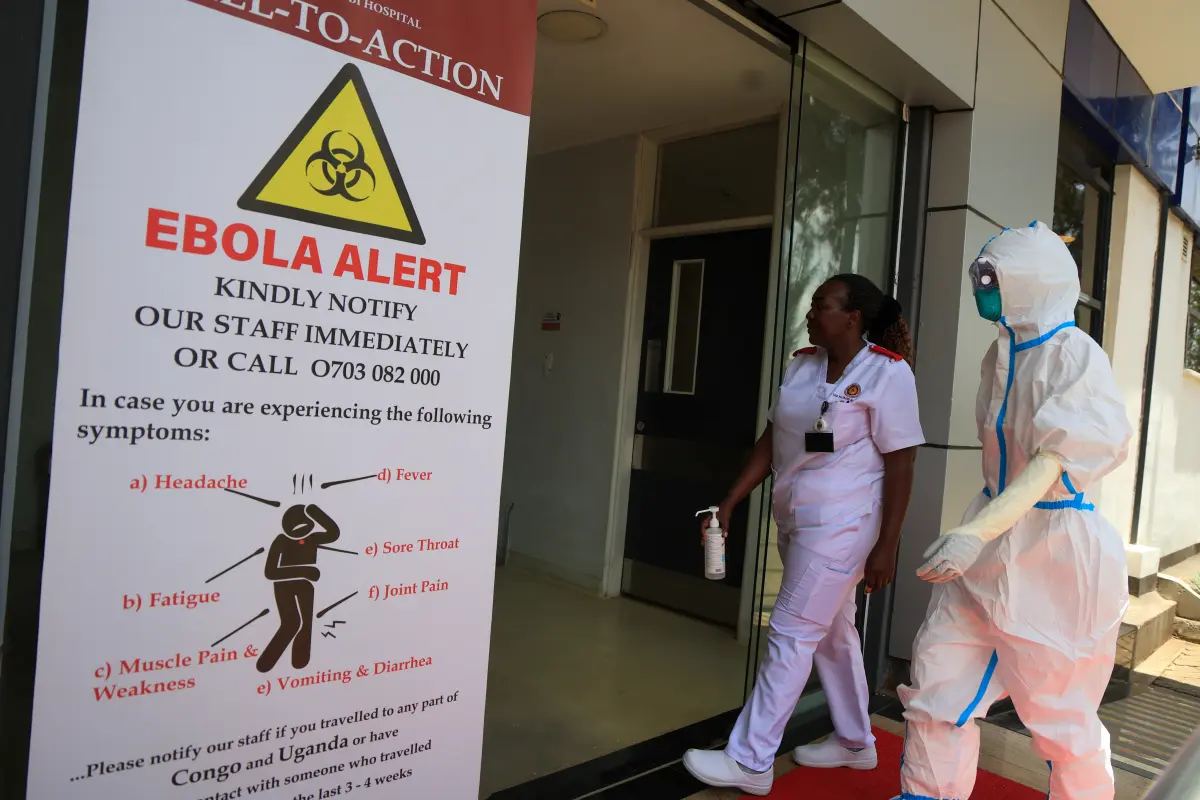
Kenya confirmed its third Ebola case on Friday, October 16: a 65-year-old woman, a close relative of the first two patients, who was already in quarantine when she became ill. The diagnosis brought the country’s confirmed case count to three, including one death. Health authorities and the World Health Organization say there is no evidence of community transmission.
A critical detail for the response is where the new case was detected. The woman was identified within a group already under monitoring, rather than after moving through the community without follow-up. The second case, confirmed on October 14 in a 39-year-old man, was also detected in quarantine.
That allows an earlier response, but it does not mean the outbreak is over. The WHO warns that further cases could emerge among contacts during their observation period. The priority is to identify and care for them from the first symptoms, when they can begin to transmit the disease.
A chain linked to the first patient
Kenya’s known chain of cases began with a Kenyan citizen who had been living in the Democratic Republic of the Congo. According to the Health Ministry’s account, he traveled by road to Kampala, Uganda, and flew from there to Nairobi on October 3.
On arrival, he was taken to a hospital, isolated and assessed. Two laboratories—the National Virology Reference Laboratory and the Kenya Medical Research Institute—confirmed infection with Bundibugyo virus. The man died on October 5, according to the WHO’s subsequent timeline.
The ministry reported the case under the International Health Regulations and began contact tracing. That work extends beyond family members to health workers, friends and people who shared the flight. Being listed as a contact means there was a possible exposure that needs assessment, not that the person is infected.
Reuters reported on Friday that authorities had reached 127 of the 130 identified contacts and were still searching for the remaining three. Following up with those contacts remains one of the response’s unfinished tasks.
Laboratory testing, quarantine and entry screening
Kenyan media provided details of the new patient’s diagnosis. Citizen Digital, citing Director General for Health Patrick Amoth, reported that tests were positive at both the national laboratory and the research institute’s laboratory. The woman was transferred to an infectious diseases unit for care.
The same outlet reported the distribution of protective equipment and infection-control supplies to health facilities and points of entry. The government also announced plans to use digital surveillance forms before passengers and crew arriving from high-risk countries disembark.
Those measures build on surveillance that began months before Kenya’s first diagnosis. On October 6, the ministry had reported training nearly 5,000 health workers and having the capacity to test samples at five laboratories. The preparations aim to get suspected cases into isolation and diagnostic testing without relying on recognizing the disease by appearance alone.
What makes this form of Ebola different
Bundibugyo is one of the viruses that cause Ebola disease. The distinction has clinical consequences: vaccines and treatments approved for another form cannot be assumed to be available or effective against this one. The WHO says there is not yet a licensed vaccine or an approved specific treatment for Bundibugyo.
That does not mean patients receive no care. Rehydration, treatment of symptoms and complications, and other supportive care can improve survival. The lack of a specific medicine makes early access to a prepared treatment facility particularly important.
The disease spreads through direct contact with blood, bodily fluids or contaminated materials. It is not airborne. The period between infection and the onset of symptoms can range from two to 21 days, which is why monitoring contacts does not end after a single check.
Early symptoms can resemble those of other illnesses. Fever, fatigue or muscle pain alone cannot confirm a diagnosis. Clinical assessment and laboratory testing are necessary, and not every patient develops bleeding.
A regional outbreak that requires continued follow-up
Kenya’s cases are connected to a much larger outbreak in the Democratic Republic of the Congo. In its October 8 report, using data through October 6, the WHO had recorded 8,728 confirmed cases across seven Congolese provinces. Those figures reflect that reporting cutoff, not an updated total for Saturday, October 17.
The regional report highlighted difficulties in reaching all contacts and the importance of preventing infections during medical care and burials. Those challenges show why containing a chain of transmission requires more than detecting its first patients.
In Kenya, the WHO reported on Friday that the country continued to allow travel, trade and public gatherings without restrictions. The absence of evidence of community transmission defines what is currently known; contact follow-up and subsequent diagnoses will determine how the situation develops.