Schneider Electric raises outlook as AI demand drives record sales
The French group reported third-quarter revenue of €11.46 billion and raised its full-year targets. Data centres are driving growth, while its agreed acquisition of PTC remains pending.
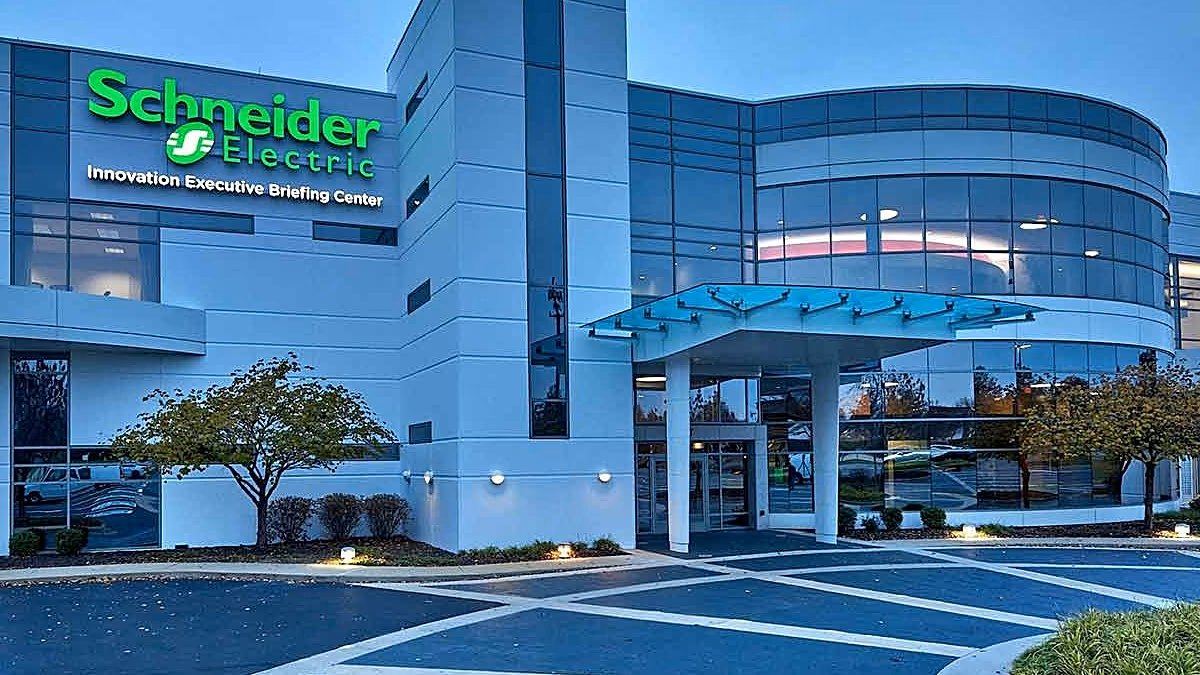
Schneider Electric raised its 2026 outlook on Friday after reporting record quarterly revenue of €11.46 billion. The French electrical equipment and automation manufacturer is benefiting from the expansion of data centres, as investment tied to the artificial intelligence boom makes power supply and cooling central businesses in the technology race.
The upgrade is its second this year and comes as the group prepares a major software acquisition in the United States. The two developments show both sides of its strategy: supplying the physical infrastructure needed for new digital projects and expanding the tools companies use to design and manage their products.
Higher full-year targets
Sales from July to September rose 16.9% on an organic basis, which excludes the effects of exchange rates and changes in the businesses included in the group. Reported growth was 17.9%. L’Agefi noted that revenue exceeded the €11.13 billion analysts had expected in a consensus compiled by Schneider.
For 2026 as a whole, the group now expects organic revenue growth of 12% to 14%, up from its previous range of 10% to 13%. It also raised its forecast for growth in adjusted operating profit, or adjusted EBITA, to 18%–21% from 14%–19%.
Its adjusted operating margin target is approximately 19.7% to 19.9%. The projected improvement means Schneider expects to retain a larger share of its sales under that measure of profitability.
The infrastructure behind AI
In its statement, Schneider reported triple-digit growth in demand from data centres. The company ended the quarter with another record order backlog. Sales to that market grew at a double-digit rate, supported by prefabricated solutions, electrical distribution and protection equipment, and cooling.
This is the equipment that keeps computing capacity running continuously. The business extends beyond installing servers: it also covers how they receive electricity, how that supply is protected and how heat is removed from the facilities. Schneider supplies some of the infrastructure that receives less attention than chipmakers in coverage of the AI boom.
Its energy management business grew 18.8% organically, while industrial automation increased 8.1%. China and East Asia led the group’s regional growth at 26.1%, ahead of North America’s 19.9%. Both volumes and prices supported product growth, according to the company.
The power grid is another constraint
The wider context helps explain demand, but also presents risks to the pace of investment. In its 2026 report on energy and artificial intelligence, the International Energy Agency estimates that data centres’ electricity consumption could rise from 485 terawatt-hours in 2025 to around 950 in 2030, accounting for roughly 3% of global electricity demand.
The agency warns of bottlenecks in grid connections, equipment manufacturing, chips and financing. An announced project must overcome those hurdles before it becomes an operating facility. Rising investment does not guarantee that every planned data centre will be built.
The concentration of large electricity loads also raises questions about who pays for new grid infrastructure and how expansions are coordinated. The IEA says the effect on electricity prices depends on the conditions of each power system and on public policy choices. It does not assume that every new data centre must make electricity more expensive for households.
A software acquisition still to be completed
Schneider is seeking to expand its digital business through the agreed acquisition of PTC, announced on October 5. The deal offers $205 in cash per share and values the US company’s equity at approximately $22.6 billion. PTC develops software for industrial design, engineering and product data management.
The companies say the rationale is to connect design information with data on how equipment and facilities operate and are maintained. Schneider aims to strengthen its industrial AI offering in this way. The commercial benefits it expects from that combination remain projections; they cannot yet be counted as contributions from a completed integration.
PTC’s filing with the US securities regulator confirms that the acquisition is subject to shareholder and regulatory approvals, including those covering competition and foreign investment. The companies expect to close the transaction in the third quarter of 2027.
The quarter offers a concrete sign of the AI boom: some of that spending is already translating into sales of electrical equipment and cooling systems. Sustaining the expansion will require turning demand into deliveries and overcoming the physical constraints that accompany the construction of new digital capacity.