UN presses for Hormuz fertilizer deal before more planting windows close
The proposed transit mechanism still awaits agreement between the United States and Iran. Delays threaten crop schedules, while fertilizer markets are feeling the disruption unevenly.
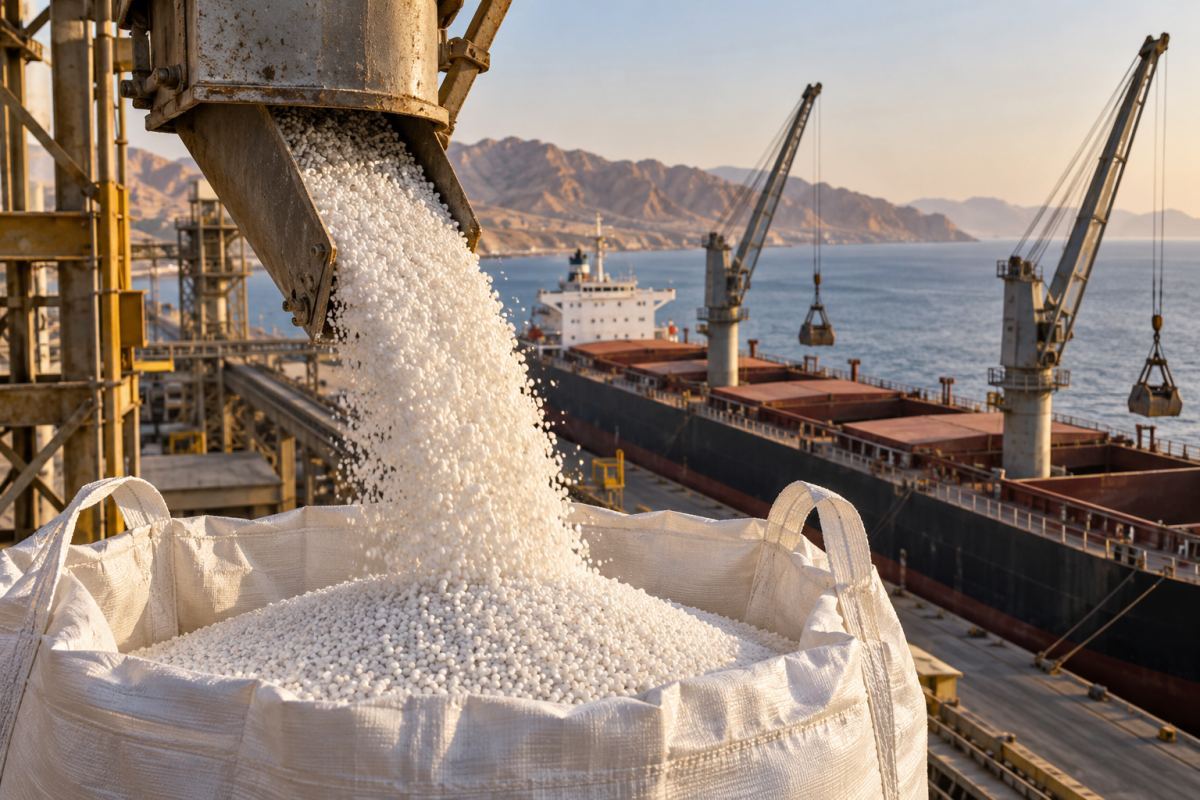
The United Nations has renewed its call for an agreement between the United States and Iran to allow fertilizer shipments through the Strait of Hormuz before delays jeopardize further planting seasons. Attention to the route often centers on oil, but supplies of products needed to grow food are also at stake.
Jorge Moreira da Silva, executive director of the United Nations Office for Project Services, or UNOPS, told Reuters in Bangkok on Wednesday that the mechanism could be activated seven to ten days after an understanding between Washington and Tehran. That timetable depends on political approval that is still missing; it is not an announced opening date.
For a farmer, the distinction has practical consequences. Buying fertilizer is not the same as receiving it in time to apply it. The Food and Agriculture Organization has warned that transport delays can affect later harvests, even if ships begin moving again before crops are gathered.
A mechanism ready to operate, but still awaiting approval
The task force established by the UN in March brings together UNOPS, the United Nations Conference on Trade and Development, the International Maritime Organization and the International Chamber of Commerce. According to the official description published in July, the proposal provides for registering vessels, coordinating movements to avoid incidents, prioritizing cargo and verifying transit.
The aim is to make shipping more predictable for fertilizer and related raw materials. It is a temporary, limited operation that does not change states' rights or transfer their sovereign authority. Those boundaries define its scope: moving specific cargo requires operational assurances, even if the mechanism does not settle every dispute affecting navigation in the region.
The UAE newspaper The National had already reported the UNOPS chief's frustration in September. In that interview, Moreira da Silva identified diplomatic negotiations, rather than objections to the technical design, as the obstacle. He also described a coordination center in Salalah, Oman. His argument was to allow food-security relief while talks on a broader agreement continued. The renewed warning shows that separating the two has yet to get the system operating.
Markets have adapted, but not evenly
Disruption to one trade route does not mean the entire world supply disappears. An analysis published September 18 by the International Food Policy Research Institute, or IFPRI, documented how exporters outside the Gulf, including China and the United States, had replaced some of the lost supplies.
The researchers also found substantial differences between products. Urea and ammonia prices had fallen from earlier peaks, while phosphate fertilizers remained expensive and sulfur had become a bottleneck. That is a snapshot of the period studied, not a price quote for Thursday. It nevertheless guards against a misleading reading: fertilizers are not a single market moving up or down at the same pace.
Using data from importing countries, the analysis estimated an approximately 9% decline in nitrogen fertilizer trade in the first half of 2026 compared with the same period in 2025. It also warned that subsequent seasonal demand could put renewed pressure on prices if restrictions persisted. Alternative suppliers cushion the impact; they do not necessarily eliminate its costs or ensure availability at every destination.
For the United States, a study published in March by the University of Illinois's farmdoc daily showed different exposure depending on the product. Using 2023 trade data, it found that about 17% of U.S. urea consumption and 20% of DAP and MAP phosphate fertilizer consumption came from the Gulf. Direct dependence was minimal for potash and anhydrous ammonia. These are structural benchmarks from before the crisis, not an updated inventory assessment.
The distinction matters for farms: domestic production may offer protection for one input while another still depends on vulnerable imports. An average measure of foreign dependence can obscure the particular product that is missing at the moment it is needed.
Crop calendars do not wait for diplomacy
In May, FAO Director-General Qu Dongyu explained that a delay of a few weeks could force farmers to reduce or abandon fertilizer applications. Nutrients need to arrive at specific stages of crop development; receiving them later does not automatically recover lost yields. The organization identified import-dependent countries in Africa, Asia and the Middle East already facing economic fragility or food insecurity as among the most exposed.
Its proposed response combines alternative routes, farmers' access to inputs and support for vulnerable economies. The FAO also recommends diversifying suppliers and avoiding export restrictions that worsen shortages. Its technical brief on the conflict distinguishes those immediate steps from longer-term investment in agriculture, sustainable fertilizers and renewable energy. A new factory cannot, by itself, resolve a delivery needed this season.
Moreira da Silva believes that allowing five ships a day through could meet critical needs. That is an estimate for the proposed operation, not a count of vessels already passing under the mechanism. Progress will be measured by something more tangible than another announcement: cargo leaving, reaching its destination and becoming available before the opportunity to use it closes.