Despite Trump’s tariff pressure, China remains the world’s largest goods exporter
Exports rose 36.3% in dollar terms in September, bringing the cumulative trade surplus close to $1 trillion. Tariffs have altered markets and trading conditions without displacing China’s export lead.
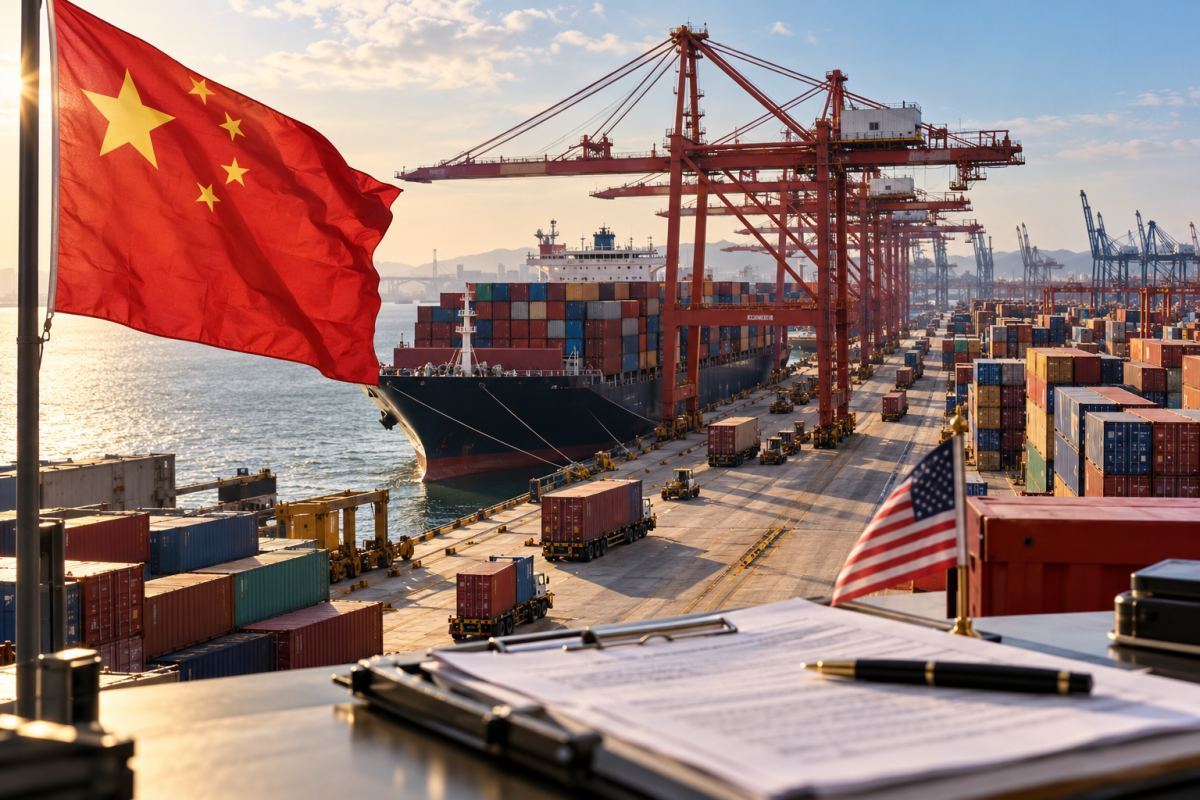
China demonstrated the strength of its export industry again Wednesday. Overseas sales rose 36.3% year over year in September, measured in dollars, according to customs data reported by Reuters and The Associated Press. Growth accelerated from August’s 25%, leaving a monthly trade surplus of $133.53 billion.
The figures reinforce a reality President Donald Trump’s tariff pressure has not reversed: China retains the global lead in merchandise exports. The World Trade Organization’s latest annual ranking puts its goods exports at $3.772 trillion in 2025, or 14.4% of the world total. The United States and Germany follow.
That lead does not mean tariffs are irrelevant or Chinese businesses face no costs. Their exports to the American market did decline last year. The figures show an ability to sustain global sales while destinations, products and market-access rules change.
A strong September, with imports rising too
Chinese imports increased 31% year over year in September, compared with 28.2% in August. Export growth therefore was not accompanied by an overall fall in purchases from abroad. Even so, the value sold far exceeded the value bought.
The January–September trade surplus reached $938.11 billion, Reuters reported. That brings China closer to $1 trillion before year-end, but it does not mean it has already exceeded the roughly $1.19 trillion annual record set in 2025. The final quarter’s figures are still to come.
A trade surplus is the difference between goods exports and imports. It is not companies’ net profit, government tax revenue or money distributed directly to households. Its scale matters because it reflects the trade imbalance China’s partners want to reduce.
September’s growth rates measure the dollar value of transactions. They cannot automatically be read as identical increases in the physical quantity of goods shipped: prices and exchange rates also affect that measure.
A specific definition of first place
The WTO table allows countries to be compared using the same period and category. In 2025, the United States exported $2.185 trillion in goods and Germany $1.764 trillion, against China’s $3.772 trillion.
The ranking concerns goods, rather than every service sold across borders. In commercial services, the United States ranked first and China fourth. Combining the two categories would conceal important differences in how these economies sell to the world.
September 2026’s figures show recent momentum, but they are not yet a full-year global ranking for 2026. The comparative lead rests on the latest available annual table; the new development is the acceleration in Chinese sales during the month just ended.
Tariffs changed the map without erasing demand
The WTO report shows Chinese exports to the United States fell about 20% in 2025. At the same time, shipments to the European Union increased 8.4%, while those to members of the Association of Southeast Asian Nations rose 13.4%.
The contrast helps explain the resilience of the total. Losing sales in one important market does not require losing them everywhere. Nor does it establish that every American order found an identical replacement elsewhere: supply chains and demand respond to several forces.
Trade confrontation has also given way to negotiations. On September 27, the Office of the U.S. Trade Representative announced recommendations for more favorable tariff treatment for $30 billion in nonsensitive goods from each country.
Its statement mentioned agricultural products, medical devices, household goods and toys. The wording concerned recommendations and potential future benefits. It did not announce the elimination of all tariffs or turn bilateral commerce into unrestricted trade.
Technology drives sales and creates other dependencies
Semiconductors and automobiles are among the sources of growth. Customs data reported by Reuters show semiconductor exports increased 108.1% in value during the first nine months of the year. Auto exports rose more than 50% in both value and volume.
The global buildout of artificial intelligence infrastructure supports demand for equipment and components. That creates opportunities for manufacturers, but it also ties part of their growth to the technology investment cycle. Strong export numbers do not remove dependence on foreign buyers.
BNP Paribas Asset Management strategist Ecaterina Bigos told AP that diversification into Southeast Asia or Latin America helps, but cannot fully replace Western demand. Europe is also negotiating conditions to rebalance its trade relationship with China.
For consumers and businesses, the picture combines product availability with uncertainty over costs and access. Tariff decisions can change prices and suppliers, while the scale of Chinese industry continues to shape the options of those buying its products and competing against them.
September’s figures do not show that Trump has no influence over trade. They establish something more precise: that influence has not displaced China as the largest goods exporter, and new barriers coexist with an industrial capacity that continues to find demand abroad.