Bangkok brings the IMF and World Bank together as debt, energy and AI dominate the agenda
The annual meetings begin on October 12. Their discussions affect businesses through borrowing costs, energy bills and investment decisions.
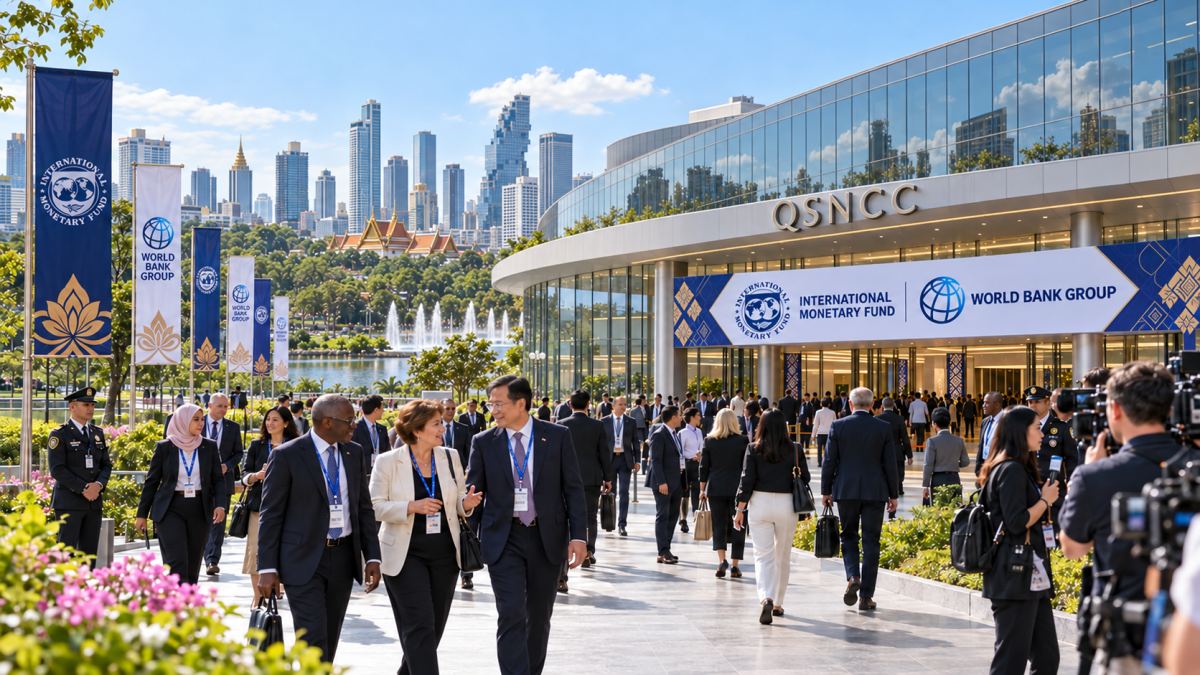
Bangkok hosts the annual meetings of the International Monetary Fund and World Bank from Monday, October 12, as advances in artificial intelligence coincide with energy pressures and mounting public debt. Running through October 18, the gathering will bring together economic policymakers, private-sector representatives and civil society organizations.
The city is hosting the meetings again after serving as their venue in 1991. The choice places the discussion in Asia, a region central to production networks, trade and technology investment. For readers in Japan, Europe and the United States, the decisions under discussion have a tangible connection to the cost of financing a business or covering household expenses.
Three forces moving at different speeds
In her October 7 speech ahead of the meetings, IMF Managing Director Kristalina Georgieva identified three forces shaping the economy: artificial intelligence, high energy prices and public borrowing. Her assessment does not portray technological growth as a guarantee of shared prosperity.
AI investment can boost economic activity and productivity, but it can also concentrate the gains and fuel expectations that may not be met. Energy pushes up costs that businesses must absorb or pass on to customers. Debt leaves governments less room to respond to new crises without putting further strain on their finances.
Georgieva warned of risks linked to concentrated investment and borrowing if the expected gains from AI prove disappointing. A small business need not invest directly in the technology to feel the effects: they could emerge through access to credit or uncertainty among suppliers and customers.
Jobs and private investment on the agenda
The World Bank's program includes a discussion of AI applications and employment on Monday, followed on Wednesday by another on mobilizing private capital to create jobs. The schedule is subject to change. These sessions indicate the questions that will shape the debate; they do not, by themselves, amount to newly approved financing programs.
The distribution of investment and employment matters too. A technology can increase output without benefiting every worker or region equally. Training, infrastructure and access to finance help determine who can take advantage of it.
The Bangkok meetings will provide an opportunity to compare those priorities with governments' positions. Assessments will need to be distinguished from commitments, and announcements from the mechanisms intended to put them into practice. For businesses and consumers, what matters is how the discussions translate into credit conditions, price stability and job opportunities, rather than the sequence of speeches.