Talarico and Paxton enter Texas Senate race’s final stretch with no clear lead in Marist poll
The October 14 poll puts Democrat James Talarico at 47% and Republican Ken Paxton at 45% among likely voters, within its margin of error. Early voting begins Monday, October 19.
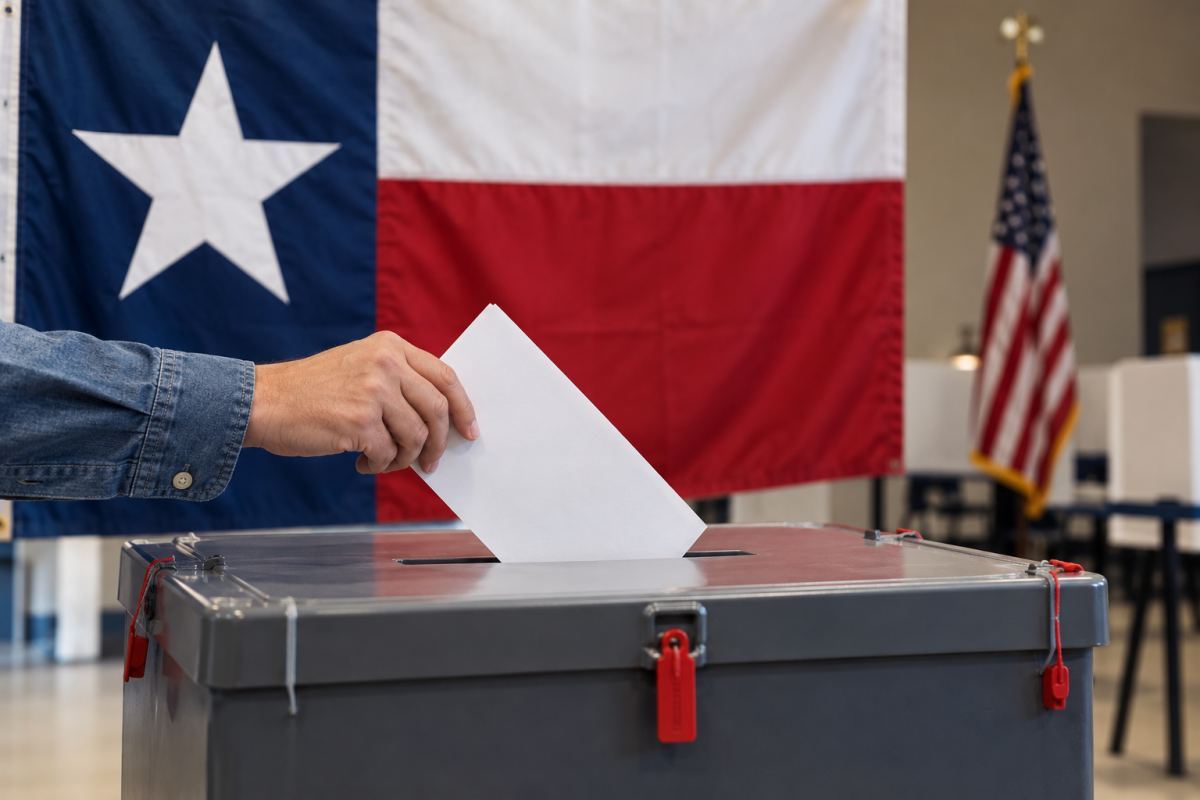
Texas’ U.S. Senate race remains competitive with less than three weeks until Election Day. A Marist poll released Wednesday, October 14, puts Democrat James Talarico at 47% and Republican Ken Paxton at 45% among likely voters. The two-point gap falls within the survey’s 4.9-percentage-point margin of error for that group.
The result describes a close contest without establishing a clear lead for either candidate. It also arrives at a different stage from the summer polls: in-person early voting begins Monday, October 19, and runs through October 30. Election Day is November 3, according to the Texas secretary of state’s office.
The seat currently held by John Cornyn will provide six years of representation in Washington. Talarico’s opportunity is to turn a competitive candidacy into enough votes to defeat the Republican. Paxton’s challenge is to bring his party’s base together while attracting voters outside it. The poll identifies strengths and limits for both.
Independents offer an opening for Talarico
Among likely voters who identify as independents, Marist finds 52% supporting Talarico and 30% backing Paxton. These voters are not a uniform bloc: they have different preferences, priorities and levels of willingness to participate. But their distribution helps explain why the contest does not simply mirror the Republicans’ advantage in party identification.
Democratic loyalty to the party’s nominee is extremely high, with 99% reporting support for Talarico. Among Republicans, 87% support Paxton and 8% favor the Democrat. Expanding a coalition therefore requires more than mobilizing voters who already identify with each party.
That does not mean Talarico’s 52% among independents will automatically be reproduced at the ballot box. Estimating who will vote is part of a poll’s methodology. In a close election, turnout that differs from expectations can change the composition of the final electorate.
Libertarian Ted Brown also appears in the University of Texas’ tracking of the contest. Marist places 2% of likely voters in the other-party category, alongside 4% who are undecided and 2% who did not respond. None of those groups can be assigned in advance to either major-party candidate.
Supporting a candidate is different from expecting a win
The same survey asks a separate question: who respondents think will actually win, regardless of their own preference. On that measure, 53% of likely voters expect Paxton to prevail and 42% expect Talarico.
The apparent contradiction has a straightforward explanation. Someone can vote for one candidate while believing the opponent will win. Expectations capture perceptions of the political environment; they are neither a probability calculation nor a forecast issued by Marist.
The gap between preference and expectation presents an additional challenge for Talarico. A competitive campaign needs supporters to participate even if they believe the opponent has better prospects. For Paxton, widespread expectations of victory likewise do not guarantee that voters will turn out for him.
The Senate contest does not redraw the entire state
Marist finds 51% support for Republicans and 46% for Democrats on the generic U.S. House ballot among likely voters. In the governor’s race, Greg Abbott receives 49% and Gina Hinojosa 45%. These are separate contests and questions, with their own margins and uncertainties.
The contrast with the Talarico-Paxton contest shows why one candidacy’s performance cannot be extended to every race in Texas. Voters can distinguish between candidates and offices. Nor does a statewide generic House preference establish how many individual districts each party will win.
Trump matters to some voters, but not in the same way to everyone. Asked about their House vote, 38% describe it as a vote against the president, 27% as a vote in his support and 34% say Trump has little influence on that decision. That measure concerns the House election; it is not an automatic explanation of every Senate preference.
What the other polls show
The University of Texas tracker, updated Wednesday, also lists a UT/Texas Politics Project poll with Talarico at 50% and Paxton at 47%, conducted September 25 through October 5. ReconMR/Siena recorded 48% and 44%, respectively, in fieldwork conducted October 5–8.
Samples, dates and methods differ. Those surveys provide context for the competition, but subtracting results from different polls does not establish a trend as though the same electorate had been interviewed each time.
Marist surveyed 1,196 registered voters from October 8 through October 11 by phone, text and online. It then applied a likely-voter weight. The 4.9-point margin belongs to the likely-voter results and should not be confused with the margin for all registered voters.
Starting Monday, campaigns will compete for decisions that can already become ballots cast. The poll leaves Texas with a competitive Senate race. Mobilization over the coming weeks will determine who can turn that situation into a seat.