Brazil 2026: what Trump might gain from Flávio Bolsonaro, and what Lula's continuity could mean
Two scenarios and their limits: political affinity can create opportunities without making South America an automatic bloc.
Scenario analysis · October 3, 2026, before voting begins.
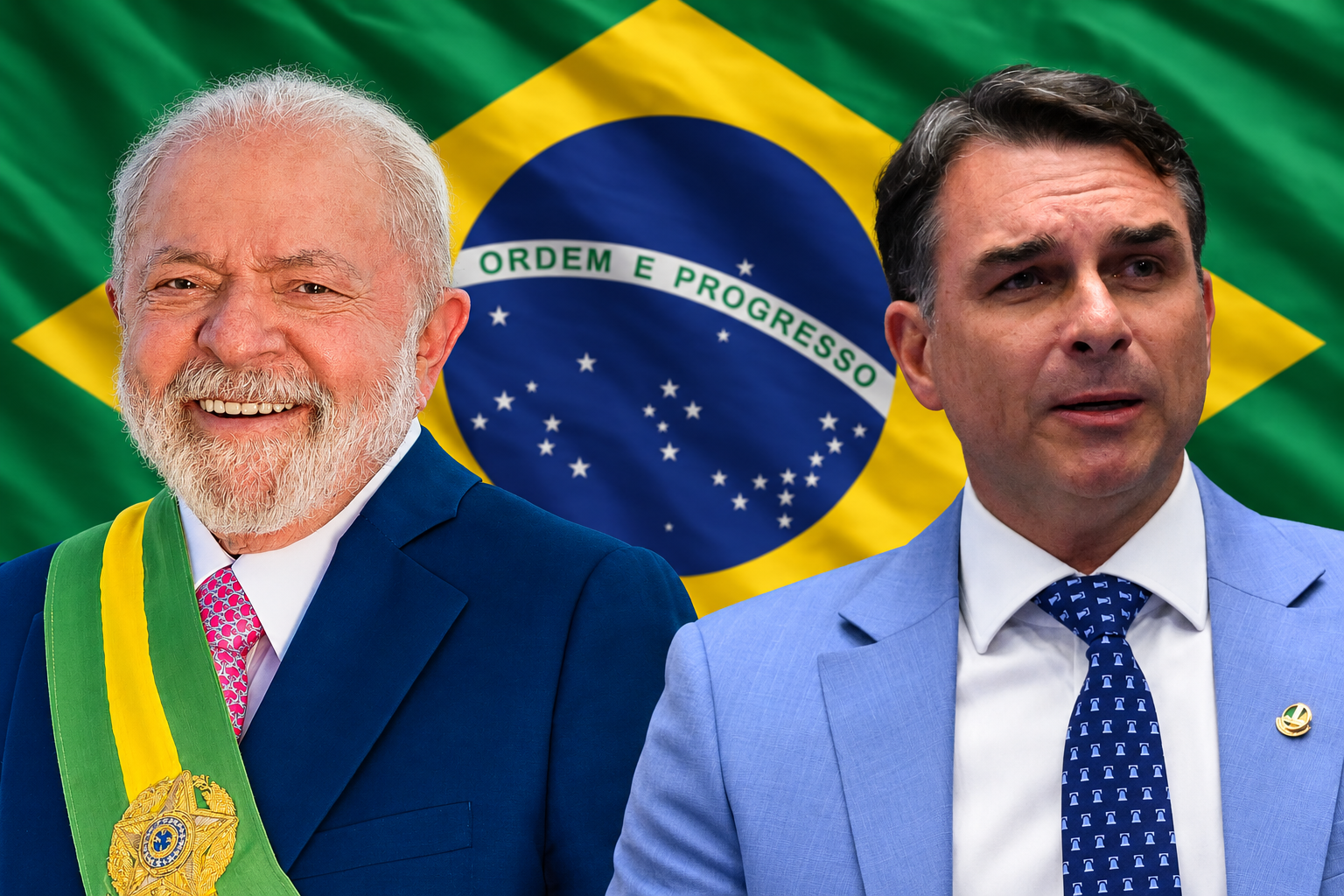
On October 4, Brazil will choose more than its next president. Voters will also elect the Congress with which that president must govern. A victory for Flávio Bolsonaro could give Donald Trump a friendlier counterpart in Brasília. Another term for Luiz Inácio Lula da Silva would extend a relationship in which Brazil's government insists on more autonomy from Washington. Neither outcome, by itself, turns South America's largest country into a piece of someone else's bloc. The question is which agreements Brazil would actually sign and what political and commercial price it would demand.
The first round is on October 4 and a possible runoff on October 25, according to Brazil's Superior Electoral Court, the TSE. The court validated the candidacies of Lula and Flávio Bolsonaro, among others. Jair Bolsonaro is not the candidate: he was declared ineligible. The distinction matters. A surname is neither a substitute for Flávio's registered platform nor a prediction of every decision he would make.
Flávio's promise: closer to Washington, while continuing to sell to China
There is documentary reason to expect a change of tone if Flávio wins. His platform filed with the TSE calls for repairing a US relationship it says has deteriorated, prioritizing commercial partners and resuming Brazil's OECD accession process. It criticizes Lula's treatment of Nicolás Maduro. That agenda could make talks with the White House on diplomacy, security and trade easier. Trump could plausibly claim a political victory in the hemisphere.
The same document sets a limit that a headline about a new “right-wing map” can miss. It proposes negotiating also with China, the European Union and Asian markets. It does not promise to abandon those relationships for a single patron. A government close to Trump would still have to defend Brazilian exporters against US restrictions. The platform promises to seek answers to sanctions affecting agriculture whether they come from the United States, China or Europe.
This is not an abstract constraint. Brazil exported US$8.34 billion to China in August 2026, according to the official trade figures from the Ministry of Development, Industry, Trade and Services. A sudden rupture with that market would strike business interests at home. Trade forces a distinction between liking a foreign government and decisions a president can sustain in front of Brazilian producers, states and legislators.
Lula: declared autonomy and a need to negotiate
Lula's platform published by the TSE defends a universal foreign policy, diverse partners, multilateralism and resistance to trade barriers. It describes Trump administration tariffs as a pressure Brazil has had to answer. If Lula remains in office, it is reasonable to expect him to keep defending Brazilian autonomy in public and to preserve room for negotiation with China, Europe and South American neighbors.
Autonomy does not mean that Brazil can ignore the United States. Trade, investment and security matters between the two countries survive an election. The useful test will not be election-night rhetoric. It will be the substance of subsequent bargaining: which tariffs are reviewed, which markets open, what commitments are made and what Brazil receives in exchange. A Lula government could disagree with Trump on one file and cooperate on another.
Three tests of a Trump “win”
First, trade. Ideological affinity is not a treaty. Brazil belongs to Mercosur, whose framework includes a common external tariff and coordinated trade policy. There is room for exceptions, but a far-reaching new agreement with Washington cannot be created by a phone call between presidents. It would require negotiations and political decisions inside and outside Brazil.
Second, institutions. The TSE's election calendar includes congressional races on the same day. Whoever takes office in 2027 will need legislative support for budgets, laws and appointments. A hostile majority or fragmented coalition could narrow the president's ability to turn international promises into domestic policy. Winning the presidency does not settle that arithmetic.
Third, the region. A Flávio government closer to Washington might take some common positions with the United States on Venezuela. That would not prove it could direct every South American government, or that the others would accept a single strategy. Flávio's own platform invokes Brazilian interests. Continued Lula rule, meanwhile, would not require Brazil to endorse every decision in Caracas. Positions on political recognition, elections, the border and migration will tell us more than an ideological label.
Venezuela cannot be reduced to a two-color map either. Brazil's next government will have to decide how to approach elections, the border and migration while Washington sets its own priorities. Calling Venezuela “subjugated” is a political judgment; it does not predict Brazil's decisions. The October 4 vote alone cannot settle that relationship.
What to watch after the vote
The official result and the makeup of Congress will offer the first measure of the winner's room to act. The next indication will come from the choice of foreign minister and stated priorities. Then the documents will matter: trade agreements, tariff decisions, positions in international bodies and concrete measures toward Venezuela. They will show whether affinity with Trump produces negotiated benefits for Brazil, or whether Lula's stated autonomy yields results.
The strongest conclusion before voting is narrow but consequential: Trump would have a greater diplomatic opportunity with Flávio Bolsonaro; he would not automatically acquire Brazil's foreign policy. Lula would present a different negotiation, likely more publicly contested, without ruling out all cooperation. The distance between slogan and government action is where the real regional map will take shape.