Judge restricts DHS election-related visits in nine states; order on hold until Friday evening
The temporary measure concerns certain field operations involving U.S. citizens before November 3. Its effect depends on a court bond requirement and could change on appeal.
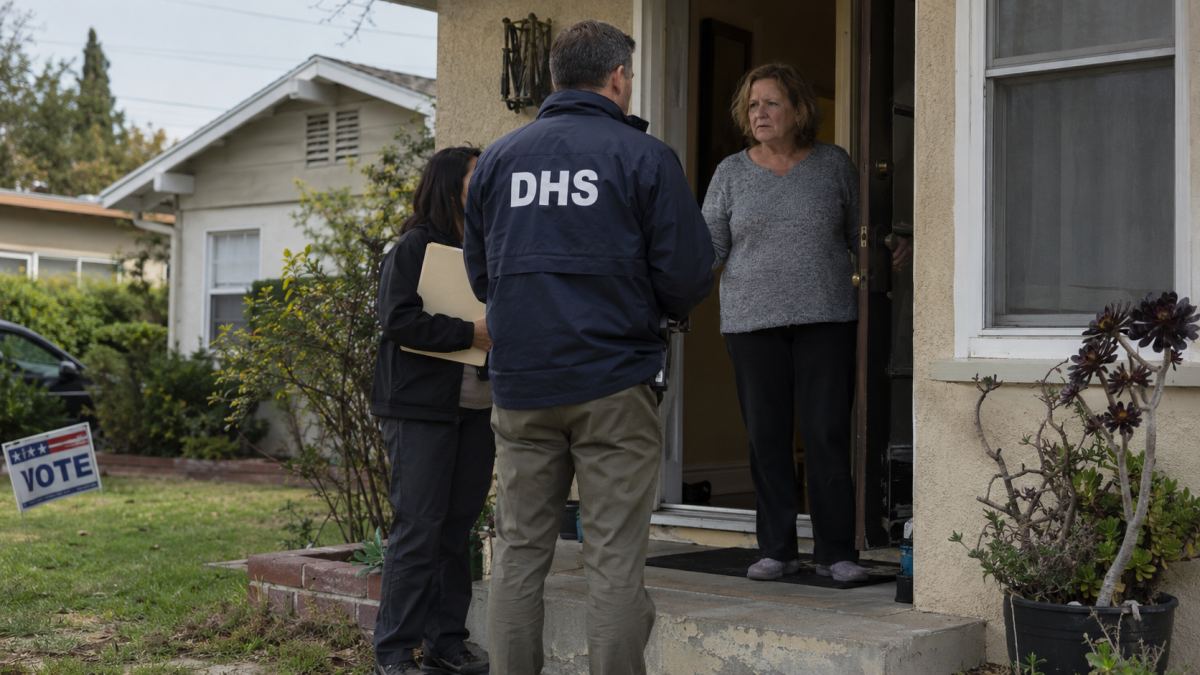
A federal judge in California ordered limits on certain election-related visits and interviews by the U.S. Department of Homeland Security in nine states during the final stretch of the midterm campaign. Issued Wednesday, the ruling covers voting-related field operations involving people whom agents know, suspect or reasonably should suspect are U.S. citizens. Early Friday, the order was still on hold: the judge delayed its effect until 5 p.m. Pacific time and required the plaintiffs to post a $100 bond by 5 p.m. Thursday.
As of Friday morning, there was no public confirmation that the bond had been posted or that an appeals court had issued a later ruling. Under the judge's order, the injunction dissolves if the bond was not posted on time. It therefore cannot yet be described as an effective halt to all investigations.
Judge Araceli Martínez-Olguín's ruling covers California, Connecticut, Georgia, Missouri, Nevada, New York, Pennsylvania, Washington and Wisconsin. The preliminary injunction was sought by nurses' unions, the Voto Latino Foundation and two California local governments challenging a federal initiative to identify registrations or votes by noncitizens. The lawsuit has not ended in a final judgment on all the claims.
What the order actually restricts
In those nine states, the order bars election-related field operations and interviews when officials know, suspect or reasonably should suspect that the person involved is a U.S. citizen. It also restricts certain operations based solely on records in the TECS system produced through the data-matching procedure challenged in the case, subject to the same condition concerning citizenship.
It does not declare every federal investigation of unlawful voting illegal or prevent inquiries supported by other lawful evidence. The judge expressly acknowledged that authorities may investigate election offenses. Her preliminary finding, however, was that they could not use methods likely to intimidate citizens who help others exercise the vote. If it takes effect and is not changed by a higher court, the injunction would last until polls close November 3 or until further order.
DHS says its priority is to identify noncitizens who vote illegally and has said it does not intend to question people it believes are citizens. The plaintiffs argue that the data used to select targets can contain errors and that visits by armed agents, sometimes publicized on official social media accounts, can discourage lawful election activity.
The data behind the visits
The ruling describes how the investigative lists were assembled. Some records came from tens of millions of entries from independent sources; others came from official voter rolls or commercial versions where state records were unavailable. Names, dates of birth, addresses and citizenship information were then compared in an effort to rule out people who should not be under suspicion.
That process did not identify millions of offenders. The figures of 48.2 million and 50.6 million cited in the order refer to the volume of input records, with possible matches and overlaps, not proven instances of illegal voting. The judge noted that similar names, incomplete files and outdated naturalization information can produce false positives. She also observed that there is no complete federal citizenship database capable of resolving every question automatically.
The plaintiff unions said the effect extended beyond the people visited. Members reported scaling back voter registration, information and turnout work because they feared the investigations. At this preliminary stage, the judge found sufficient evidence of a risk of intimidation under the Voting Rights Act for people who encourage or help others to vote.
That assessment is provisional. The court considered whether urgent protection was justified before the election, not whether everyone on an investigative list was a citizen or whether all the lawsuit's allegations will ultimately be proven. Some plaintiffs also failed at this stage to establish the procedural grounds needed to pursue all of their claims.
Election day is near, and the court's timetable matters
Early voting for the November 3 congressional elections has begun in several states. A visit to someone's home during that period may have effects quite different from an inquiry months later, the plaintiffs argued. The court accepted that someone deterred from voting, or from helping others vote, cannot readily recover that opportunity after the election.
The administration can use the period created by the stay to seek urgent review. It may also contest the order's scope as the case proceeds. Developments in the coming hours will determine whether the restrictions take effect Friday afternoon, are modified or lapse. None of those outcomes was confirmed at the time of this report.
The underlying issue brings together two obligations: investigating election offenses on reliable evidence and protecting citizens from conduct that could inhibit participation. The ruling draws a temporary, geographically limited boundary around a particular method. Until the order's status is confirmed after the stated deadline, its text and express stay are firmer facts than any claim of a final victory for either side.