South Korea proposes talks with Pyongyang to clarify military line and avert another border clash
Seoul wants to verify the line on the ground, restore military communications and agree on procedures after a blast injured three soldiers. North Korea has not accepted the invitation.
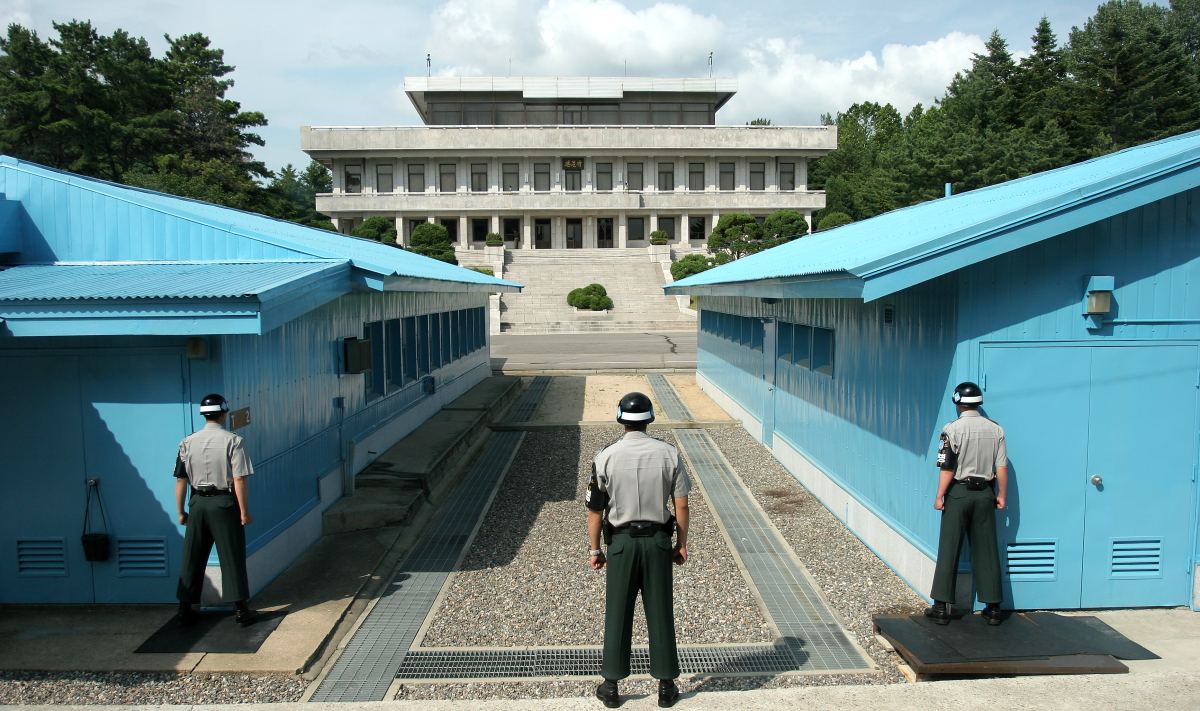
South Korea proposed military talks with North Korea on Friday to verify the line separating their forces on the ground, restore communications and reduce the risk of an accidental confrontation. The proposal follows a September 21 land-mine explosion that injured three South Korean soldiers and weeks of opposing claims about Pyongyang's construction work near the Demilitarized Zone. North Korea had not publicly accepted the invitation when it was announced.
Kim Hong-cheol, a defense policy official in Seoul, called for a discussion of the Military Demarcation Line, or MDL. He also proposed restoring military communication links and agreeing on procedures to prevent clashes. A date and venue could be arranged through Panmunjom, and South Korea would consider three-way talks with the United Nations Command, according to the public broadcaster KBS.
The offer is meant to address a practical danger before another incident occurs. If patrols and construction crews rely on different maps or markers, a movement one side considers to be on its own territory may look like a crossing to the other. Where armed forces operate in close proximity, that disagreement can lead to loudspeaker warnings and warning shots.
A September mine blast sharpened the urgency
Three South Korean soldiers were injured in explosions during an operation in the Demilitarized Zone on September 21. Seoul's military investigation concluded that North Korea had planted the mines south of the demarcation line. Pyongyang rejects responsibility. South Korea's defense minister has said the blast site was not in a section where the line's position was disputed, a detail that rules out treating that incident as a simple map-reading error.
The broader border dispute predates the blast. North Korea has spent years building fences, tactical roads and other fortifications. South Korea's military says North Korean soldiers have crossed the line about 50 times this year during the work and that it responded with warnings and shots. The North denies that its troops crossed and accuses Seoul of using the allegation to justify its own actions.
On Wednesday, senior North Korean commanders inspected construction near the border. Pak Jong-chon warned of a response if South Korean actions endangered his troops, according to North Korean media accounts reported by KBS. Kim Yo-jong, the sister of leader Kim Jong-un, also raised the prospect of resuming propaganda broadcasts toward the South. The sharper rhetoric comes as troop movements make reliable communication particularly important.
A line drawn in 1953, with most of its markers gone
The MDL dates from the 1953 armistice, which halted the Korean War without a peace treaty. The Demilitarized Zone extends on both sides of the line. It is neither open to civilian travel nor free of military activity; the ceasefire agreement governs how it is administered and monitored.
Many of the physical markers identifying the line have disappeared over time. South Korea's unification minister, Chung Dong-young, said in early October that only about 180 of the original 1,292 markers remained. That figure illustrates the difficulty of identifying the line on the ground; it does not mean the legal demarcation has ceased to exist. The challenge is to agree on coordinates and reference points usable by patrols.
The issue also involves more than the two governments. South Korea and the United Nations Command use different mapping standards at some points, a Defense Ministry official told KBS this month. They set up a working group earlier this year to address those discrepancies. The U.S.-led command oversees implementation of the armistice and maintains a channel to North Korea's military when direct inter-Korean lines are severed.
Seoul proposed similar military talks last November and received no response. Renewing the invitation shows that the problem persists, but it does not mean negotiations have begun. The first verifiable step would be for Pyongyang to agree to discuss a date, location and participants. The sides would then have to decide how to verify each section of the line on the ground.
A dialogue offer does not end military vigilance
South Korea's Defense Ministry describes the proposed meeting as a way to prevent accidents, not a decision to abandon its investigation of September's explosion or its response to future crossings. North Korea insists it knows where the line lies and rejects accusations of incursions. Their accounts of events remain at odds.
The United Nations Command said after the announcement that it remained committed to the armistice and to reducing the risk of miscalculation. Yonhap reported that the command did not confirm whether it had already conveyed the proposal to North Korean authorities. The existing channel allows an approach to be made, but cannot guarantee a political reply.
Any agreement would depend on the sides being willing to examine maps and positions without turning every incident into an unresolvable sovereignty dispute. Even a meeting confined to warning procedures could reduce the immediate danger to patrols. Without a response from the North, construction, warnings and surveillance will continue under different interpretations of a line drawn more than seven decades ago.