Russia frees Stephen Hubbard, the American teacher detained since 2022
Putin announced the release during a meeting with Steve Witkoff. The 74-year-old American had been convicted in a closed trial on charges his defense team disputed.
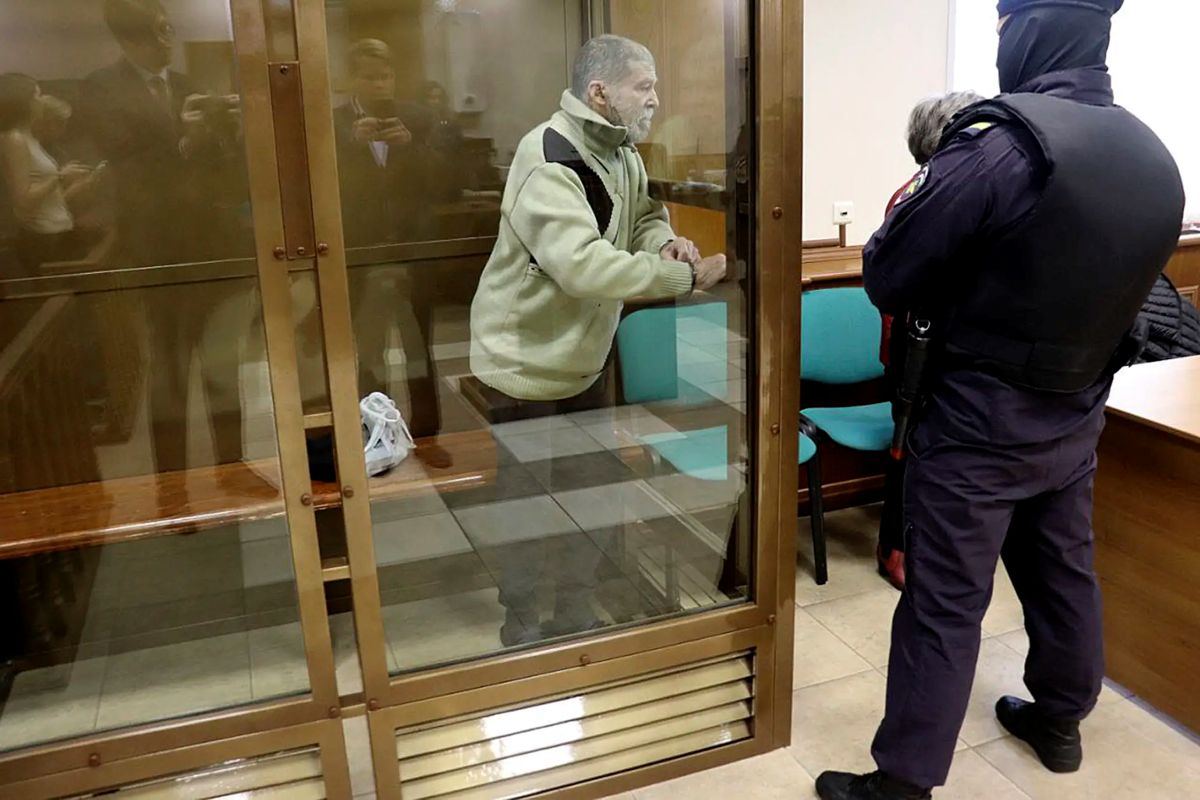
Russia on Wednesday freed Stephen Hubbard, the 74-year-old American teacher detained by Russian troops in Ukraine in 2022 and subsequently convicted by a Moscow court. Vladimir Putin announced the decision while receiving Donald Trump’s envoy, Steve Witkoff, in St. Petersburg. Witkoff thanked him on the U.S. president’s behalf. The Kremlin described the release as a humanitarian gesture.
The announcement ends more than four years of captivity for a man whose family and defense team denied he had fought against Russia. It also delivers a concrete result from contacts between Washington and Moscow, although statements about his release establish neither an agreement to end the war in Ukraine nor any U.S. concession in return.
Putin said Hubbard had been taken to Pulkovo Airport. That identifies one stage in his departure from prison; it does not, by itself, confirm that he had landed in the United States or reunited with his family. At the time of the announcement, his release was confirmed, but completion of his journey home had not been confirmed.
From teaching English to a Russian prison
Hubbard was born in Michigan and spent much of his life outside the United States. According to a Reuters profile published before his release, he taught English in Japan for 25 years, later lived in Cyprus and moved to Ukraine in 2014 with a Ukrainian partner. He was an expatriate teacher living in the eastern city of Izium when Russia’s invasion reached him.
Russian troops detained him in April 2022. Ukraine retook Izium that September, but Hubbard remained in Russian custody. In October 2024, the Moscow City Court sentenced him to six years and 10 months in prison after a trial held behind closed doors.
Prosecutors alleged that he had signed a contract with a Ukrainian territorial defense unit, received training and weapons, and agreed to monthly pay of at least $1,000. That is the Russian investigators’ account, reported by Interfax. Its inclusion in the judgment does not resolve the defense team’s objections or make it an independently established account of what happened.
Attorney Martin DeLuca told Reuters in 2025 that Hubbard denied belonging to a military unit and had been seized at his home. His sister, Patricia Hubbard Fox, also disputed the allegations and reports in Russian state media that he had admitted guilt.
A case Washington continued to press
The United States designated Hubbard as wrongfully detained in January 2025. That designation expressed the U.S. government’s position on his imprisonment and kept efforts to secure his release on the diplomatic agenda. Washington also said Russia was denying him consular access.
His age and health added urgency to those appeals. On May 7 this year, Republican Senators Jim Risch and Mike Crapo called for his release during Hostage Week, which focuses on Americans held abroad. They described him at the time as a 74-year-old in declining health with family in Idaho. Their statement records the concerns in May; it is not a medical assessment of his condition after leaving prison.
Trump said on Tuesday that he had spoken at length with Putin about Hubbard and requested his release. The response came a day later, during the face-to-face meeting with Witkoff. That sequence identifies a recent political intervention, but it does not reconstruct every contact that preceded the decision.
Kremlin spokesman Dmitry Peskov said on Wednesday that Washington had been raising the matter for some time and that Putin had acted on humanitarian grounds. He added that the two countries’ security services maintain contact over prisoner exchanges. He did not specify whether an exchange had taken place in this case, so Hubbard’s release cannot be described as a confirmed swap.
What the humanitarian gesture establishes
The release comes as Witkoff takes part in contacts concerning Ukraine. Norway’s government on Tuesday announced meetings in Oslo involving the U.S. envoy, Ukrainian President Volodymyr Zelensky, Finnish President Alexander Stubb and Norwegian Prime Minister Jonas Gahr Støre. Jared Kushner would participate remotely, according to the announcement.
That schedule shows humanitarian efforts and talks about the war taking place during the same period of diplomacy. It does not establish that they form part of a single agreement or that Hubbard’s release signals concessions on territory, security guarantees or a ceasefire. Each of those issues requires separate confirmation.
For Hubbard, the immediate change is freedom from imprisonment under a sentence the United States considered unjust. For his family, questions remain about how his return and any care he may need will be arranged. For Washington and Moscow, the decision demonstrates that a channel exists that can resolve a particularly prolonged individual case. That is the extent of the confirmed outcome: one man freed after years of appeals, with the authorities yet to explain all the terms of the negotiations.