Texas wins appeal shielding state from pregnancy accommodation law
The Fifth Circuit voted 9–8 to uphold an injunction barring enforcement of the Pregnant Workers Fairness Act against Texas. The case turns on the House’s use of proxy voting during the pandemic.
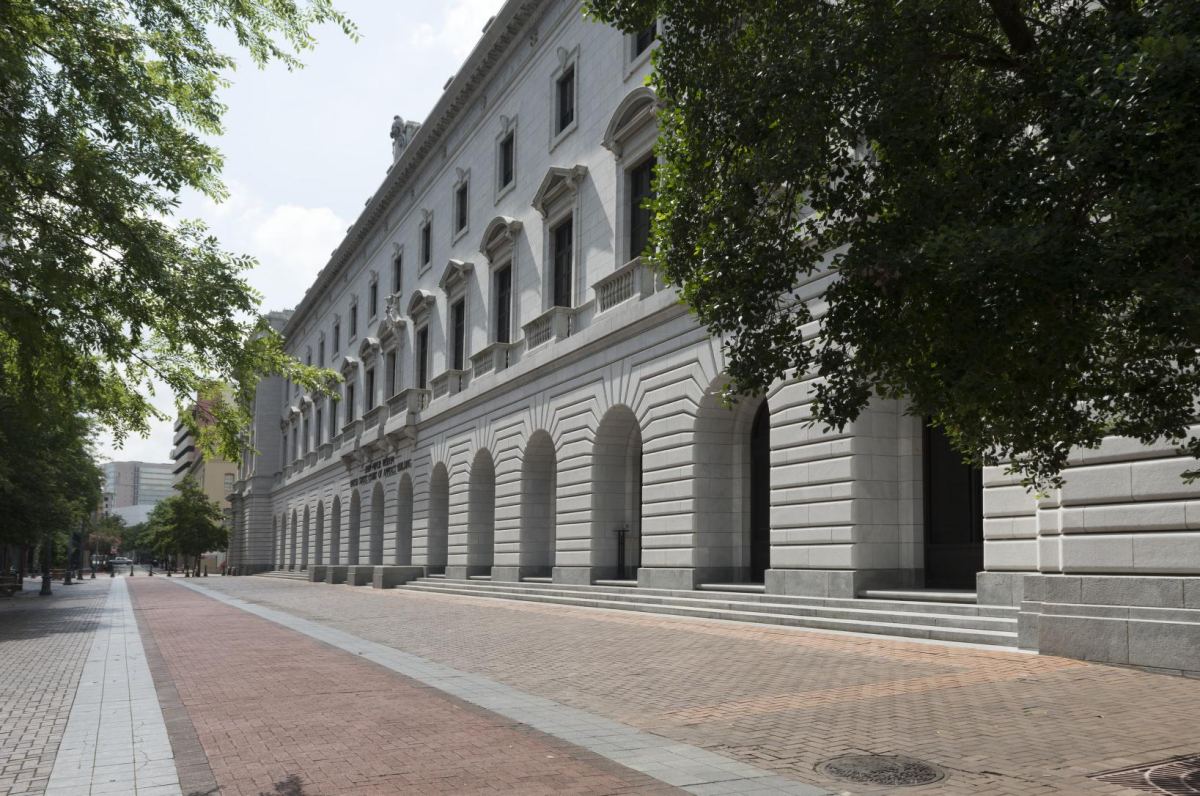
A federal appeals court ruled Friday, November 20, that the U.S. government cannot enforce the law requiring workplace accommodations for pregnancy, childbirth and related medical conditions against the state of Texas. The 9–8 decision ties those protections to a constitutional dispute over how Congress conducted business during the COVID-19 pandemic.
The full U.S. Court of Appeals for the Fifth Circuit upheld a lower court’s permanent injunction. The majority concluded that absent lawmakers could not count toward the quorum needed to pass legislation, even when they had authorized a colleague to vote or record their presence on their behalf.
The injunction shields Texas from enforcement of the Pregnant Workers Fairness Act, or PWFA. The opinion expressly limits that relief to the state that brought the lawsuit. Its constitutional reasoning nevertheless raises questions about future litigation and the security of workplace protections across the Fifth Circuit, which covers Texas, Louisiana and Mississippi.
Why a 2022 House vote matters
Congress included the PWFA in the Consolidated Appropriations Act of 2023, a federal spending package. The House approved the bill on December 23, 2022, by 225 votes to 201. According to the court’s account, 226 representatives recorded their votes or presence through proxies rather than participating in person.
The system originated in a resolution adopted in May 2020 to keep the House functioning during the public health emergency. A member could submit a signed designation allowing another representative to cast a vote or record the absent member’s presence. The House continued the arrangement in the following Congress.
The Constitution says a majority of each chamber constitutes a quorum to conduct business. It also allows each chamber to set its own procedural rules. The dispute concerns the relationship between those powers: whether control over legislative procedure permits the House to count a member who is not physically there.
Judge Cory T. Wilson, writing for the majority, concluded that it does not. The majority relied on the constitutional text, its context and historical practice. In its view, the House’s authority to manage its proceedings cannot override a constitutional requirement that members be present to establish a quorum.
Texas initially obtained an injunction in 2024. A three-judge appeals panel reversed that result in 2025, but the panel opinion was vacated when the court agreed to rehear the case en banc, meaning before the full court. Friday’s ruling restores the outcome favoring the state in this appeal.
What the workplace law covers
The PWFA took effect on June 27, 2023. It requires reasonable workplace adjustments for qualifying employees and applicants with limitations related to pregnancy, childbirth or associated medical conditions. In general, it covers private employers and state and local government employers with at least 15 employees, with additional provisions covering federal workplaces and other entities.
The Equal Employment Opportunity Commission, or EEOC, explains that an accommodation can be as straightforward as keeping drinking water nearby, taking extra restroom breaks, sitting during a job normally performed standing or adjusting a schedule for a medical appointment. Depending on the circumstances, accommodations can also include lighter duties, temporary changes in assignments or leave.
The law addresses limitations known to the employer because an employee, applicant or representative has communicated them. A pregnancy-related condition does not have to meet the legal definition of a disability to qualify. Employer and worker generally communicate about the limitation and the change needed, a discussion the regulations call the interactive process.
The statute prohibits denying employment opportunities because someone needs an accommodation or taking adverse action because they request or use one. It also bars forcing a qualified employee to take leave when another reasonable accommodation could address the limitation. An employer can decline an accommodation if it demonstrates undue hardship, meaning significant difficulty or expense for its operations.
The regulations also address some circumstances in which a worker temporarily cannot perform an essential job function. That does not automatically excuse every duty. Requirements concerning how long the inability lasts, the prospect of resuming the function and whether an accommodation is feasible must be met. The assessment depends on the particular job and limitation.
A court divided by one vote
The federal government argued that courts should not revisit the passage of legislation authenticated by Congress and signed by the president in this way. It relied on the enrolled-bill rule, a doctrine treating that authentication as conclusive evidence of a bill’s passage. Alternatively, it argued that the Constitution permitted the House’s proxy arrangement.
The majority rejected both arguments. It said the parties were not disputing what happened during the vote; they disagreed about what the Constitution required. The court therefore considered the challenge reviewable without resolving conflicting evidence about congressional proceedings and concluded that the House had lacked the necessary quorum.
Judge James E. Graves Jr., joined in dissent by six other judges, rejected reading a physical-presence requirement into constitutional language that does not expressly state one. He also criticized Texas for seeking to set aside protections for pregnant workers while retaining federal funding approved through the same spending legislation.
Judge Catharina Haynes dissented separately, according to a footnote in the opinion, bringing the number opposed to the result to eight. The narrow division exposes sharply different understandings of judicial authority and Congress’s power to run its proceedings, with direct consequences for a law governing ordinary workplace needs.
The injunction and the broader uncertainty
The majority stressed that the lower court had not undone every provision of the spending package for everyone nationwide. The injunction it upheld concerns enforcement of the PWFA against Texas. That limit is essential to understanding the order itself, even as other courts may be asked to apply the decision’s reasoning in different cases.
A Better Balance, an organization that supported the law through a friend-of-the-court brief, warned Friday of consequences for workers in Texas, Louisiana and Mississippi. Its president, Inimai Chettiar, said the decision threatened their health and economic security. The organization expects the case to reach the Supreme Court and urged the federal government to defend the law.
Other employment protections rest on separate legal foundations. The EEOC’s general guidance distinguishes the PWFA from Title VII’s prohibition on pregnancy discrimination and the Americans with Disabilities Act, which can cover certain pregnancy-related conditions. Those laws have different requirements. The ruling leaves a specific federal accommodation protection unenforceable against Texas while the wider constitutional dispute remains unresolved.