COP31 talks run into overtime with fossil fuels and climate finance unresolved
Negotiations continue in Antalya after the scheduled finish. Thursday’s draft dropped an explicit reference to moving away from fossil fuels and left open the baseline for tripling adaptation finance.
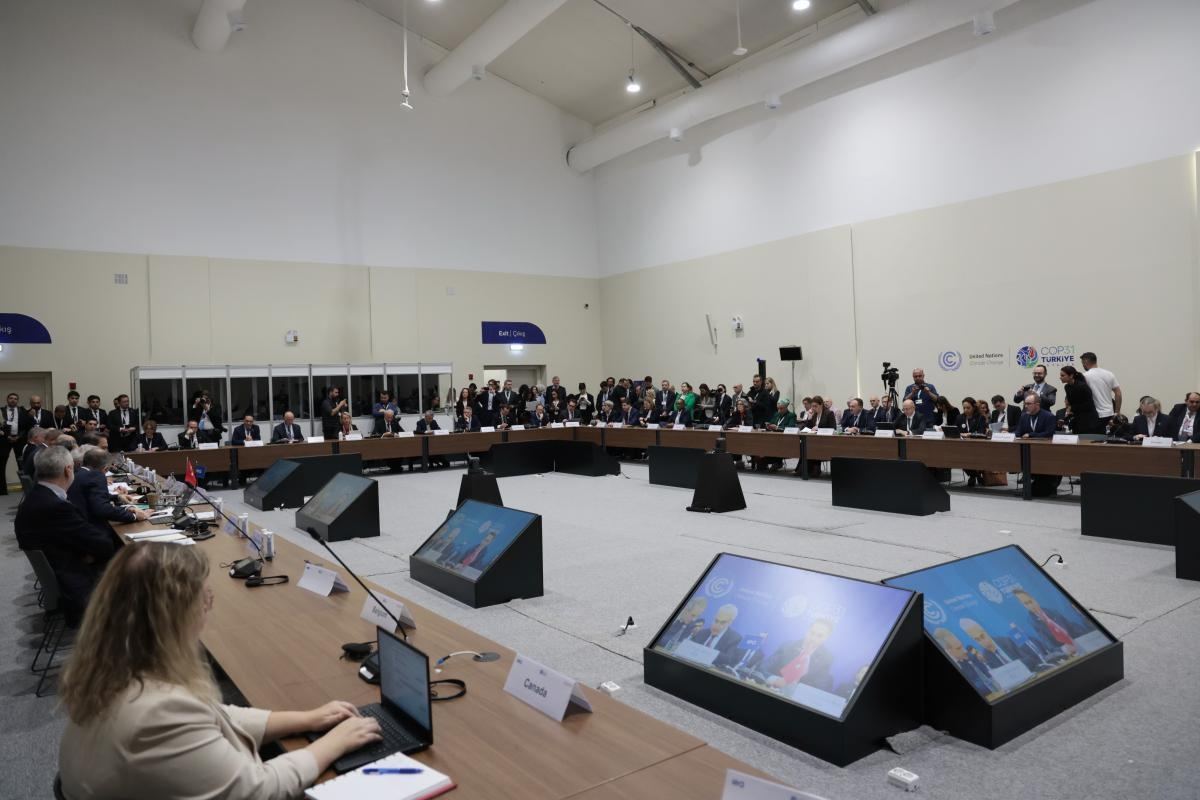
The United Nations climate summit continued into Saturday, November 21, in Antalya, Turkey, with governments still divided over emissions cuts and funding to address global warming. COP31 had been scheduled to finish on Friday. Instead, negotiators were trying to find language that could secure the consensus needed to bring the conference to a close.
At the center of the dispute is the presidency’s draft released on Thursday, November 19. The nine-page document makes no explicit mention of fossil fuels, unlike the initial proposal issued on Monday. France and Panama are among the countries seeking a clear commitment to move away from coal, oil and gas, according to the PA news agency.
The conference opened on November 9. Turkish Environment Minister Murat Kurum holds the COP presidency, while Australian Climate Change and Energy Minister Chris Bowen leads the negotiations. Kurum adjourned Friday evening’s plenary with key issues unresolved and said negotiating teams would prepare a new version, Hürriyet Daily News reported.
The Dubai commitment returns to the negotiating table
The first Antalya draft, dated November 16, reaffirmed the decision adopted at COP28 in Dubai in 2023. That decision called for transitioning away from fossil fuels in energy systems in a just, orderly and equitable manner, accelerating action this decade to achieve net-zero emissions by 2050.
The initial COP31 proposal also called for faster action to phase out fossil fuels. Both references disappeared from Thursday’s version. Countries are therefore debating how a new decision should carry the Dubai commitment forward. The Antalya proposals remain subject to revision and require their approval.
The difference affects the political direction of the energy transition. Naming the sources of emissions provides a basis for pressing governments to replace them. Language focused on technological solutions allows more room for disagreement over how quickly their use should decline. That is the issue behind demands for an explicit reference to fossil fuels in the new decision.
More electrification, but powered by what?
Bowen defended electrification on Friday as a way to advance the energy transition. In an interview published by the UN climate secretariat, he said negotiations would continue as long as necessary and emphasized that countries must reach consensus. He did not announce a final formula for settling the fossil fuel dispute.
Thursday’s draft proposes increasing electricity’s share of global final energy consumption to 35% by 2035. The target covers energy used by households and businesses. It does not mean that 35% of electricity must come from renewable sources, nor does it amount to a commitment to cut emissions by 35%.
The proposal links electrification to more modern and resilient grids, energy storage and better access to energy. It also describes it as complementary to efforts to triple global renewable energy capacity and double the global average annual rate of energy efficiency improvement by 2030. Those two ambitions were already included in the Dubai decision; the current talks concern how to move their implementation forward.
Another section promotes carbon capture, utilization and storage, particularly in sectors where emissions are difficult to cut. Proposed quantities remain in square brackets, indicating unresolved alternatives. The draft also recognizes a role for removing carbon dioxide from the atmosphere, while stating that removal should complement deep emissions reductions rather than replace or delay them.
Tripling finance requires an agreed starting point
Adaptation finance is another central issue. It helps communities and infrastructure prepare for the effects of climate change, alongside the investment needed to reduce emissions. For developing countries, access to funding shapes how much they can do to address risks that are already affecting their populations.
Thursday’s version retains a call for efforts to at least triple adaptation finance by 2035. However, it proposes asking the Standing Committee on Finance to report on options for setting the baseline. Without an agreed starting point, the promise to multiply funding does not, on its own, establish a specific amount.
Monday’s proposal included a minimum of $120 billion linked to that target. The figure was removed from the relevant section in Thursday’s revision. The change leaves open the discussion over how much funding should be provided, as well as the reference year and method used to establish the baseline.
The draft also proposes an Antalya-to-Addis Ababa Roadmap on Adaptation and Resilience Finance. It would seek more predictable and larger sources of funding, as well as ways to access them. The COP31 and COP32 presidencies would prepare a report for consideration in 2027. For now, this is a proposed work plan rather than a transfer of funds.
The document identifies barriers including the cost of capital, debt and developing countries’ limited budget capacity. It calls for public finance, grants and lending on favorable terms, and proposes simpler approval and disbursement procedures. Those conditions help determine whether an international pledge can become a project that protects communities without adding to their financial burden.
The 1.5-degree warning and the decisions still to come
The talks are taking place as the draft itself expresses concern that global warming is projected to peak above 1.5 degrees Celsius relative to preindustrial levels. It proposes limiting both the size and duration of that overshoot, while continuing deep, rapid and sustained emissions reductions.
The Paris Agreement, adopted in 2015, seeks to hold the rise in global average temperature well below 2 degrees Celsius and pursue efforts to limit it to 1.5 degrees. The World Meteorological Organization explains that these thresholds concern sustained long-term warming, typically assessed over 20-year periods.
The proposal emphasizes that harm would be lower at 1.5 degrees of warming than at 2 degrees. It also recognizes that each additional increment raises risks for people and ecosystems, with some consequences irreversible. A potential overshoot therefore does not remove the need to cut emissions or protect populations exposed to climate impacts.
The negotiations extend beyond the main political declaration. UN Climate Change Executive Secretary Simon Stiell said on Thursday that the agreed work program included 165 items that countries were required to address. Finance, adaptation and other processes have their own texts, so progress on individual issues does not automatically settle disagreements over the overall outcome.
The extension leaves room for countries to revise the proposals. The outcome will depend on the decisions they adopt, the clarity of their energy commitments and the arrangements for financing action. Until then, the targets and mechanisms in the drafts remain under negotiation.