Fossil CO₂ emissions could fall in 2026, but land-use change alters the picture
The Global Carbon Budget’s central estimate projects a 0.4% decline in fossil emissions. Its uncertainty range also includes the possibility of a slight increase.
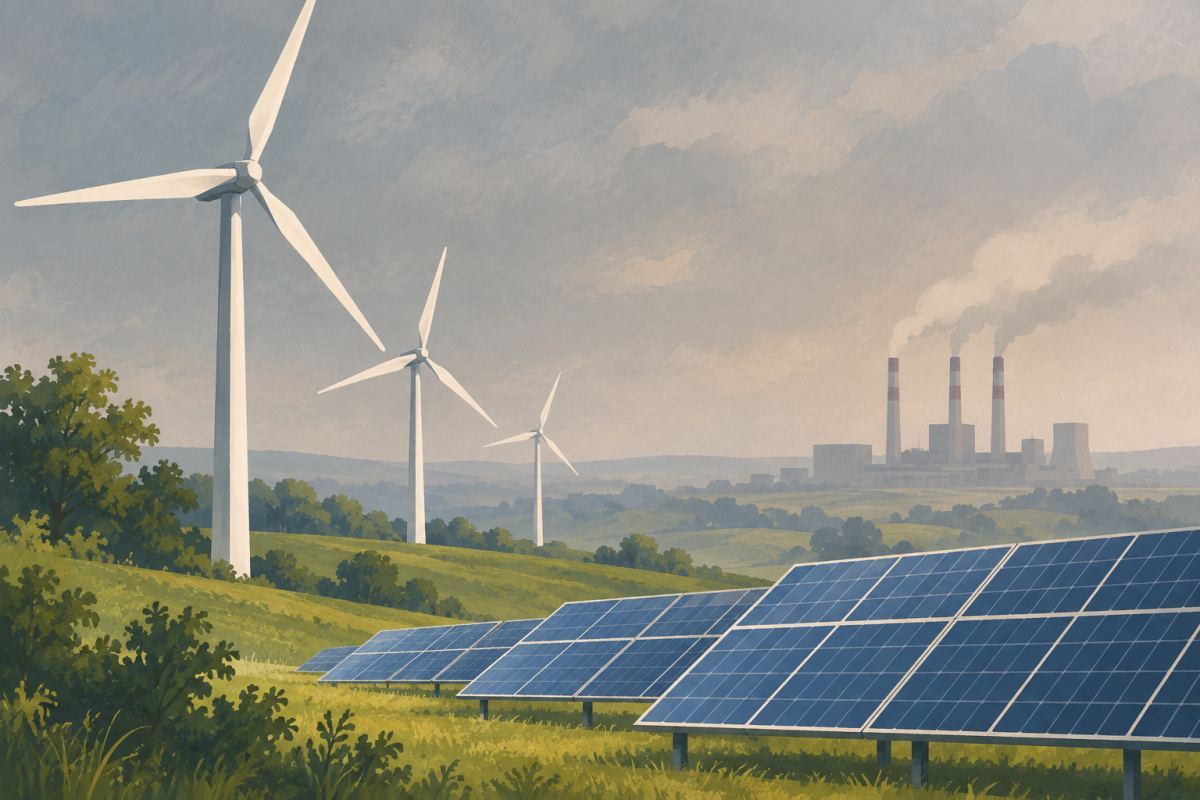
Global carbon dioxide emissions from fossil fuels and cement production could fall 0.4% in 2026, according to the central estimate in the Global Carbon Budget released on November 10. The projection combines growth in clean energy with an expected fall in oil use linked in part to energy disruption caused by the war with Iran.
The estimate is preliminary, with an uncertainty range from a 1.5% decrease to a 0.6% increase, according to the study’s summary. The research was released as a preprint and is under review for the journal Earth System Science Data.
The University of Exeter, a project participant, said fossil CO₂ emissions are projected at 38.2 billion metric tons in 2026. But the wider balance changes when emissions from land-use change, such as deforestation and forest degradation, are included.
Total emissions are still projected to rise
Estimated total CO₂ emissions—from fossil fuels and land-use change—reach 43.3 billion metric tons in 2026, compared with 42.8 billion in 2025, according to the university. A possible fall in the fossil component therefore does not mean a reduction in the combined total.
The project estimates that oil-related emissions could fall 1.9% this year. Researchers consider it likely that some of the decline reflects supply restrictions and prices linked to the conflict with Iran. That is a potentially temporary effect, distinct from a sustained change in the energy system.
At the same time, expanding solar and wind power and electric vehicles avoid some emissions that would otherwise be produced to meet growing energy demand. The researchers caution, however, that this growth does not yet guarantee a sustained decline in global fossil emissions.
One year does not define the trend
Among regional projections, the team estimates fossil emissions will decline 1.5% in the European Union, 1.3% in the United States and 1% in Japan. It projects a 0.9% reduction for China and a 4.4% increase for India. These are estimates for the full year, not final totals.
The study also projects that average atmospheric CO₂ concentrations will reach 427.7 parts per million in 2026, around 54% above the preindustrial level. Even if the rate of emissions falls slightly, CO₂ will continue to accumulate while emissions exceed the absorption capacity of natural sinks and other forms of removal.
The authors stress that a decline in a single year, especially if it depends in part on a geopolitical disruption, does not demonstrate that emissions have reached a permanent peak. Assessing that possibility will require observing the years ahead.