Google Cloud revenue doubles, but AI spending and investment losses weigh on Alphabet's earnings
Google's parent company reported $127.58 billion in third-quarter 2026 revenue, up 25%. A loss on equity investments reduced net profit, while infrastructure purchases pushed quarterly free cash flow into negative territory.
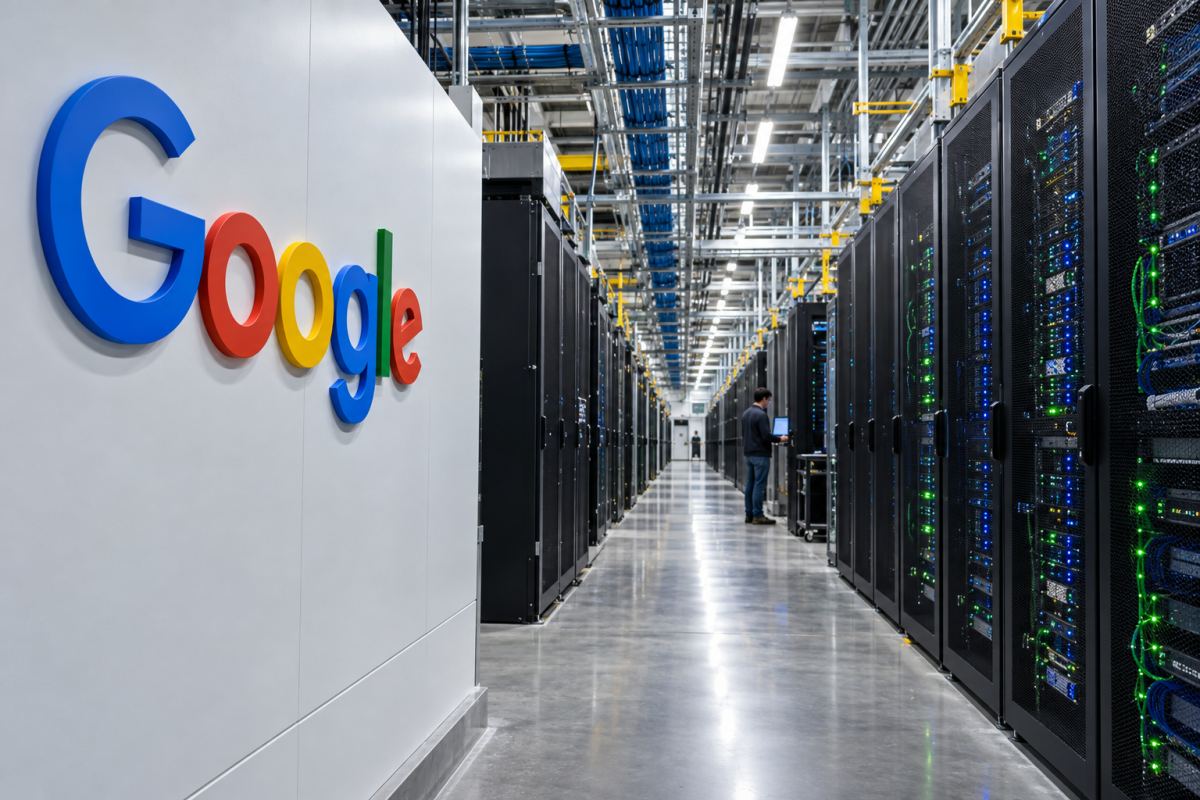
Alphabet reported a quarter of rapid growth on Wednesday — and a mounting bill for its artificial intelligence expansion. Google's parent company took in $127.58 billion from July through September 2026, 25% more than a year earlier. Google Cloud was the main growth engine, more than doubling revenue to $30.71 billion. But purchases of property and equipment exceeded the cash the company generated from operations during the quarter, while net income available to common shareholders fell from $34.98 billion to $26.17 billion.
Those figures tell different stories. The operating business did not contract: operating income rose 30% to $40.58 billion. The decline in net profit was driven largely by a loss on Alphabet's equity investments. Negative free cash flow, meanwhile, reflects the scale of spending on equipment and infrastructure as the company builds capacity for what it says is strong demand for AI and cloud services.
Investors' initial response was negative. Alphabet shares fell more than 10% in after-hours trading, according to the Associated Press. The drop came despite substantial sales growth: revenue fell short of the $127.97 billion average forecast from analysts surveyed by FactSet, as reported by the news agency. After-hours prices can change before the next regular trading session.
Cloud grows faster than the search business
Google Cloud brought in $30.71 billion, compared with $15.16 billion in the same quarter of 2025. Its operating income climbed from $3.59 billion to $11.12 billion. Alphabet attributed the increase to demand for enterprise AI infrastructure and services, growth in its established Google Cloud Platform offerings and sales of its TPU processor systems. The figures show that some of the company's technology spending is translating into revenue and profit within Cloud. They do not, on their own, establish when Alphabet will earn back its broader infrastructure investment.
Google Services remains the larger division. It encompasses Search, YouTube, Android and subscriptions, among other products, and its revenue rose 11% to $96.30 billion. Search and other Google advertising brought in $63.35 billion, up 12%. YouTube advertising contributed $11.21 billion, an increase of about 9%. Including its advertising network, Alphabet reported $82.01 billion in total ad revenue.
Sundar Pichai, chief executive of Alphabet and Google, told investors that year-over-year growth in search queries had reached its fastest pace in five years. That is a company-reported measure of use, separate from the growth in ad sales. Investors watch both because Search continues to help finance Alphabet's expansion, while AI-generated answers are raising questions about how the company will make money from future searches.
Infrastructure purchases outpace operating cash
Alphabet generated $42.29 billion in cash from operations during the quarter but spent $51.36 billion on property and equipment. The difference produced negative free cash flow of $9.07 billion under the company's definition — operating cash flow minus capital expenditure. The measure was also negative in the previous quarter, at $5.86 billion. Over the trailing 12 months, however, it remained positive at $19.75 billion.
Purchases of property and equipment more than doubled from $23.95 billion in the third quarter of 2025. That outlay is not an operating loss: it is spending to expand capacity that may generate revenue over several years. It also increases the pressure on Alphabet to sustain business demand and make productive use of the infrastructure it installs. One quarterly report cannot yet answer those longer-term questions.
Chief Financial Officer Anat Ashkenazi said on the earnings call that Alphabet was keeping its 2026 capital-spending forecast of $195 billion to $205 billion and expected another significant increase in 2027. The company did not provide a definitive spending figure for next year in this report. Separately, Alphabet-level activities — which include shared AI research — recorded a $7.66 billion operating loss, compared with $4.47 billion a year earlier.
Why net profit fell
Alphabet recorded an $8.66 billion loss on equity securities during the quarter. That adjustment, which can include realized and unrealized changes in value, reduced net income after taxes by $6.7 billion and diluted earnings per share by $0.55, according to the company. Earnings per share were $2.12, down from $2.87 a year earlier.
The distinction between operating profit and the final earnings figure is central to understanding the results. Operating income measures the businesses after their operating costs and expenses; net income also reflects investment results, taxes and other items. This time, revenue and operating income grew, while the investment loss weighed on the amount attributable to common shareholders. A different valuation of those investments in future quarters could again change the comparison without an equivalent shift in advertising or cloud sales.
Pichai also said the Gemini app had reached one billion users and Google's first-party model APIs were processing nearly 32 billion tokens a minute. Those are company-reported measures of adoption, not separate revenue lines in Alphabet's accounts. The next few quarters will test how much of that use becomes sustained sales and how much cash is needed to support the growth. September's results show both sides of the transition: Cloud is contributing much more operating profit, but the cost of adding capacity currently exceeds Alphabet's quarterly operating cash generation.