U.S. and Japan agree to establish AMRAAM final assembly facility in Japan
The two allies announced plans in the Philippines for a facility in Japan to assemble and test air-to-air missiles. They also agreed to share information to expand production of SM-3 interceptors, but gave no timetable or production targets.
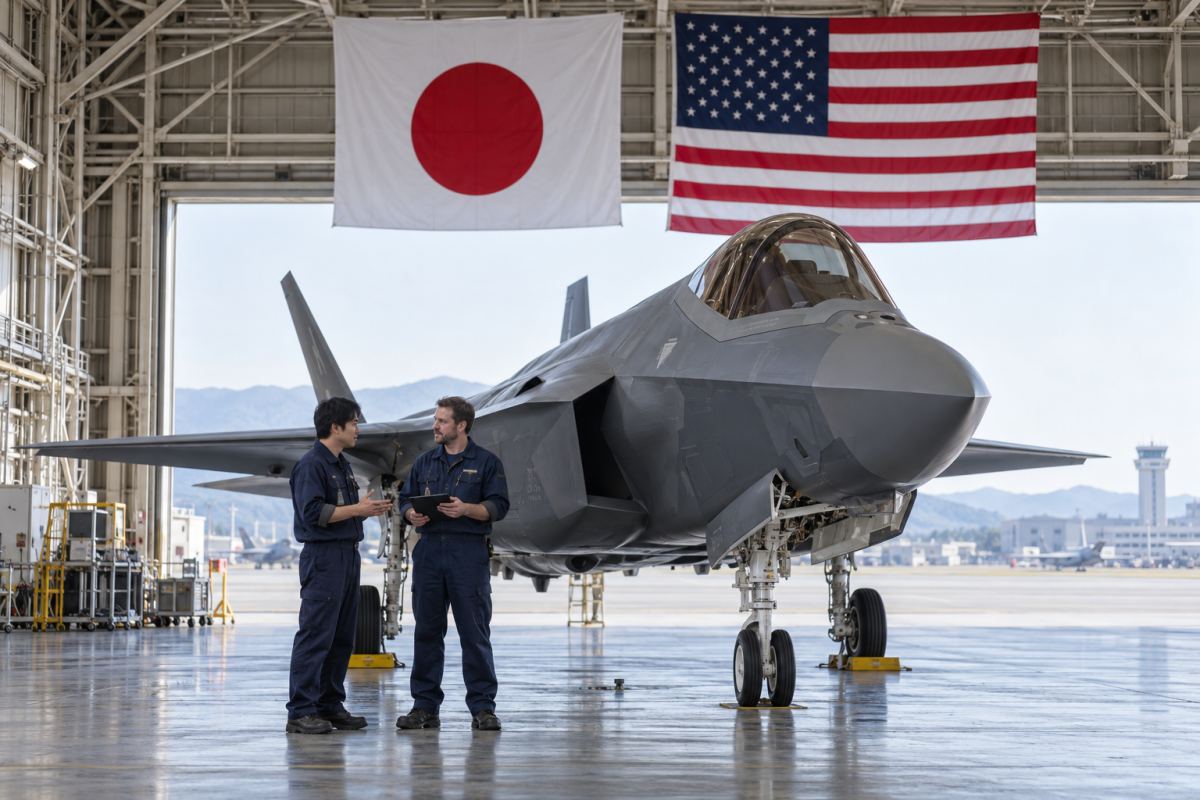
Japan and the United States have taken another step toward producing weapons together. Their defense officials agreed to establish a facility in Japan for the final assembly and testing of AMRAAM air-to-air missiles, according to a statement released by Japan’s Defense Ministry on October 28. The decision followed bilateral talks in Cebu, the Philippines, on the sidelines of a meeting involving Southeast Asian defense ministers and their partners.
The agreement sets out a specific industrial and military goal, but it does not mean a plant is already operating. Neither government disclosed where the facility will be located, what it will cost, when it might be built or how many missiles it could deliver. Japan’s Defense Ministry announced a second commitment: the two countries will share technical information needed to increase production of SM-3 Block IIA interceptors. The projects are separate parts of a bilateral initiative called Operation Supercharge.
Two missiles designed for different threats
AMRAAM is a medium-range air-to-air missile designed to let a fighter jet engage another aircraft from a distance. Japan’s announcement describes a FACO facility, using the industry term for final assembly and check-out. At a news conference, Defense Minister Shinjiro Koizumi said the missile is essential for the F-35 fighters operated by Japan. Carrying out part of the process in Japan could ease bottlenecks and help sustain its forces, although any such benefit will depend on the facility’s capacity, which has not been disclosed.
The SM-3 Block IIA has a different role. It is an interceptor used in ballistic missile defense. The talks in Cebu addressed the exchange of information that could allow its production to expand. The statement did not say whether that would happen at a new plant, on existing production lines or through changes among suppliers. Nor did it set a target number of interceptors. For both missiles, how the political agreement will translate into actual output remains an open question.
Koizumi and U.S. Secretary Pete Hegseth spoke for about 30 minutes on Wednesday morning, local time in the Philippines. Japan’s Defense Ministry said they agreed on the need to strengthen the alliance’s deterrence and response capabilities. They also discussed dispersing aircraft, improving access to facilities, expanding their presence in southwestern Japan and strengthening air and missile defenses. The industrial plans formed part of a wider set of defense discussions.
An alliance seeking a stronger response capability
Koizumi had proposed Operation Supercharge months earlier as a way to accelerate the development and joint production of defense equipment. In May, he had already cited AMRAAM and the SM-3 Block IIA as possible areas of cooperation. The October meeting turned that broad aim into two identifiable commitments: a FACO facility for AMRAAM and information-sharing intended to help produce more SM-3 interceptors.
Associated Press, which covered the Cebu meetings, reported Koizumi’s account of an increasingly serious regional security environment. The minister stopped short of presenting the talks as a measure aimed solely at one country. The official statement nevertheless placed the decisions in the context of growing military capabilities and activities by countries near Japan, and the need to prevent attempts to change the status quo through force or coercion.
Geography is central to that assessment. Japan’s islands lie near the Korean Peninsula and Taiwan, and the ministry specifically cited the need to strengthen the allied presence in Japan’s southwest. Tokyo also told Washington that it is reviewing its three national security strategy documents. The new agreement fits into that broader process, which considers how to respond to threats before they become an open military crisis.
The industrial decisions also have a less visible side. Building a complex weapons system requires components, skilled workers, testing and approvals from both governments. A final assembly line does not necessarily mean every component will be made in Japan. Details about suppliers and the Japanese share of the work will therefore matter in judging how much the project expands Japan’s own production capacity and how much of the supply chain will still depend on the United States.
The meeting also covered an issue unrelated to missiles but significant for the bilateral relationship. Koizumi again raised Tokyo’s position on a robbery and murder case in Okinawa this month involving U.S. forces personnel in Japan. The ministers agreed to continue discussions on preventing further incidents. Defense cooperation moved forward even as tensions over the U.S. military presence in Japan persist.
For AMRAAM, the next milestone will be an announcement of the facility’s location, its precise tasks and when it could begin operating. For the SM-3, the question is how the exchange of technical information will lead to greater production. The Cebu announcement confirms that Tokyo and Washington want to build more defense capacity together; the scale of that effort remains to be determined.