Eaton Fire smoke carried lead and arsenic far beyond the flames, study finds
Continuous air monitoring during the 2025 Los Angeles fires found that smoke from burning buildings had a different chemical makeup from wildfire smoke. Caltech estimates that nearly 7 million people experienced airborne lead concentrations far above normal levels over a 24-hour period.
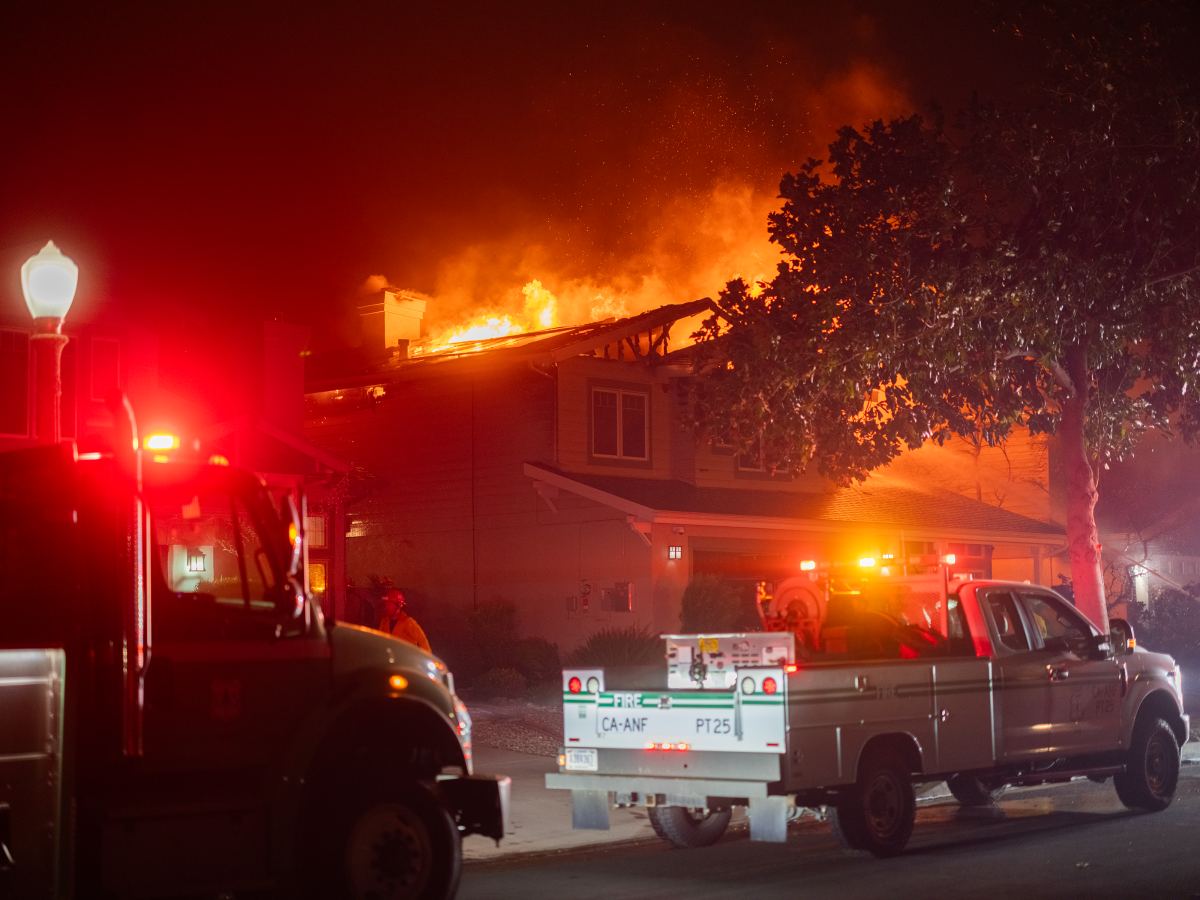
When the Eaton Fire swept through Altadena in January 2025, the danger extended beyond the homes it destroyed. Smoke carried metals and other substances released by burning buildings and vehicles into areas far from the fire. A study by California Institute of Technology researchers, published October 28 in Science Advances, offers one of the first detailed measurements of how a smoke plume changes chemically when a fire consumes an urban neighborhood as well as vegetation.
The researchers estimate that, at the peak of structural burning, nearly 7 million people in the Los Angeles area were exposed over a 24-hour period to airborne lead concentrations about 80 times higher than typical background levels. That is an estimate of environmental exposure, not a finding that every resident suffered lead poisoning. The scientists say the health effects of a brief exposure at those concentrations remain unknown.
What made the urban smoke different
The team compared smoke from the Eaton Fire with smoke from another Southern California fire that burned mostly vegetation. The plume associated with burning buildings contained more than 50 times as much lead, about seven times as much chlorine and bromine, and three times as much arsenic. Those figures compare particles measured during the two fires; they do not mean that everyone inhaled the same dose.
Homes, cars, electronics and building materials can release substances in proportions unlike those produced by burning trees and brush. Eaton provided a particularly revealing sequence: it began among Altadena’s buildings and then moved into the mountains. Instruments recorded the shift within a single fire. At first, the smoke had the chemical signature of an urban fire; later, it increasingly resembled smoke from burning vegetation.
The measurements came from an air-monitoring station in Pico Rivera, roughly 11 miles (18 kilometers) south of Altadena. Its instruments ran continuously during the fire. Routine air-quality reports often describe the total amount of fine particulate matter, such as PM2.5, but that measure alone does not reveal what the particles contain. A sample collected once a day can also miss spikes that last only a few hours. Continuous monitoring allowed the researchers to follow both the amount and the composition of the smoke as the fire moved.
The team also examined potassium, an element found in plants and released when they burn, alongside lead. On the days when more buildings were burning, the ratio of the two pointed to a strong contribution from urban materials. As the flames advanced into the San Gabriel Mountains, the ratio moved closer to what researchers see in wildfire smoke. That progression helps explain why warnings based only on the size of a fire or the total mass of airborne particles may miss a meaningful change in what people are breathing.
Widespread exposure, uncertain health effects
The study does not establish that the temporary rise in airborne lead caused any particular illness. Lead author Haroula Baliaka said more research is needed to understand short but intense exposures to several pollutants at once. The estimate of nearly 7 million describes people who may have breathed air affected by the plume during that period; it is not a count of people with documented medical harm.
The researchers also supplied historical context for the striking comparison. Typical airborne lead levels in Los Angeles had fallen by about 99% since leaded gasoline was phased out. The peak during Eaton was exceptionally high relative to today’s baseline, but it was close to concentrations that were common before the 1980s. That does not dismiss the potential risk. It shows why both the reference level and the duration of exposure have to accompany a figure such as “80 times higher.”
The Associated Press spoke with researchers about what the findings could change. The data could improve models that predict where hazardous smoke will travel when homes burn. Knowing the plume’s chemical makeup could help emergency officials assess which communities downwind need information and protection, even when the flames are miles away.
Caltech cautions that the strong lead signature may reflect features of Altadena, where many older structures burned. The same 80-fold increase should not be assumed for every urban fire. The study does, however, sharpen a question for officials responding to fires in populated areas: alongside measuring how much smoke is in the air, they need to know what it contains and where it is going.