María Corina Machado returns to Venezuela: her route to Caracas and the U.S. response
Machado reappeared in Barquisimeto and set out for Caracas. RTVE says she is in the capital, but a public appearance there had not been independently documented at the article's 5:09 p.m. cutoff.
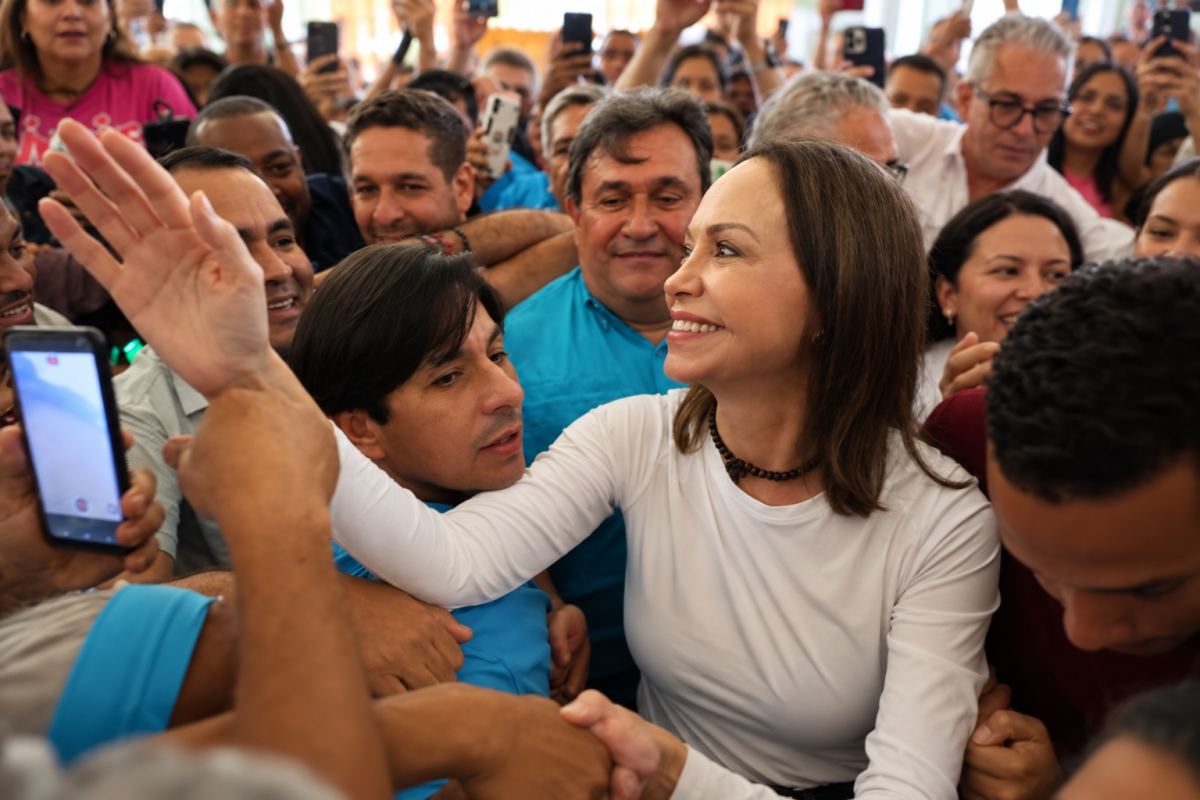
María Corina Machado returned to Venezuela on Sunday after nearly 10 months abroad. Her first verifiable public appearance was at the shrine of the Divine Shepherdess in Santa Rosa, near Barquisimeto in Lara state. She then left by vehicle toward Caracas, according to a Reuters witness and her team. As of 5:09 p.m. Caracas time on October 25, RTVE said it had independently confirmed that she was in the capital. AP, Reuters and the Venezuelan local coverage examined for this report, however, had not yet documented a public appearance by Machado there.
Images released by her party, Vente Venezuela, and photographs from news agencies establish that she was in Barquisimeto. The party announced a road journey with planned stops before she entered the capital. An invitation to welcome her at a particular location does not establish that she reached it. Her team has not publicly disclosed her exact whereabouts.
How she returned remains partly unclear
Machado announced her return in a short post on X: “I’m here. With you.” Her aides have not said where or how she crossed into Venezuela. Reuters, citing two people familiar with the journey, reported that she flew on a private aircraft from Panama to Colombia and then entered Venezuela by land. Neither Machado nor the Colombian or Venezuelan governments have publicly confirmed that account. It does not establish which border crossing she used or whether either government assisted her.
Once in Lara, Machado visited the church in Santa Rosa associated with devotion to the Divine Shepherdess. A Reuters journalist saw her leave in an SUV as people greeted her and sang the national anthem. AP described embraces and emotional scenes inside the church. Her team said she would continue to Caracas by road. El País reported that Vente Venezuela planned stops in Carabobo and Aragua before a gathering with supporters in the capital. Those were plans, not confirmation that each stop had taken place.
The return ends an absence that began in December 2025, when Machado left Venezuela to receive the Nobel Peace Prize in Oslo. Before that departure, she had spent extended periods in hiding. Her party says she tried several times to return this year without success. The operation that enabled Sunday's journey has not been fully explained.
Trump and Rubio respond differently
President Donald Trump told reporters at the White House that he had not known about Machado's return. He described her as a very nice woman, recalled that she had given him her Nobel medal and said he hoped she would be safe. He ended by saying the United States was doing well in Venezuela. He did not endorse a presidential bid by Machado or announce an election date. His measured response stood apart from the enthusiasm of her supporters, who see her return as a chance to speed up political change.
Secretary of State Marco Rubio credited U.S.-backed reconciliation talks with creating the security conditions for her return. He said the process had allowed political prisoners to be released and opposition figures living abroad to come home, and called for the rights of all political groups to be respected. He also said dialogue could lead to free elections and lasting democracy. The figures he cited for releases and returns were his own claims, not independently established totals.
The talks bring together Delcy Rodríguez's interim government and part of the opposition. Machado's movement is not taking part. She has returned to the country where any election will ultimately be decided, while the U.S.-backed negotiating process continues without her organization. No date has been set for a new presidential election.
Supporters gather in Venezuela as exiles react
The welcome in Barquisimeto appeared spontaneous. Hernán Adames, 69, told Reuters he hoped Machado could help bring freedom and democracy. Vente Venezuela also called for support caravans in Caracas and other cities. NTN24 reported on X that hundreds of Venezuelans gathered in Caracas's Plaza Altamira to welcome her and demand elections. Their gathering shows the anticipation among her supporters in the capital; it does not establish that Machado herself had arrived at the square. Nor can those supporters' views be taken as representative of all Venezuelans.
Families holding a vigil for political prisoners outside El Rodeo I also heard the news. According to El País, they passed word of Machado's return to those inside, and calls for justice and freedom could be heard from the prison. Former lawmaker Juan Pablo Guanipa urged that her return lead to releases and a timetable for a presidential vote. Henrique Capriles, who has differed with Machado in the past, welcomed the news as positive for people seeking change. On the government-aligned side, lawmaker Jorge Arreaza argued that dialogue should allow political opponents to participate rather than exclude one another. The government's press office did not immediately respond to Reuters about Machado's return.
From exile in Spain, Edmundo González Urrutia welcomed the news and said he would soon be with Machado in Venezuela, without giving a date. Venezuelan economist Ricardo Hausmann, who lives in the United States, raised concerns about her safety and said Washington and the interim authorities would bear political responsibility if she were harmed. Their reactions emphasize different questions: the prospect of a political reunion and the safeguards needed for Machado to remain in the country.
Machado won the opposition primary in 2023, but authorities barred her from running in the 2024 presidential election. González took her place on the ballot. The National Electoral Council declared Nicolás Maduro the winner without publishing polling-station-level tallies that would allow the result to be independently checked. The opposition released copies of tally sheets that it said showed a González victory. Maduro's capture by U.S. forces in January 2026 brought Rodríguez to the interim presidency and opened a new phase of negotiations, but it did not settle the dispute over electoral legitimacy.
Machado's return changes her ability to organize and negotiate from within Venezuela. It does not transfer power or guarantee an imminent election. What follows will depend on whether she can work freely, what protections are provided for prisoners and returning exiles, whether her movement can participate in institutional decisions, and whether a verifiable election timetable emerges. On her first day back, her presence in Lara was documented, her journey toward Caracas was reported, and supporters were waiting for her. The political test begins after the welcome.