ICE arrests two passengers during boarding at Seattle-Tacoma airport
The airport operator is reviewing whether agreed procedures were followed during Saturday’s operation. Alaska Airlines says it received no advance warning; ICE alleges that both passengers had overstayed their visas.
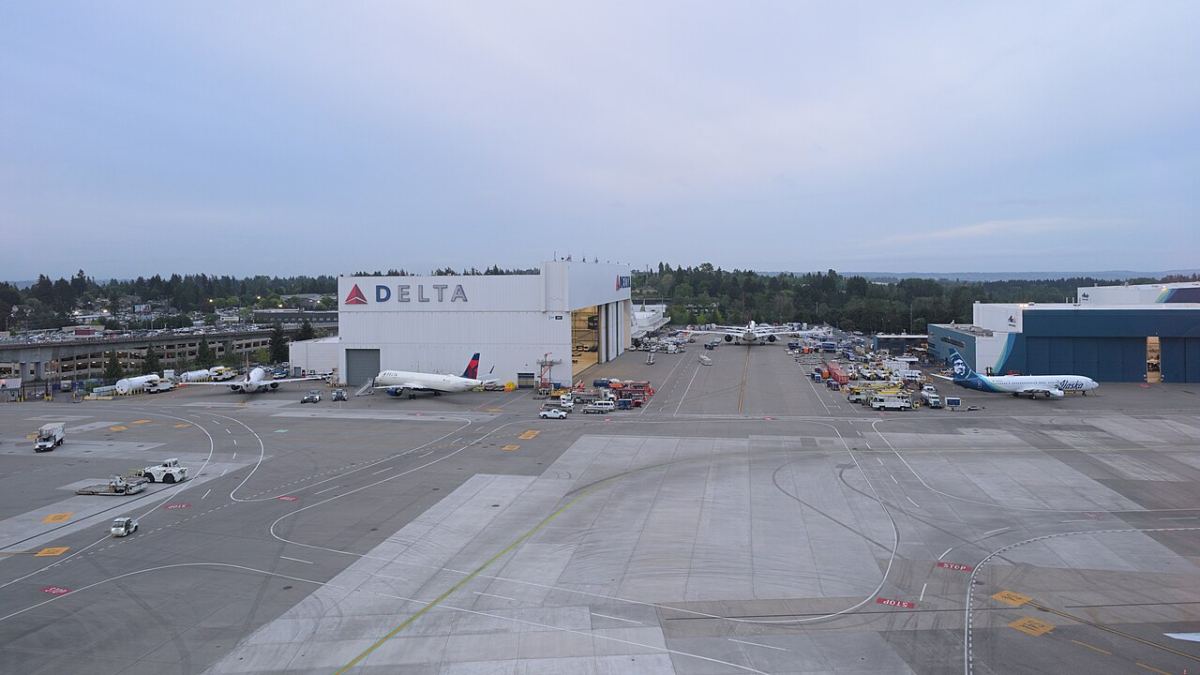
Immigration and Customs Enforcement officers arrested two people during boarding for an Alaska Airlines flight at Seattle-Tacoma International Airport on Saturday, November 21. The arrests took place on the jet bridge leading to a Los Angeles-bound aircraft, drawing criticism from Washington state officials and raising questions about how immigration operations are conducted around passengers and airline employees.
The Port of Seattle, the public authority that owns and operates the airport, said it was outraged by the incident. In a statement issued Saturday, it said the operation took place without its participation or knowledge. The Port is discussing the incident with the Department of Homeland Security, which oversees ICE, to determine whether previously agreed procedures were breached.
Washington’s Democratic governor, Bob Ferguson, condemned the officers’ tactics and renewed his call to abolish ICE, according to The Associated Press. The federal agency defended the operation, saying officers had initially targeted a man and arrested a second person after she threw hot coffee at them. That account of the confrontation comes from ICE.
The federal account and the boarding videos
In statements reported by AP and ABC News, federal authorities identified the initial target as Ricardo Larrondo Mendoza, a Mexican citizen. They alleged that he had remained in the United States beyond the period allowed by his visa. They identified the second person arrested as Sofia Hernandez Mejia, also Mexican, alleging that she had overstayed her visa and thrown coffee at officers.
DHS said Hernandez Mejia would be charged with assaulting a federal officer, ABC News reported. That announcement states an intention to bring a criminal charge; it is not a court finding of guilt. The federal explanations released Saturday focused on the grounds for the arrests and did not say where either person had been taken after being detained.
Footage described by AP and ABC shows masked officers, passengers crowded onto the jet bridge and at least one person being dragged away. A crying woman can also be heard saying her daughter was arrested despite having a work permit. Her account differs from the federal explanation, but the recordings alone do not establish the immigration status of the people detained.
The operation affected flight AS1306, scheduled to depart for Los Angeles at 8:10 a.m. Pacific time on Saturday. AP reported that the flight was delayed. Passengers were preparing to board when the arrests took place, putting the confrontation in a confined passage where travelers and airline staff are normally moving toward the aircraft or helping people onto the flight.
What the airport and Alaska Airlines are reviewing
The Port’s statement described the incident as distressing for the family involved and for other passengers. It said local federal immigration officials had previously agreed to protocols for operations at Seattle-Tacoma. Its discussions with DHS are intended to establish whether those procedures were followed. The statement did not announce a finding that the federal agency had breached an agreement.
Alaska Airlines also said it had received no advance warning and expressed concern about the impact on customers and employees. The airline said it does not direct or coordinate immigration enforcement. In its response, reported by ABC News, it said it seeks to protect passengers’ privacy and safety where possible and is reviewing what happened with the airport operator.
April Sims, president of the Washington State Labor Council, said union members were aboard the flight, according to AP. That response brought the working environment at the airport and on airlines into the debate. For employees helping passengers board, an enforcement operation on a crowded jet bridge raises immediate safety questions alongside the dispute over the arrests themselves.
The reviews concern two separate issues: the federal decisions to detain particular people and the procedures used to carry out an operation inside an airport. The Port is speaking with DHS about those procedures. Alaska, meanwhile, said it is working with the governor and the airport authority to examine standards for safe air travel following the incident.
Who has authority inside Seattle-Tacoma?
The airport operator’s public guidance explains that Seattle-Tacoma is a public-use airport governed by federal regulations. Federal officers have broad access to its facilities, including the airfield, terminal areas on both sides of security screening, parking garages and access roads.
The Port also says it cannot interfere with federal law enforcement operations or broadly prevent federal agencies from accessing airport property. Entry to areas restricted to Port employees, tenants or their employees requires a judicial warrant or other authority to enter. That is a specific restriction on particular spaces, rather than a rule placing the entire airport beyond federal officers’ reach.
The Port of Seattle Police Department has a separate role: maintaining safety and security at its facilities. The Port says its officers do not conduct, assist or actively participate in immigration enforcement. The presence of ICE officers in a terminal therefore does not, by itself, mean the operation is being carried out jointly with the airport operator’s own police force.
That distinction also underpins Port Commission Order 2026-02, adopted on February 10. It calls for Port police to be clearly distinguishable from federal agencies through identification, uniforms and organizational changes. It also requires advance notice to airport officials of planned high-visibility operations and training conducted in public areas by the Port’s own police department.
The February restrictions and their limits
A second measure, Order 2026-03, adopted on February 24, restricts the use of Port property for civil immigration detention facilities and support facilities, such as equipment storage, vehicle staging or operational briefings. New leases and permits must not authorize those facilities. Existing agreements are to be reviewed for consistency with the order and applicable law where practical.
The order includes exceptions for current, limited facilities and where its restrictions conflict with federal law. It does not amount to an outright ban on ICE operating at Seattle-Tacoma. The Port can set conditions on how its property is used while recognizing federal powers it does not control. Those two aspects of its policy operate alongside one another.
The same order calls for rights training for workers and tenants, delivered by people with expertise in immigration law and civil rights. It requires a rapid process for checking reports of immigration activity to reduce confusion, as well as coordination with state and regional authorities. Information must be available in several languages, including Spanish and Japanese.
After Saturday’s arrests, the immediate questions are what happened on the jet bridge and whether officers followed the procedures agreed for operating there. The Port continues to seek explanations from federal officials while Alaska reviews the incident. The dispute over the officers’ tactics remains unresolved. The next steps in the immigration cases and the criminal prosecution announced by DHS also remain unclear.