US Army delays Iowa lead azide detonations until Monday
The operation scheduled for Friday, November 20, in Middletown has been moved to November 23. The delay follows calls for clearer information about lead dust risks and a legal challenge to the environmental permit.
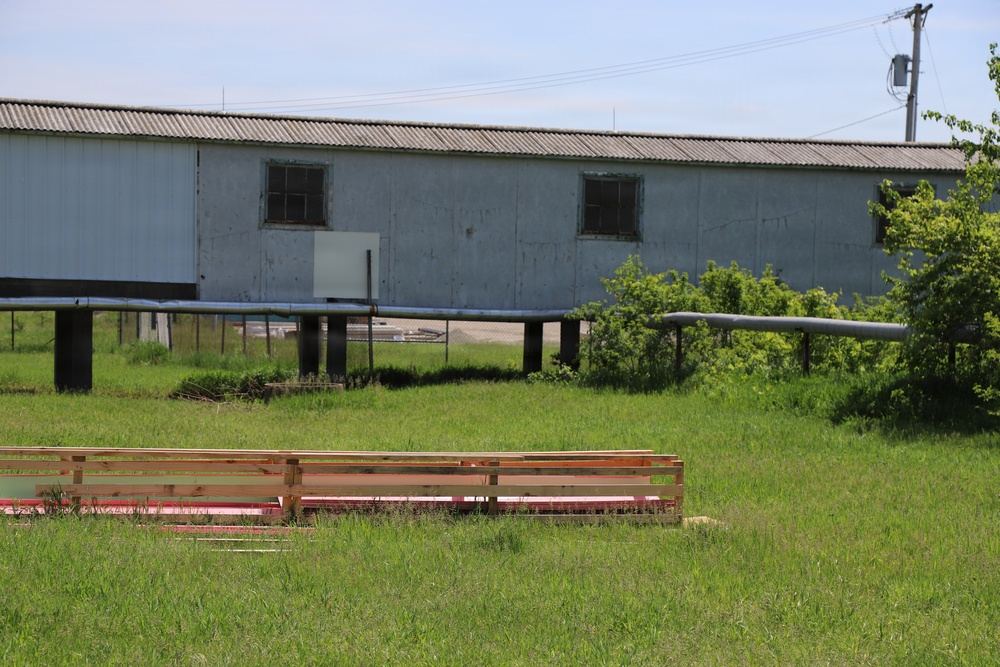
The US Army has postponed the destruction of deteriorated lead azide at its ammunition plant in Middletown, Iowa, until Monday, November 23. The detonations had been scheduled for around noon on Friday, November 20. The decision changes the timetable for an operation that has raised concern about lead particles potentially spreading beyond the military installation.
Acting Army Secretary Adam Telle announced the change Thursday evening. He said Monday was the latest possible date before a forecast temperature drop that, according to the Army’s assessment, could further destabilize the material. His statement did not give a new time for the operation.
Iowa Gov. Kim Reynolds confirmed that she had spoken with Telle to request a delay. Earlier Thursday, two environmental groups asked the US Court of Appeals for the Eighth Circuit to review the emergency permit and put it on hold.
The material remains a safety concern
The operation is still planned as a controlled detonation at the storage site. The Army maintains that this poses the lowest risk to people living nearby and in surrounding areas.
The Environmental Protection Agency identifies 68 drums of degraded lead azide. Its notice explains that deterioration has made the material particularly sensitive and that handling or moving the containers could trigger an accidental explosion. The agency issued its authorization to address what it considers an imminent and substantial threat to human health and the environment.
Telle said the Army discovered the problem in March and had since been communicating with officials and residents in Middletown and the modeled impact area. Cold weather is one of the risks the Army says it is considering in setting the schedule. Communities’ potential exposure will also depend on weather conditions during the operation.
Reynolds sought a delay as groups requested a court stay
In a November 19 statement, Reynolds said she had directly asked Telle to postpone the operation and thanked him for doing so. She joined the officials asking for more time before the operation could proceed.
Iowa Public Radio reported that Republican and Democratic lawmakers had called for clearer answers about risks and precautions. The Army said it would continue working with state and local officials to distribute updated information.
Earthjustice brought the challenge on behalf of the Iowa Environmental Council and the Sierra Club’s Iowa chapter. In their Thursday motion, the groups argued that the EPA had failed to require adequate consideration of less dangerous alternatives, sufficient safeguards and timely public notice.
They requested an urgent ruling by 10 a.m. Central time Friday, based on the original schedule. Telle’s announced postponement is an Army decision. The objections in the filing are the groups’ allegations, rather than judicial findings that the permit is unlawful.
The permit requires sampling, monitoring and cleanup
The EPA issued the emergency permit on November 13 and published its notice on November 16. It authorizes storage and treatment of the waste at a location within the installation that was not covered for those activities by its existing environmental permit.
The emergency permit runs from November 13, 2026, through February 11, 2027. That administrative period is separate from the date chosen for the operation. The Army’s postponement does not amount to the EPA withdrawing its authorization.
The permit requires advance notification of potentially affected areas, sampling and monitoring before, during and after the detonations, cleanup of contaminated areas and reports to the agency.
Monitoring will need to help assess both airborne particles and material deposited on surfaces. Having a permit does not remove the need to establish the operation’s actual environmental effects.
The new date makes updated projections essential
Iowa health officials explain that the Army’s maps project potential airborne exposure and dust deposition. They are not measurements of contamination that has already occurred. Their extent may change with the weather.
That distinction affects communities on both sides of the Mississippi River. In a November 18 statement, Illinois officials warned of possible impacts in Mercer County based on the modeling available then. They also said the Illinois communities potentially affected could change as those calculations were updated.
Illinois requested post-detonation sampling of air, soil and surface dust, public release of the results and action to address any impacts. That request reflects the possibility of particles crossing the state line. It does not establish that the whole state will be exposed.
For Monday’s schedule, residents need the latest Army and local government notices. Temporary relocation times, exposure areas or forecasts issued for Friday should not automatically be treated as current instructions for the new date.
Health precautions are tied to the detonation
Iowa’s health information identifies two main exposure routes: breathing airborne particles and coming into contact with deposited dust that may then be swallowed. Young children and pregnant women need particular attention.
The guidance issued for the operation recommends that residents in potentially affected areas remain indoors with doors and windows closed for 24 to 48 hours after detonation, unless updated official instructions say otherwise. This precaution is linked to when the operation takes place. It is not a general stay-at-home order for Friday following the postponement.
The document advises cleaning potentially affected surfaces with soap and water once the airborne exposure period has ended, avoiding dry sweeping and reducing the amount of dust carried indoors through handwashing and removing shoes at the entrance.
People concerned about possible exposure should consult a healthcare professional about whether blood lead testing is appropriate. The pause leaves the material awaiting disposal and preserves the need for updated information, environmental monitoring and protection for nearby communities.