Taiwan reports 49 Chinese military flights in 24 hours, its highest daily count of 2026
The Defense Ministry also detected six Chinese naval vessels and six official ships. The reporting period ended at 6 a.m. Tuesday, local time.
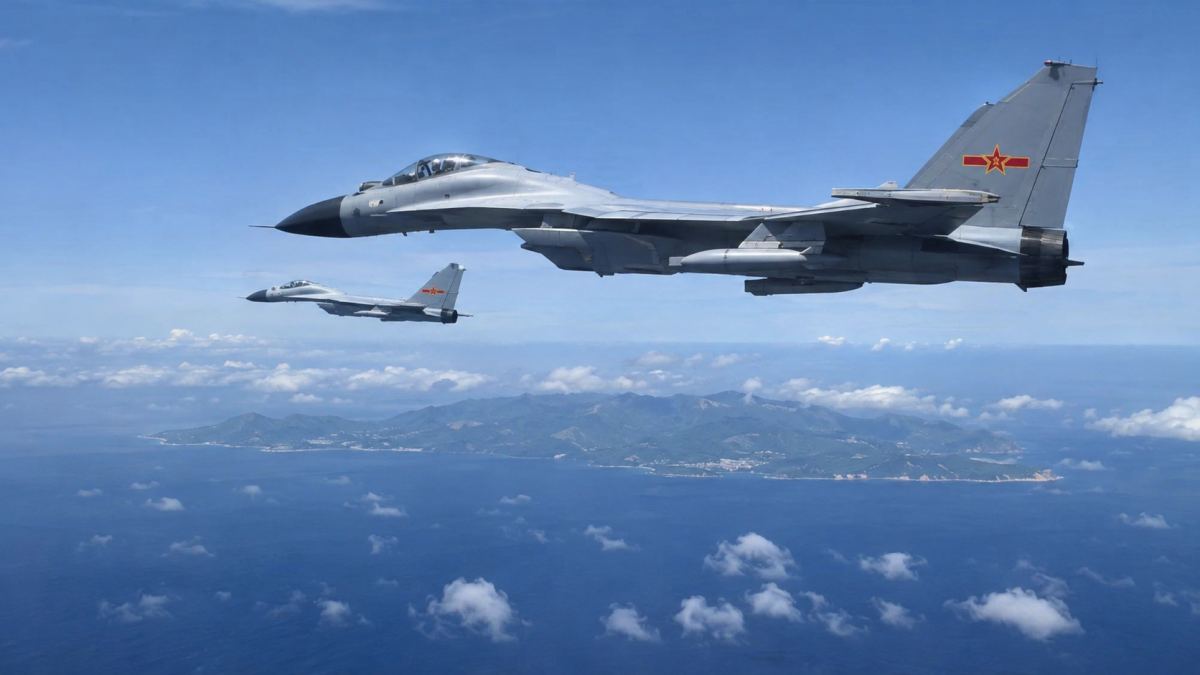
Taiwan's Defense Ministry on Tuesday reported 49 Chinese military aircraft sorties in the area around the island over a 24-hour period, the highest daily count so far in 2026, according to Taiwanese media and news agency EFE. The report coincides with a sustained Chinese naval presence in regional waters, keeping attention on security in the Taiwan Strait.
The reporting period ran from 6 a.m. Monday to 6 a.m. Tuesday, November 3, Taipei time. During that interval, Taiwanese authorities also detected six Chinese naval vessels and six other official ships. Taiwan's armed forces said they tracked the movements using aircraft, ships and land-based missile systems.
The ministry counts aircraft activity or sorties: the 49 detections do not necessarily mean 49 different aircraft were involved. Of the total, 31 flights crossed the strait's median line and entered the central, southwestern and eastern sectors of Taiwan's air defense identification zone, according to the ministry's English-language statement.
An air defense identification zone is not the same as the island's territorial airspace. It is a monitoring area extending beyond it. Taipei's announcement described movements in identification zones and around Taiwan; it did not report that the aircraft had flown over the main island's territory.
A one-day increase
The previous daily high for 2026 was 42 flights, according to EFE. The count of 49 included several types of military aircraft; the agency mentioned fighters, bombers, drones, helicopters and support aircraft. The report does not establish that they all performed the same role or took part in a single announced exercise.
The Defense Ministry's daily count is a snapshot of detections within a specific window. Activity can vary from one day to the next, so a high figure alone cannot establish the duration of an operation or predict Beijing's intentions.
Taiwan publishes these reports to communicate the military activity it observes nearby. The strait's median line has served for years as an informal reference between the two sides, although Beijing does not recognize it as a border. Crossing it brings forces closer together in an area with heavy air and maritime traffic.
The ministry did not announce any clashes in Tuesday's report. Its statement also did not identify a Chinese explanation for the increase in activity. Describing the movements as preparations for an imminent attack would go beyond the information released.
The maritime dimension
The air activity comes as Taipei monitors Chinese naval movements in the western Pacific. EFE reported the presence of a group led by the aircraft carrier Liaoning, deployed in the area for exercises since mid-October.
Last week, Joseph Wu, secretary-general of Taiwan's National Security Council, drew attention to Chinese ships operating east of the so-called first island chain, which encompasses territories and archipelagos stretching from Japan through Taiwan to the Philippines. He said the activities posed a threat to Taiwan, Japan and the Philippines.
The six naval vessels and six official ships recorded in the 24-hour report are specific to that reporting period. They should not automatically be added to figures on a regional map published on another date: the two reports describe different areas and times.
For governments in the region, the focus extends beyond the number of ships or flights. Location, the duration of operations and communications between forces also affect the risk of incidents. The strait is also an important route for maritime trade, giving any disruption to shipping an international economic dimension.
One indicator among several
The daily spike comes in a year when Chinese air operations around Taiwan have declined compared with the previous two years, while the maritime presence has increased, according to EFE's analysis of the ministry's reports.
The agency calculated that 2,335 Chinese military aircraft movements had been recorded around Taiwan in 2026 up to this report, approximately 49% fewer than in the same period of 2025. That is a sum of Taipei's daily reports, rather than an inventory of individual aircraft.
The comparison puts Tuesday's high in context: it can be the largest count on a single day this year while remaining part of a cumulative total below that of the previous year. Changes in ship activity represent a separate dimension and need to be tracked independently.
The disagreement between Beijing and Taipei
China considers Taiwan part of its territory and has not ruled out using force to gain control. Taiwan's government rejects that position and says the island's political future should be decided by its people. Taiwan has been governed separately from mainland China since 1949.
Tensions around the strait also affect China's relations with the United States and its Asian neighbors. Washington maintains security ties with Taiwan and supplies defensive weapons to the island, while Beijing opposes what it regards as external support for separation.
Taipei's report covers activity up to 6 a.m. Tuesday, local time. Authorities will continue to monitor military and maritime traffic, and subsequent reports will show how the deployment develops after that cutoff.