Aftershocks continue off California after magnitude 5.0 Manhattan Beach earthquake
A magnitude 4.0 aftershock hit off Hermosa Beach on Saturday night. Manhattan Beach closed its pier and restricted access to some buildings.
Earthquakes continued off the Los Angeles County coast early Sunday after a magnitude 5.0 shock rattled Southern California on Saturday morning. The U.S. Geological Survey recorded a magnitude 4.0 aftershock off Hermosa Beach at 8:09 p.m. Saturday and a preliminary magnitude 3.3 in the same area at 9:07 p.m. Its catalog listed more than 100 earthquakes within 12 miles of the mainshock’s epicenter between the initial jolt and 1:58 a.m. Sunday, Pacific time. Most were below magnitude 2.5.
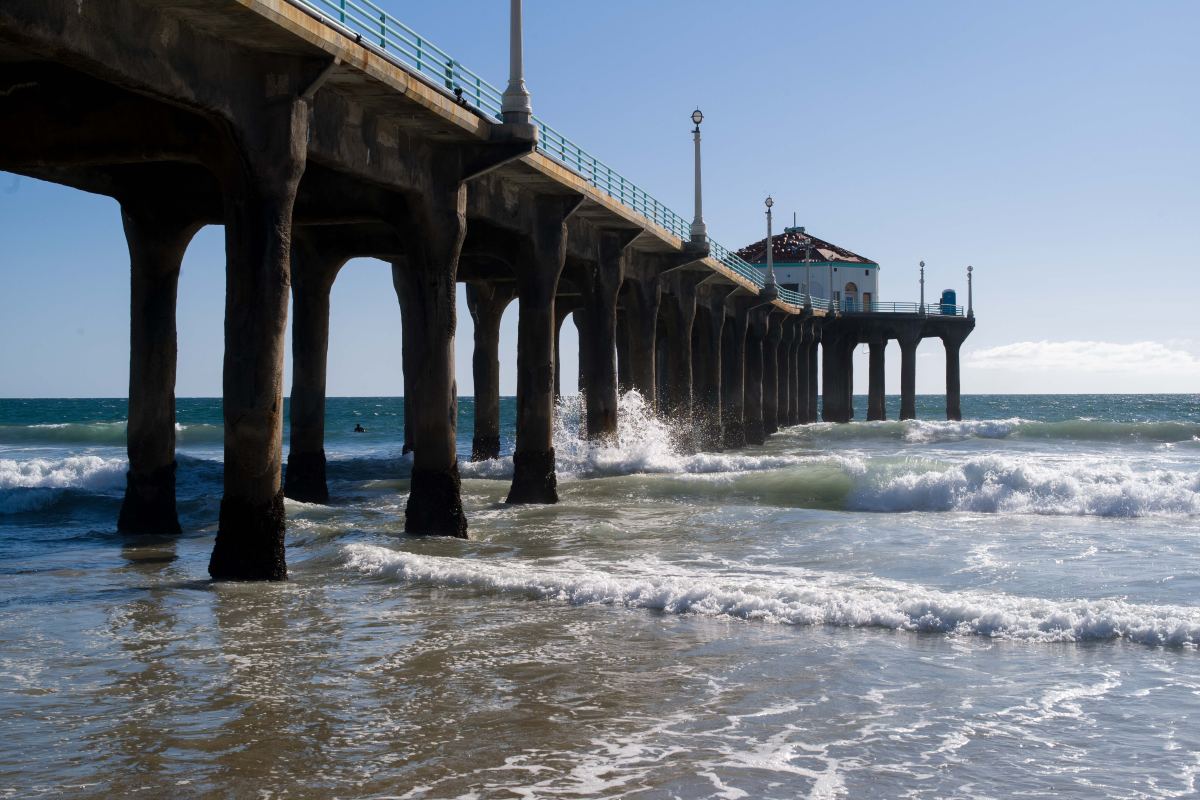
Building inspectors in Manhattan Beach were assessing damage to homes and businesses. The city said some properties had been posted with red or yellow safety notices and that the Manhattan Beach Pier was temporarily closed. The Los Angeles Fire Department, which carried out two rounds of inspections within the city of Los Angeles, reported that crews had found no significant damage to structures or infrastructure and no injuries there. Manhattan Beach has its own municipal government and emergency services.
The mainshock came at 9:30 a.m. Saturday, November 28, about 3 miles southwest of Manhattan Beach. The USGS and the Southern California Seismic Network put its depth at roughly 8 miles. The strongest subsequent quake recorded in the area was magnitude 4.5, at 11:41 a.m., about 4 miles west-southwest of Manhattan Beach. Shaking reached Los Angeles and other parts of the region on a busy travel weekend after Thanksgiving.
Inspections and closures in the South Bay
The initial shaking sent crews from all 106 Los Angeles neighborhood fire stations out to check critical infrastructure. The department ended its first earthquake response at 10:40 a.m. and reactivated it following the stronger aftershock. It returned to normal operations at 12:38 p.m. after the second survey. The department’s reports covered the city of Los Angeles, which includes Los Angeles International Airport but lies outside the jurisdictions of the neighboring beach cities.
At LAX, some windows at Terminal 7 broke, El País reported, citing a spokesperson for Mayor Karen Bass. The spokesperson said flights and passenger traffic were unaffected. NBC Los Angeles reported that the Los Angeles Department of Water and Power had seen no service disruption from the shaking. In Manhattan Beach, local inspectors continued going through properties as the evening sequence unfolded.
Saturday was Small Business Saturday, a holiday shopping day that encourages people to buy from independent stores. The local outlet MB News reported that shopkeepers in downtown Manhattan Beach were cleaning up broken merchandise. Kris D’Errico, the owner of two clothing stores, told the outlet that a crack about four feet long had appeared in a wall behind where she had been sitting. At Universal Studios Hollywood, a burst pipe flooded part of the park on Saturday afternoon. A park spokesperson told the Los Angeles Times the break was unrelated to the earthquake. The park remained open while the affected area was closed for repairs.
California’s emergency services office uses red placards to indicate that a building is unsafe to enter or occupy. Yellow means access or use is restricted according to the posted notice. Manhattan Beach did not give a total for properties put under either restriction in its Saturday update. The city also said that police and firefighters were coordinating with other agencies and that there was no tsunami threat at the time of the update.
The city said residents might see intermittent flaring for up to 48 hours at the Chevron refinery in neighboring El Segundo, which was conducting contingency flaring. The city said no action was required from the public at the time. The most visible closure in Manhattan Beach was its pier, where the city suspended public access as a precaution while monitoring conditions.
What the measured shaking shows
The federal catalog’s reviewed magnitude of 5.0 reflects data collected after the first alerts. The report on the ShakeAlert warning shows that an initial message went out about five seconds after the mainshock started, using an early estimate of 4.7. Those first estimates give emergency systems a basis for a warning while seismologists gather more measurements. People near the epicenter can feel the shaking before a phone alert reaches them.
By early Sunday, more than 28,000 people had submitted reports for the mainshock to the USGS through its Did You Feel It? program, which asks what they noticed at their locations. The survey responses help map how far the shaking was felt. Inspections by local authorities provide a separate record of building and infrastructure damage. In Lomita, southeast of Manhattan Beach, Teresa Macias told The Associated Press that bottles she decorates fell to the floor and her dog hid under her bed.
The 8:09 p.m. aftershock off Hermosa Beach drew more than 2,000 reports of its own to the USGS. The 9:07 p.m. event was followed by smaller tremors along the same stretch of coast, including one that instruments detected shortly before 2 a.m. Sunday.
What the USGS expects over the next week
The forecast in effect early Sunday covers the week from 9:40 p.m. Saturday through the evening of December 5, Pacific time. The USGS put the chance of at least one aftershock of magnitude 4.0 or greater at about 36 percent over that period. It estimated a roughly 4 percent chance of one reaching magnitude 5.0 or greater. The figures refer to the offshore sequence around Manhattan Beach and can change as the agency incorporates new observations.
Seismologist Lucy Jones told reporters that the sequence had been somewhat more active than average and remained within the range seen after earthquakes of this size. Small tremors become less frequent as a sequence ages. Some aftershocks can still be strong enough to feel in communities around the South Bay, particularly near the offshore zone where Saturday’s activity was concentrated.
Local guidance as inspections continue
The Los Angeles Fire Department advises people who are indoors when shaking starts to get low, protect their head and neck, take cover under sturdy furniture when possible and hold on until it stops. Manhattan Beach’s fire chief urged residents to check for damage and heed building restrictions. The city also advised having chimneys inspected before lighting a fireplace, since shaking can damage sections of the chimney that are out of sight.
The city also urged people to stay clear of damaged buildings and downed power lines. Anyone who smells gas or hears a leak should leave the building without touching light switches or using a phone inside. Manhattan Beach advises calling 911 and the gas utility once safely outside.