Mike Love, longtime Beach Boys frontman and co-founder, dies at 85
The longtime Beach Boys frontman helped write ‘Good Vibrations’ with Brian Wilson and took the California band’s songs on the road for more than six decades.
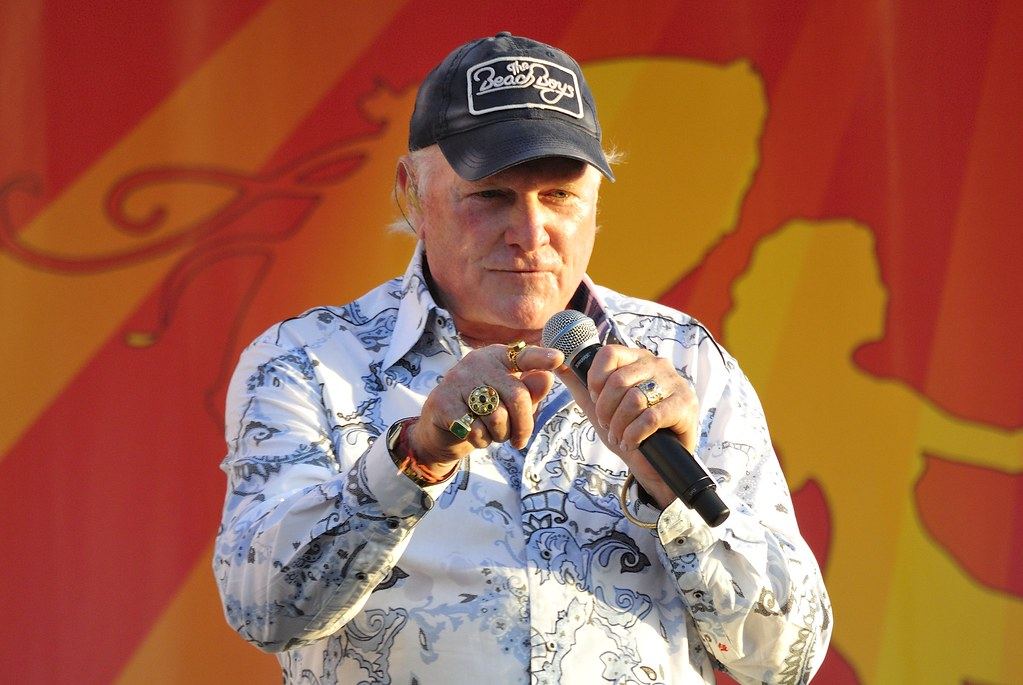
Mike Love, the Beach Boys co-founder who gave “California Girls” its lead vocal and helped write “Good Vibrations,” died Saturday, November 28, at 85. His publicist, Katie Altman, told NPR and other outlets that Love died with his family around him. She gave no cause of death.
Love spent more than six decades associated with the band that took shape among the Wilson brothers and their circle in Hawthorne, California. In its first years, he helped turn the language of school, cars and the beach into choruses that listeners could sing back. As the group’s arrangements grew more elaborate, the words he wrote with Brian Wilson gave the recordings another point of entry. He also became the band’s chief presence on the road, bringing the songs to new audiences long after the cousins stopped working together regularly.
The Los Angeles Times placed his final concert at the Ryman Auditorium in Nashville in October. John Stamos, the actor and musician who had performed with the group for decades, had spoken publicly about Love’s health that month. After his death, Stamos paid tribute to his friend on Instagram, as NBC reported.
The cousin at the microphone
Michael Edward Love was born in Los Angeles on March 15, 1941. He sang with his Wilson cousins growing up and briefly worked in his father’s sheet-metal business. In 1961, he formed the Beach Boys with Brian, Dennis and Carl Wilson and their friend Al Jardine. The group recorded “Surfin’” that year and signed with Capitol Records in 1962. Its first album for the label, Surfin’ Safari, followed that year.
The voices were part of the attraction from the beginning. Love’s nasal edge on the lively “Surfin’ U.S.A.” made it easy to pick him out of the harmony. Brian’s falsetto gave the quieter “In My Room” a different intimacy. A listener could move between those worlds on records made by the same group, even as radio and the band’s image emphasized the beach songs.
Love often wrote the words that completed ideas Brian brought to him. In his 2016 memoir Good Vibrations, written with James S. Hirsch, he described sketching a restless teenager looking for somewhere else to drive in “I Get Around.” The narrator is already well known in his neighborhood, and that is part of what bores him. The song became the band’s first Billboard Hot 100 No. 1 in 1964. “Help Me, Rhonda” reached the top in 1965, with Jardine singing lead, another reminder of how the group could reshuffle its voices from one single to the next.
From “California Girls” to “Good Vibrations”
“California Girls,” released in 1965, showed how much room there was inside the Beach Boys’ formula. Wilson’s orchestral opening gives way to Love’s lead vocal and a chorus built around the idea of California as a place worth imagining from anywhere. The same partnership worked on a different scale the following year, when Wilson assembled “Good Vibrations” in sections recorded at several studios.
The band’s account of those sessions describes preliminary lyrics by Tony Asher, with Love taking on the words for the version the group released. He recalled having the chorus written before he finished the verses and wanting language that suited the record’s strange new sound. A cello and a sliding electronic tone give the single some of its most recognizable moments. The chorus supplies the phrase a listener can carry away after hearing it once. Released in October 1966, “Good Vibrations” became the group’s third American No. 1.
Accounts of the band’s turn toward Pet Sounds and more experimental work often describe Love as wary of losing the audience that bought the early singles. Love disputed accounts that cast him as hostile to the album. The recordings preserve a fuller picture of his role. His voice remained part of the increasingly intricate arrangements, and later songwriting credits recorded some of his contributions to that period.
The songs and the name
The credits became the subject of a long dispute. The early catalog had been sold in 1969 after the group’s first manager, the Wilsons’ father Murry, handled its publishing. In 1994, a federal jury found Love to be a co-author of 35 songs. A later federal court record dates the verdict to December 12 and says the cousins reached a settlement on December 20, before the damages phase began. The ruling put a legal record behind a contribution listeners had heard for decades.
The band’s identity on the road led to a separate dispute. A federal appeals opinion records that Brother Records, the company controlling the trademark, issued Love a nonexclusive license in 1998. The company obtained an injunction over Jardine’s use of the name in the billing of his own touring group. The licensing arrangement meant the musicians heard at a Beach Boys concert could be different from those heard on the original recordings.
Love had already supplied another era of the band with a hit. He co-wrote “Kokomo,” which appeared in the 1988 film Cocktail and returned the Beach Boys to the top of the Hot 100, their first No. 1 since “Good Vibrations.” That same year the group entered the Rock & Roll Hall of Fame. Love’s combative induction speech, which took aim at acts including the Beatles and the Rolling Stones, became part of the evening’s story.
Onstage together again
Love and Wilson performed together again for the 50th anniversary reunion in 2012. They recorded That’s Why God Made the Radio with other members and toured before returning to separate projects. On the road, Love continued to present the repertoire with a lineup that included Bruce Johnston for years and sometimes invited Stamos to play.
When the Songwriters Hall of Fame inducted Love in June 2025, just after Brian Wilson’s death was announced, Stamos joined him for a medley that included “California Girls,” “I Get Around,” “Kokomo” and “Good Vibrations.” Love spoke to the Associated Press that night about the pleasure he took in creating songs with his cousin. The four songs at the ceremony traced what they had made together and what Love went on to write with other collaborators.