Army officer Brandon Tyner enters U.S. military custody after UK arrest in Russia espionage investigation
British police handed the investigation to American authorities after consultations with prosecutors. The lieutenant colonel was assigned to a multinational NATO headquarters near Gloucester.
U.S. Army Lt. Col. Brandon Carroll Tyner has been taken into American military custody after his arrest in Britain in an investigation into suspected espionage linked to Russia. London's Metropolitan Police announced on November 17 that U.S. authorities would take the investigation forward, with British investigators continuing to assist.
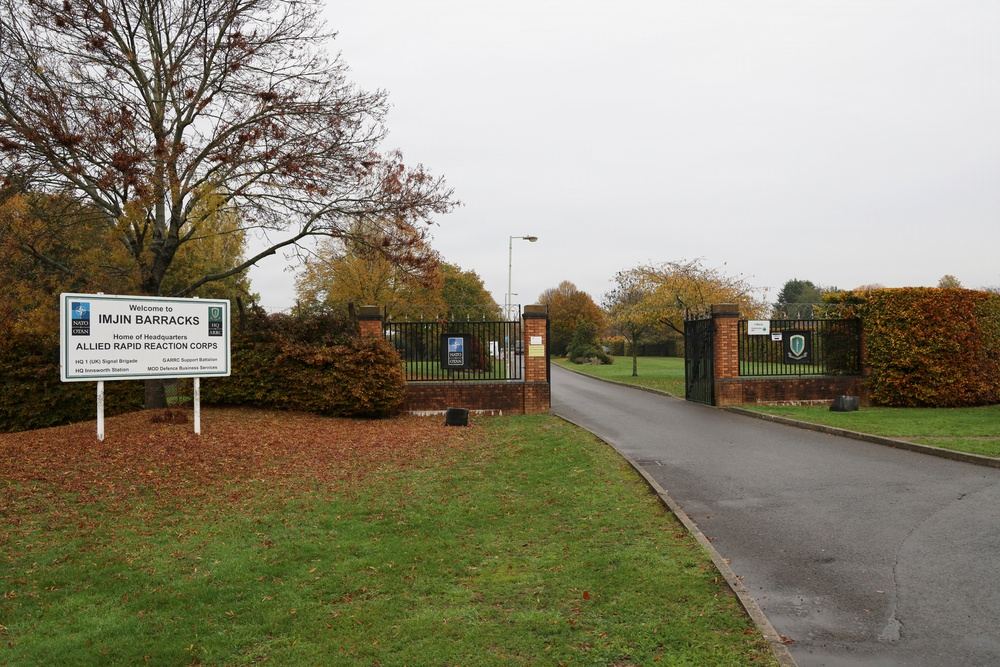
Tyner, 41, was arrested on November 10 in Gloucestershire, in western England. He was assigned to Imjin Barracks near Gloucester, home to NATO's Allied Rapid Reaction Corps, known as the ARRC.
The announcement came a week after the initial arrest. The police statement did not set out American charges, identify a military detention facility or give a date for a court appearance. The espionage allegations remain under investigation.
British investigators hand the case to their American partners
Assistant Commissioner Laurence Taylor, who leads Britain's Counter Terrorism Policing network, said investigators presented their case to the Crown Prosecution Service, the body responsible for criminal prosecutions in England and Wales. Prosecutors then consulted the attorney general's office and American authorities about how to proceed.
The resulting decision was to pass the investigation to the United States, Taylor said. He described the handover as consistent with existing international protocols and said British teams would continue supporting their U.S. colleagues. He did not identify the particular provision of those protocols used in this case.
The announcement establishes who now has custody of the officer and who will lead the next stage of the inquiry. The Metropolitan Police described it as part of an investigation that already involved the U.S. military and FBI when the arrest was made.
In the original November 10 statement, also published by the U.S. Army, police said officers were searching two locations in Gloucestershire. The suspect was then being held at a London police station. Authorities identified Russia as the country concerned and said the inquiry was not connected to other ongoing counterterrorism investigations.
A human resources officer serving at a NATO headquarters
An Army official identified the arrested officer as Brandon Carroll Tyner, Army Times reported on November 13. The publication said he began serving as a human resources officer in January 2008 and had deployed to Afghanistan, Qatar and Iraq.
His assignment at the time of his arrest was Imjin Barracks, a British military installation in Innsworth on the outskirts of Gloucester. Personnel from several allied countries work there at a headquarters designed to command multinational operations.
In the first official statement on the investigation, Brig. Gen. Sean Stinchon, who commands the Army Counterintelligence Command, described the suspect as a senior soldier entrusted with sensitive information. That statement did not identify the particular documents, systems or data available to him.
The human resources specialty and overseas deployments are part of the service history provided by the Army. The official announcements have not set out a detailed account of the conduct under investigation or publicly identified the material that may be involved in the case.
The multinational command based at Imjin Barracks
The ARRC is a high-readiness multinational headquarters led by Britain. The British Army describes it as having more than 400 permanent staff from more than 20 nations contributing to NATO's work every day.
It can serve as a corps headquarters, direct a land component or act as the headquarters of a joint task force. Those roles allow it to organize and command forces for different operational requirements involving allied countries.
The command was formed in 1992, at the end of the Cold War. Its official British history records deployments to Bosnia and Herzegovina and Kosovo, followed by command of the International Security Assistance Force in Afghanistan in 2006. The headquarters moved from Germany to Imjin Barracks in 2010.
That multinational setting places Tyner's assignment within an organization staffed by service members from several countries. British and American cooperation in the investigation therefore concerns a U.S. officer serving on British territory at a NATO headquarters.
The British national security provisions behind the arrest
Police arrested the officer on suspicion of offenses under sections 1 and 3 of Britain's National Security Act 2023. The original announcement identified both provisions as the basis of the allegations being investigated.
Section 1 covers obtaining, copying, retaining or disclosing protected information where the law's conditions are met. Those conditions include a purpose the person knows or ought reasonably to know is prejudicial to British safety or interests, and the required connection to a foreign power or designated body.
Section 3 concerns conduct intended to materially assist a foreign intelligence service, or conduct likely to provide that assistance with the knowledge specified in the law. Its examples of assistance include providing information, goods, services or financial benefits, or access to them.
Those provisions explain the framework of the British investigation. The police announcement about the custody transfer did not present a detailed criminal charge against Tyner or identify the legislation American authorities would use for subsequent proceedings.
The FBI and Army counterintelligence remain involved
FBI Director Kash Patel said the bureau's Philadelphia field office and its London legal attaché office worked on the investigation. He also identified cooperation with British counterterrorism police, the British security service MI5, UK Defence Counter Intelligence and the American command led by Stinchon.
The Army Counterintelligence Command's responsibilities include investigating threats involving foreign intelligence services and protecting military information, personnel and facilities. Its official description lists national security investigations, analysis and counterintelligence operations among its activities.
Kremlin spokesman Dmitry Peskov denied any Russian connection to the officer following the arrest, according to The Associated Press. The November 17 British announcement leaves American authorities responsible for taking the investigation forward, with continued support from their counterparts in Britain.