Princes and Thieves: allegations about Jared Kushner and responses from those named
An excerpt from Matthew Cole’s book alleges that leaders in the United Arab Emirates and Saudi Arabia financed accounts that Donald Trump’s son-in-law could access while he worked in the White House. Kushner and Trump deny the claims. The published excerpt does not include the bank records needed to verify them.
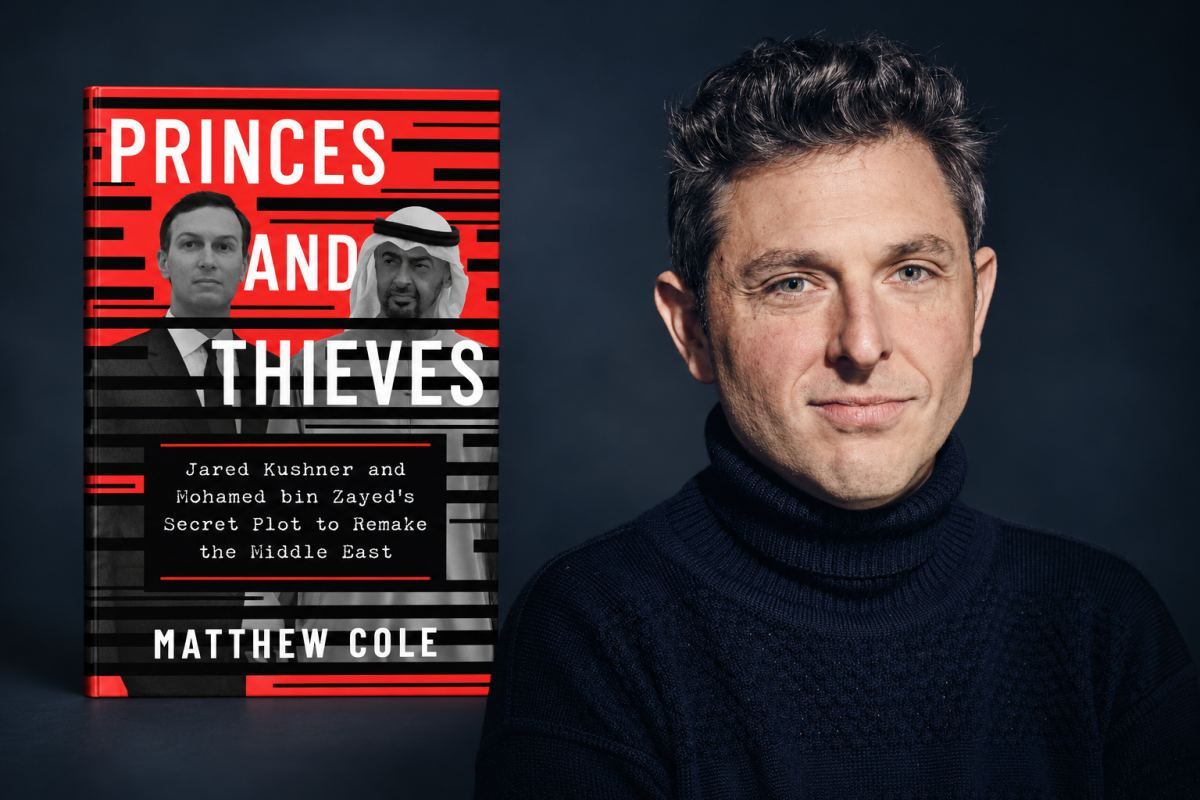
Journalist Matthew Cole alleges that, during Donald Trump’s first term, Jared Kushner had access to accounts funded by leaders in the United Arab Emirates and Saudi Arabia to advance political goals in the Middle East. The allegation appeared in an excerpt from Princes and Thieves published by Vanity Fair on October 22. Both the former presidential adviser and Trump have categorically denied it. Their dispute is a matter of public record; the existence of the accounts and the purpose of the money cannot yet be established from the documents available to the public.
Simon & Schuster has scheduled the book for publication on October 27 under the subtitle Jared Kushner and Mohamed bin Zayed’s Secret Plot to Remake the Middle East. Its promotional description presents a plan involving Kushner, UAE President Mohamed bin Zayed and Saudi Crown Prince Mohammed bin Salman to influence Washington’s policy. That is the author’s and publisher’s thesis, not an independently established conclusion. Before the book is released, readers can examine the portion published by Vanity Fair, which lays out some of Cole’s reporting and includes denials from several people he names.
The accounts alleged in the excerpt
Cole writes that Dutch military intelligence obtained images of Kushner’s phone screen after finding material stolen by Russian operatives. According to sources cited in his account, Dutch investigators observed Kushner accessing an account in the UAE in 2018 that had received money from a bank in Azerbaijan. The purported screenshots and an intelligence report on that operation are not reproduced in the excerpt. Nor has the Dutch agency named in the account publicly confirmed it.
Cole calls one alleged account “Alpha.” He says it was opened at First Abu Dhabi Bank in the name of an Emirati foundation, received approximately $750 million from Saudi and Emirati sources, and listed Kushner as an authorized signatory. The distinction matters: Cole does not say Kushner was the legal owner of the account. He contends that authority to move its funds would have given a U.S. official a financial instrument outside the ordinary controls on his office. Kushner’s lawyers deny that he knew the foundation, had any connection to the account or violated his legal obligations.
A second account, named “Beta” in the excerpt, allegedly received about $1 billion that Mohamed bin Zayed sent to Israel, according to Cole. A person described as familiar with the arrangement told him the money was intended for Kushner’s personal benefit. The excerpt places the funds at Israel’s central bank and attributes to then-U.S. ambassador David Friedman an intermediary role in communications with Benjamin Netanyahu. Friedman denies knowing about or facilitating such an arrangement; Kushner’s lawyers say the second account did not exist either. The excerpt supplies no bank record by which readers could verify the deposit or identify its beneficiaries.
Cole puts the total in accounts he links to Kushner at no less than $2 billion. That is an allegation about arrangements in 2017 and 2018, when Kushner was a White House adviser. It must be kept separate from a later, documented investment in the firm he founded after leaving government.
What can be checked independently
The excerpt draws on unnamed witnesses, people described as familiar with the arrangements and information attributed to foreign intelligence services. It also quotes four former senior Trump administration officials who said they knew of no presidential authorization for Kushner to operate a foreign government account. Their lack of knowledge does not, by itself, establish that an account existed or that Trump was unaware of a real transaction. Identifiable records, witnesses whose accounts can be tested or other independent corroboration would be needed to establish those points.
Some public facts provide context without proving the central allegation. In 2020, the United States, the UAE and Israel announced the normalization of relations between the latter two countries. The agreement is documented, and Kushner took part in that administration’s regional diplomacy. Neither fact establishes that a secret fund lay behind the negotiations.
The later financial relationship between Saudi Arabia and Affinity Partners, the firm Kushner established in 2021, is also documented. An investigation by the U.S. Senate Finance Committee, then led by Democratic Senator Ron Wyden, recorded a $2 billion commitment from the Saudi sovereign wealth fund to Affinity and the fees agreed for managing it. The committee’s findings raise conflict-of-interest questions, but the investment concerns a business formed after Kushner’s White House service. It does not confirm Cole’s allegation about accounts during the earlier administration.
The responses, and the missing evidence
Kushner called the allegations false and said the events described “never happened.” He argued that the author had produced no bank statements, wire-transfer records, account numbers or precise transaction dates. On October 22, Kushner published on his own website an August letter from his lawyer Alejandro Brito responding point by point to Cole’s questions. The letter denies that Kushner knew of or could access the UAE or Israeli accounts and says they never existed. On the alleged intrusion into his phone, it says Kushner does not know whether he was monitored and was never told that he had been during counterintelligence briefings. Another lawyer for Kushner, Chad Mizelle, said he had sent a 13-page letter to Simon & Schuster and warned of possible legal action. On October 24, he requested supporting material from Vanity Fair and called for the excerpt to be withdrawn. These are statements by the defense; they do not, on their own, disprove every confidential source cited by Cole.
Asked about the story on October 23, Trump called it “totally false.” White House communications director Steven Cheung described the book as fiction and criticized its reliance on anonymous sources. Friedman specifically denied the part of the account involving him. As of October 24, no specific public response by the Saudi or Emirati governments to Cole’s allegations has been identified. The absence of a statement that can be located is not an admission.
The dispute has extended to outlets that summarized the excerpt. The Jerusalem Post removed its own article, saying it had found significant factual questions about the transactions described. That decision does not establish that Cole’s reporting is false, just as publication by Vanity Fair does not make the alleged money movements true. CBS News said it had not independently verified the excerpt’s claims.
The book’s release may show whether Cole offers more detail about his sources or records that can be checked. For now, the public record supports a narrower account: a reported investigation makes specific and serious allegations; Kushner’s later dealings with Gulf investment funds appear in congressional records; and the people implicated deny that the alleged accounts existed during his government service. Readers need those three points kept distinct to understand what is known and what remains in dispute.