China’s trade surplus tops $1 trillion in 2026 as tech exports surge
Imports rose 41.6% year over year in October, narrowing the monthly surplus from September, customs data show.
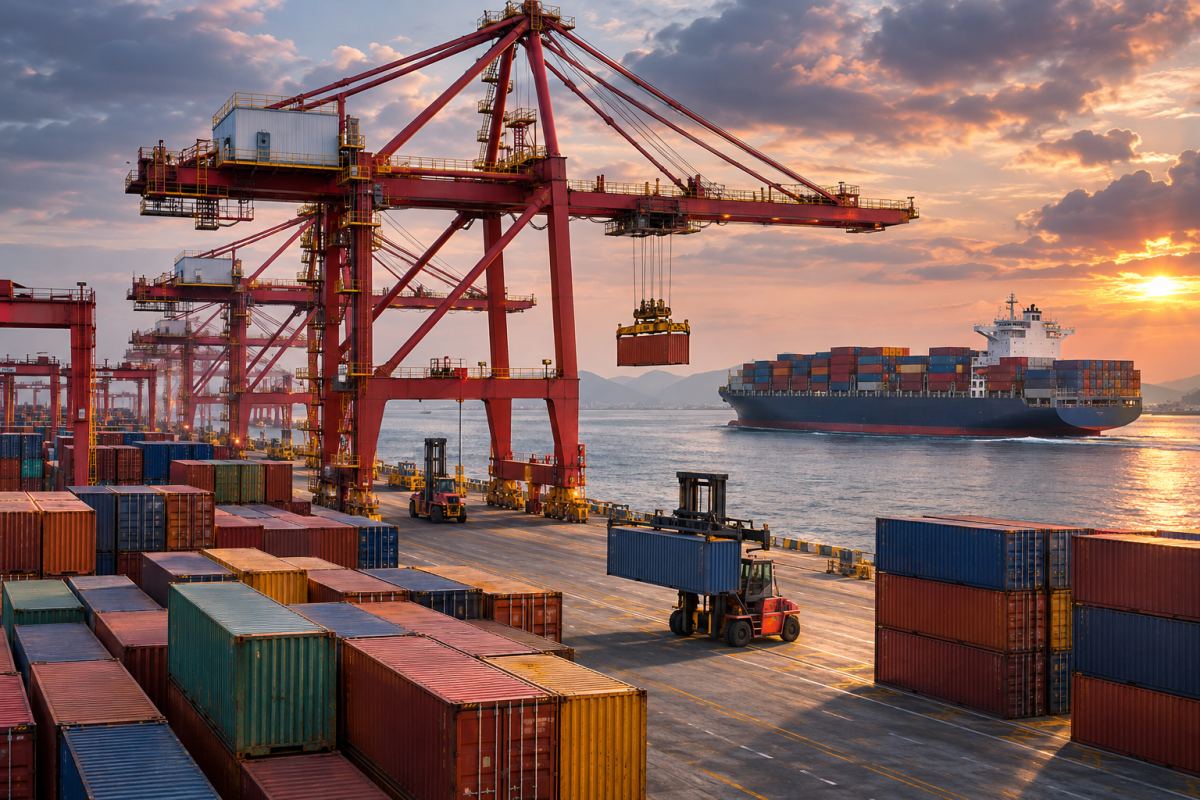
China accumulated a goods trade surplus of $1.04 trillion from January through October, after exports rose 35.2% year over year in the final month of that period. The figures, released Tuesday by the customs administration, point to the strength of Chinese overseas sales in a year marked by trade tensions and global demand for technology products.
Imports also rose rapidly, climbing 41.6% in October from a year earlier. Their growth narrowed the monthly surplus to about $105.3 billion, from $133.5 billion in September. The balance remains strongly in China’s favor because the value of its overseas sales exceeds that of its purchases.
In the first ten months of the year, the country exported approximately $3.78 trillion in goods and imported $2.74 trillion, according to customs data reported by Chinese news outlet The Paper. The surplus has crossed the trillion-dollar threshold for a second consecutive year, although two months remain before the full-year result is known.
Technology and cars drive sales
October exports reached $412.33 billion, while imports totaled $307.05 billion. Both figures are in dollars, and the growth rates compare the value of shipments with the same month a year earlier. They can therefore reflect changes in prices and exchange rates as well as quantities.
Integrated circuits and data-processing equipment were among the products driving growth. Citing customs statistics, The Paper reported that the value of integrated circuit exports rose 137.1% year over year in October. Sales of automatic data-processing equipment and components increased 114.8%.
Investment in artificial intelligence has fueled demand for chips, servers and other components. That supports exporters of finished products as well as companies involved in international supply chains. An increase in export value, however, does not by itself show how many additional units were sold.
Cars have also become a bigger part of China’s overseas expansion. In October, 582,000 new-energy passenger vehicles were exported, up 144.7% from a year earlier, according to Chinese industry association figures cited by The Paper. The category includes electric vehicles and other new-energy models as defined in China’s statistics.
Overseas purchases rise too
Import growth accelerated from 31% year over year in September to 41.6% in October, Reuters reported. Purchases of integrated circuits and other technology equipment contributed to the increase, as did the higher value of oil imports.
The Associated Press reported that a recovery in some crude shipments from the Persian Gulf helped raise October purchases. The Paper cited economists who pointed to the influence of energy prices and demand for products linked to artificial intelligence.
Some imports feed the export industry itself: components and materials bought abroad are used to manufacture goods that are later sold in other markets. An increase in overseas purchases therefore does not necessarily mean all the additional demand comes from Chinese consumers.
Figures for the first ten months expressed in Chinese currency show more moderate growth than those in dollars. The Commerce Ministry published customs data showing total goods trade reached 44.81 trillion yuan from January through October, up 20% from the same period in 2025. The difference between growth rates in the two currencies also reflects exchange-rate conversion.
Pressure on trade relationships
The size of China’s surplus remains under scrutiny in the United States and Europe, where policymakers and businesses have expressed concern about import competition and trade imbalances. Beijing says it is not deliberately seeking to expand its surplus and supports more balanced global trade, according to the Associated Press.
China’s total trade with the Association of Southeast Asian Nations rose 24.2% year over year in the first ten months, measured in yuan; trade with the European Union grew 8.5% and with the United States 6.3%, according to figures released by the Commerce Ministry. Those percentages combine exports and imports and do not represent the balance with each region.
Strong overseas sales have helped support China’s economy while domestic demand remains weak. At the same time, growth concentrated in exports could intensify tensions with partners seeking to protect their industrial production.
The 2026 balance will still depend on trade in November and December. China ended 2025 with a surplus of nearly $1.2 trillion; whether this year’s figure exceeds it will depend on exports and imports in the final stretch.