China confirms sweeping party expulsions and elevates a general to the Politburo
The Communist Party adopted a new resolution on internal discipline, confirmed more than 30 expulsions and scheduled its next national congress for 2027.
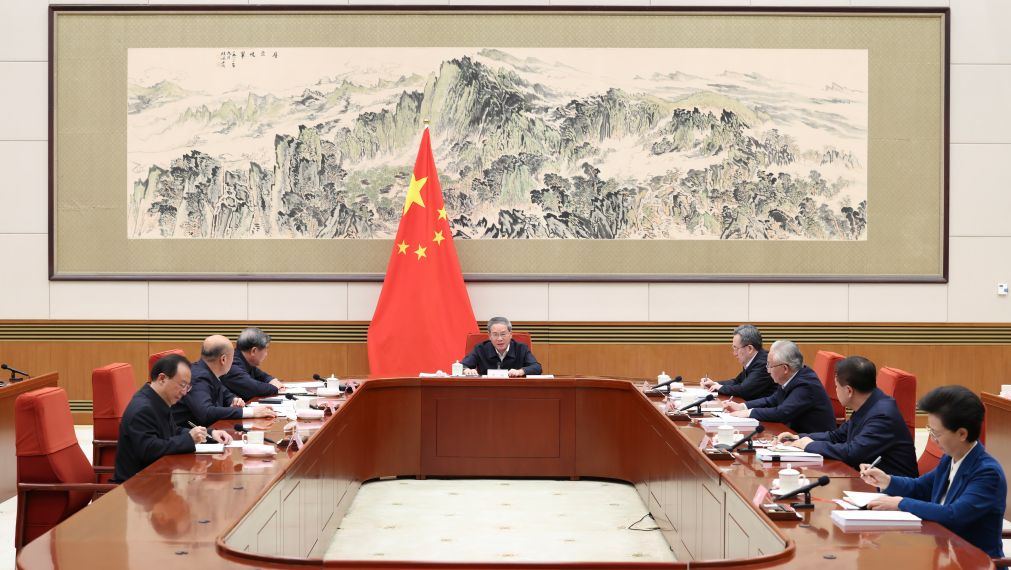
China’s Communist Party leadership ended four days of meetings on Thursday with a resolution to tighten internal discipline, confirmed the expulsion of more than 30 senior members and elevated military commander Zhang Shengmin to the Politburo. The official communiqué presents the moves as part of an anti-corruption drive. Their scale, particularly in the armed forces, shows how extensively President Xi Jinping is reshaping the party leadership ahead of its next national congress.
The fifth plenary session of the 20th Central Committee took place in Beijing from October 26 to 29. According to the text released by the state news agency Xinhua, 162 full members and 117 alternate members attended. The plenum adopted a resolution on stricter party governance, ratified expulsions previously decided by the Politburo and scheduled the next congress for the second half of 2027. That sequence is significant: the meeting did not initiate every disciplinary case but confirmed decisions already taken by other party bodies.
A purge reaching the military leadership
The names include Zhang Youxia and Liu Zhenli, two generals on the Central Military Commission whose expulsions had previously been announced. The communiqué also lists civilian officials and former leaders from other sectors. The Associated Press counted more than 30 expulsions of senior figures confirmed by the plenum. The official statement refers to serious violations of party discipline and the law, but it does not provide a detailed case file for each individual or establish that all have been convicted in court of the same offenses.
The plenum elected Zhang Shengmin to the Politburo, one of the party’s principal decision-making bodies. The promotion is notable because the Central Military Commission, which commands the armed forces, has lost other senior members amid recent investigations. Bringing a military figure into the Politburo strengthens the link between political oversight and military command. His new position gives him a place in the party leadership’s deliberations. It does not, by itself, explain how other vacancies will be filled or when the reorganization will end.
The Associated Press reported that the disciplinary campaign has reduced attendance at the meeting compared with the Central Committee’s original membership. Analysts cited by the agency see the figure as a sign of the breadth of the expulsions. That interpretation should be kept distinct from the administrative fact recorded in the communiqué: how many members attended. A member can be absent for different reasons, and absence alone does not prove an unannounced sanction.
Discipline and the continuity of power
The adopted document calls for stronger oversight of officials, stricter rules and a sustained campaign against corruption. It also reaffirms Xi’s central leadership and his political doctrine as the party’s guide. These are the Chinese leadership’s own political formulations. They explain how the party justifies its decisions; they are not an independent assessment of whether the campaign is working.
The focus on discipline reflects a challenge facing any vast governing structure: carrying decisions made at the center through to provinces, state-owned companies and military commands. The communiqué describes persistent problems with implementation, integrity and oversight. The party proposes training for leaders, inspections, internal rules and penalties. Whether those measures change behavior will have to be judged by subsequent events, rather than by the passage of a resolution alone.
The military dimension has consequences beyond internal party management. China has expanded its presence in waters near Japan and Taiwan, while other countries watch the composition of its command. The plenum’s communiqué, however, announces neither a military operation nor an immediate change in foreign policy. Replacing generals could affect the continuity of programs and chains of command, but a specific conclusion about preparations for war would require further evidence.
Central Committee members also decided that the party’s 21st national congress will meet in Beijing in the second half of 2027. That gathering will renew the main leadership bodies. This week’s plenum therefore prepares the political and organizational ground for the next cycle, rather than closing an isolated dispute. Promotions and expulsions will shape who can take part in selecting the next leadership and who will be excluded.
The available information has a clear limit. The party has published names and a broad characterization of the alleged violations, but not a verifiable individual case file for each person. Researchers and journalists outside China can examine the pattern of replacements; within the country, the official account dominates information about the proceedings. What is confirmed at the close of the plenum is the ratification of the expulsions, Zhang Shengmin’s promotion and the disciplinary resolution. Their effects on the day-to-day operation of the military and government will emerge through future appointments and decisions.