Eldridge-led group agrees to buy Lukoil’s overseas assets, pending US approval
The consortium includes a US government agency and proposes paying with restricted Russian shares. The transaction still needs Treasury clearance.
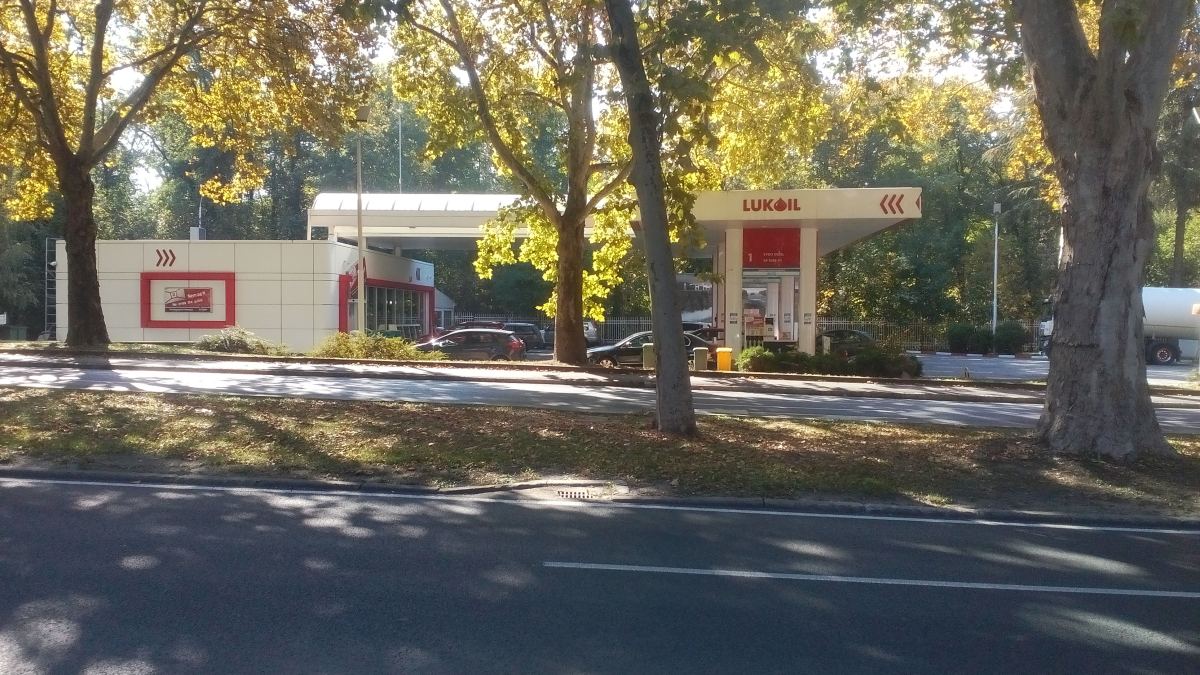
An Eldridge-led consortium has announced an agreement to acquire Russian oil company Lukoil’s international businesses, in a transaction that would give the US government an ownership stake in an extensive network of energy assets. The purchase still requires regulatory clearances, including separate approval from the US Treasury Department.
The November 25 announcement places the US International Development Finance Corporation, or DFC, alongside Eldridge, United Arab Emirates-based Catena Investment Holding and Xtellus Partners. The business being acquired is Lukoil International GmbH, known as LIG, which holds assets outside Russia.
The proposed payment mechanism—a swap involving restricted Russian shares rather than a direct cash payment to Russia—is central to the agreement. It also raises questions about how Washington will apply sanctions imposed on Lukoil to put pressure on Moscow over its war in Ukraine.
What the Lukoil International deal covers
The portfolio spans several stages of the energy business, from oil and gas production to refining, trading and fuel retailing. According to the consortium, its upstream operations extend across 11 countries and produce approximately 350,000 barrels of oil equivalent a day. That measure expresses oil and gas production in a common unit.
The announcement names three refineries: Burgas in Bulgaria, Zeeland in the Netherlands and Petrotel in Romania. Their combined processing capacity is approximately 350,000 barrels a day. Refinery capacity measures a different industrial activity from extraction; adding the two figures together would not provide a meaningful total for the portfolio’s oil supply.
The assets also include international trading business LITASCO and more than 2,000 retail stations across 16 countries in Europe, North America and Central Asia. The network’s reach explains why the proposed sale has implications beyond Washington’s relationship with Moscow. It involves facilities and fuel supply chains serving numerous markets outside Russia.
A share swap that would give Washington a stake
The buyers propose exchanging restricted shares in Lukoil and other Russian companies for 100% of LIG’s equity. The consortium says this structure avoids a direct cash payment to Russia. It also says LIG’s assets would be completely separated from the Russian parent’s ownership when the transaction closes.
Under the announced terms, DFC would receive an ownership interest on behalf of the United States at no upfront cost to American taxpayers. The release does not specify the size of that interest or disclose a total acquisition price. The consortium’s promise of returns for taxpayers describes an intended benefit, rather than revenue that the government has already received.
Eldridge, led by Todd Boehly, heads the consortium. Catena is an investment company based in the UAE, while Xtellus is a financial advisory and investment group. Citi is the lead financial adviser. The purchase remains subject to due diligence, closing conditions and other required regulatory approvals, as well as Treasury clearance.
Treasury’s conditions for cutting ties with Lukoil
Treasury’s Office of Foreign Assets Control, or OFAC, sanctioned Lukoil on October 22, 2025, to increase pressure on Russia’s energy revenues. Its current guidance allows negotiations over a sale while setting out conditions it would consider before authorizing a transaction to go ahead.
In guidance updated on November 19, OFAC says a proposed sale must completely sever LIG’s ties with Lukoil. It also requires funds owed to the Russian company to remain blocked in an account subject to US jurisdiction until sanctions are lifted.
Another condition is that the transaction should not deliver a windfall to Lukoil, including by providing value upfront through asset or share swaps. Announcing a share exchange therefore does not, by itself, establish that the structure meets Washington’s published conditions.
The consortium says the sale consideration would be held in a restricted custodial account for five years or until sanctions are lifted. That description of its proposed arrangements does not replace Treasury authorization. Nor does it establish that the government has approved an automatic release of the securities once five years have passed.
Negotiations and ongoing operations have separate deadlines
General License 131L, issued on November 19, permits negotiations and the signing of contingent contracts until 12:01 a.m. Eastern Standard Time on December 19, 2026. It expressly requires performance of those contracts to depend on separate OFAC authorization. The deadline is not a guaranteed closing date for the sale.
The same license allows specified maintenance and wind-down activities involving existing LIG operations until 12:01 a.m. on February 20, 2027. It does not authorize transfers of funds to people or accounts located in Russia.
Retail service stations outside Russia also have a separate authorization, General License 128D, which runs until April 24, 2027. OFAC explains that these exceptions are intended to mitigate the impact on consumers and permit ordinary activities, including purchases of fuel and payments for insurance or employee wages, within the licenses’ restrictions. Permission to keep eligible operations running is distinct from approval for a change of ownership.
Congressional criticism adds to the scrutiny
Representative Gregory Meeks, the senior Democrat on the House Foreign Affairs Committee, called on November 25 for DFC’s involvement to be halted. He argued that the administration was seeking to circumvent a congressional restriction on DFC investment in Russia and questioned whether a development agency was serving investors close to President Donald Trump.
Those allegations represent the lawmaker’s position, rather than a court ruling on this agreement. The consortium presents a different case: it says the acquisition would stabilize operations, preserve investment and strengthen energy security for the United States and its allies.
Thomas Glynn Hanley, a researcher at the Center for Strategic and International Studies, identifies another tension. The US government would be participating as a buyer while its own Treasury Department decides whether the transaction can proceed. His analysis also questions how the proposed custody arrangements fit OFAC’s published conditions.
The next decisive step will be the regulatory response. The transfer of LIG to the consortium remains subject to the required approvals and closing conditions. The agreement sets out a route for transferring the assets; Washington must still decide whether to accept its terms and what safeguards to require.