Starship returns from orbit to a tower catch, but booster recovery fails
SpaceX's spacecraft circled Earth 14 times and returned to its Texas base after more than 22 hours. The first attempt to recover both stages in one mission fell short when the Super Heavy booster was lost in the Gulf of Mexico.
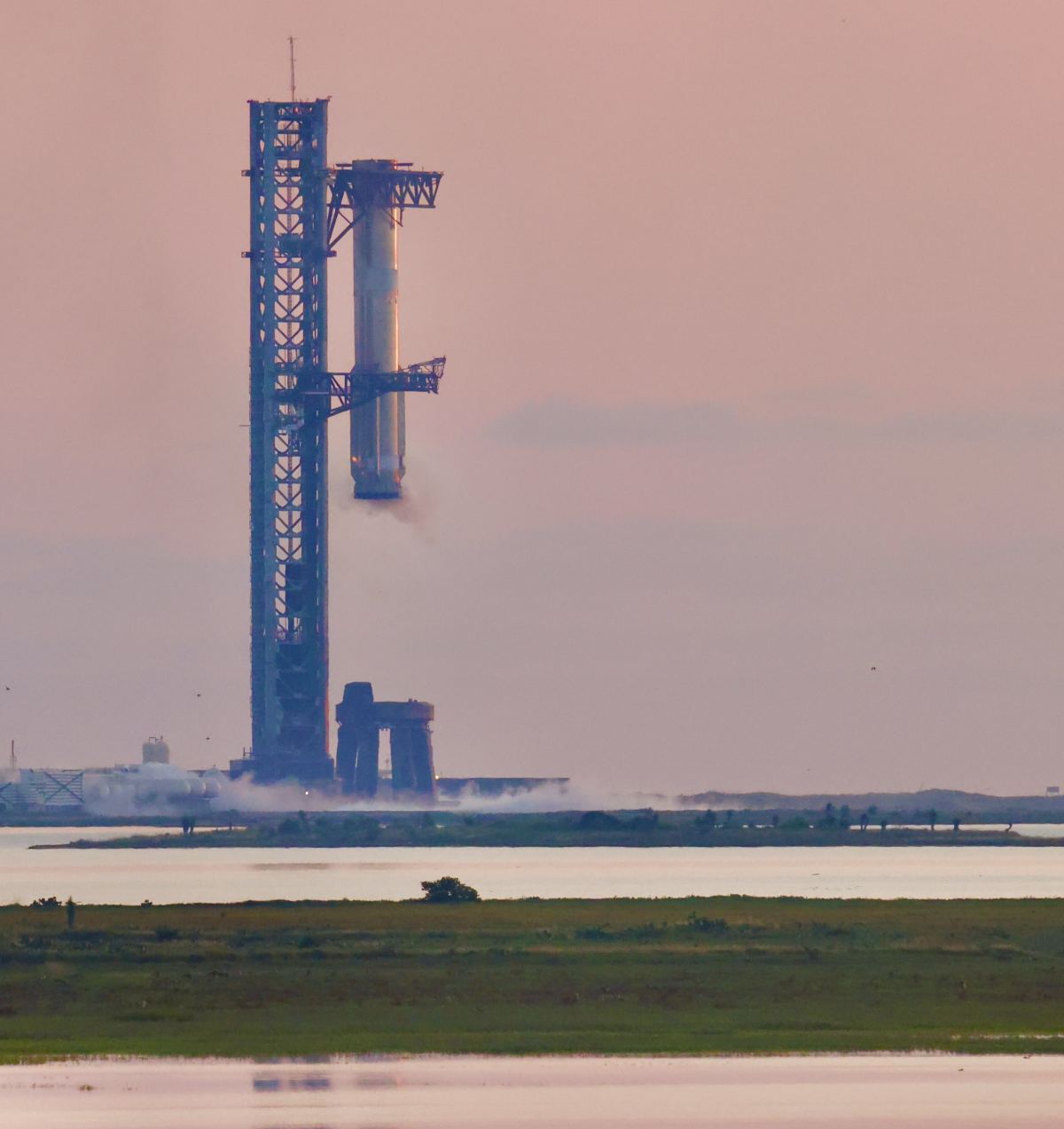
Starship returned to SpaceX's Texas base on Saturday, November 14, and was caught by the launch tower's mechanical arms. It was the first time the rocket's upper stage had come back from an orbital mission to be captured there. The result advanced the company's effort to reuse the vehicle, but it did not deliver the full recovery SpaceX had planned: the Super Heavy booster was lost shortly after Friday's launch.
Flight 15 began at Starbase, near the US-Mexico border. After separating from the booster, Starship reached orbit, deployed 26 Starlink V3 satellites and completed 14 circuits of Earth over more than 22 hours, according to the Associated Press. The spacecraft survived reentry and descended into the tower's arms. Before launch, SpaceX had described catching both stages as the test's central objective.
The other half of that test failed. In SpaceX's preliminary account reported by AP, the Super Heavy engines stopped firing earlier than planned on the way back. Its guidance system determined that it was not positioned for a tower approach and diverted it toward the water. The cause remains under investigation. SpaceX had caught boosters on earlier tests, but this flight was meant to recover the orbital spacecraft as well.
A milestone that still needs repeating
The catch shows that Starship can return from orbit and reach its recovery infrastructure. It does not yet show that the entire system can return, be inspected and fly again quickly. That is SpaceX's industrial goal: cutting turnaround time and costs by reusing both stages. Losing the Super Heavy leaves that part of the demonstration unfinished.
The flight matters to SpaceX's commercial network, too. The company said the 26 V3 satellites were intended to expand Starlink's capacity. Deploying them demonstrated a payload mission as well as a recovery test; their entry into service still depends on checks in orbit.
NASA is working with SpaceX on a Starship variant to carry astronauts to the lunar surface. The agency changed its lander plans in October, however: SpaceX and Blue Origin are both to participate in a test mission in Earth orbit, and neither provider is currently assigned a specific crewed lunar landing mission. The tower catch is a significant technical step for Starship, but it does not, on its own, complete the testing that program requires.
Flight 15's outcome is therefore specific: the first tower catch of a Starship returning from orbit, deployment of 26 satellites and loss of the booster. The investigation into that failure, and the ability to repeat the recovery, will determine how close SpaceX is to reusing the entire system.