UK launches low-cost loans for solar panels and heat pumps: What homeowners need to know
The government-backed scheme offers some interest-free loans and others at reduced rates. Ten lenders are taking part, and savings depend on the home and the total cost of borrowing.
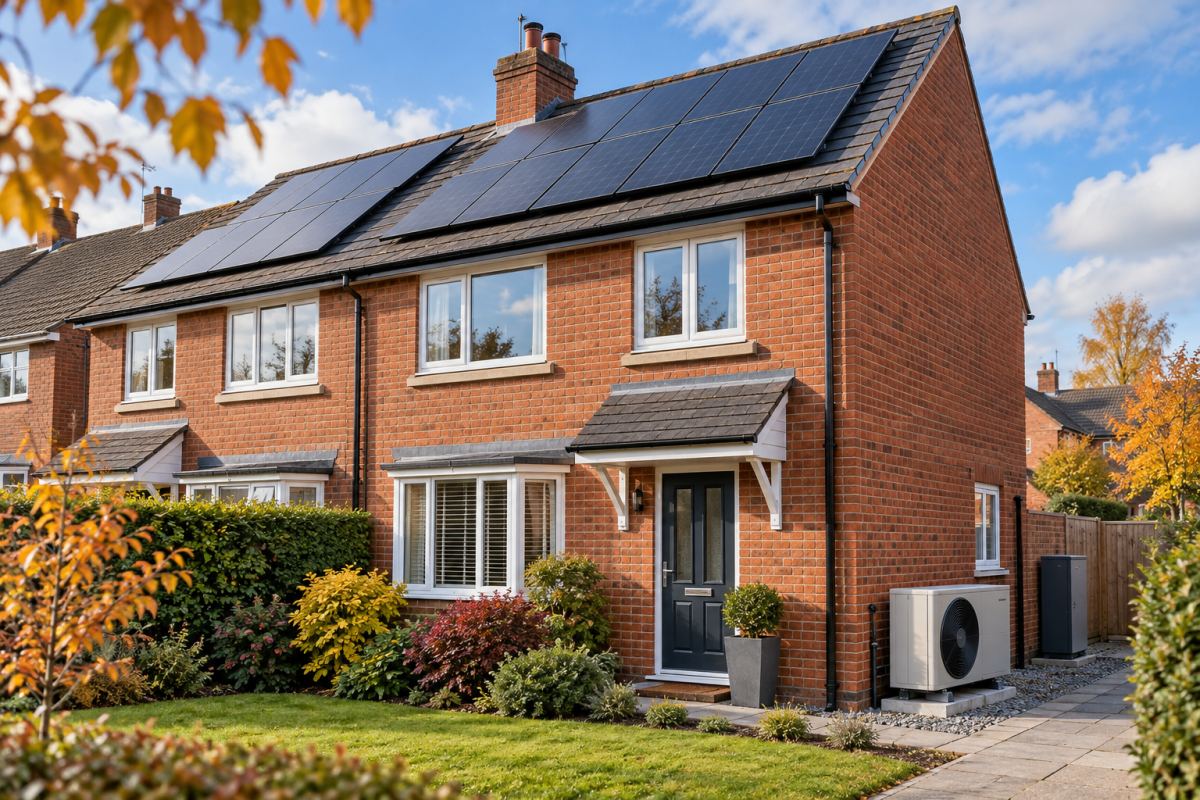
The UK government has launched a new way to finance clean-energy upgrades at home: state-backed loans, some interest-free and others offered at reduced rates, for solar panels, batteries and heat pumps. Announced on 27 October, the scheme addresses a familiar obstacle. Many households could cut their energy bills with these technologies but cannot afford the installation cost upfront. A loan spreads that cost over years; it does not make the work free or guarantee the same savings for every home.
The Warm Homes Loan scheme is open to homeowners in England, Scotland, Wales and Northern Ireland. Ten lenders are participating in its first phase. Each will apply its own credit checks and lending terms. Anyone considering a loan therefore needs to compare the monthly repayments, total interest and full loan term with the energy savings their particular property might achieve.
Spreading the upfront cost over time
The Department for Energy Security and Net Zero presents the scheme as a way to accelerate clean-energy installations without an upfront payment. According to its official guidance, some loans carry no interest, while others offer a lower rate than a comparable standard loan. Some products can run for up to 30 years. There is no single interest rate or standard monthly repayment: the offers come from different lenders and may depend on the equipment, installer and applicant’s circumstances.
The government provides an illustrative comparison. A £10,000 loan over seven years at 8% interest would normally cost about £155 a month. Under the new scheme, repayments could be as much as £285 lower over a year. That example is not an offer available to every homeowner. A longer term may reduce the monthly payment, but borrowers still need to check how much they will pay over the life of the loan.
Borrowing limits vary by type of installation. The scheme allows up to £15,000 for solar panels and the same amount for a storage battery; up to £20,000 for an air-source heat pump and £35,000 for a ground-source system. Biomass systems, connections to heat networks and other small-scale generation technologies are also listed. Homeowners may seek finance for more than one improvement. These maximum amounts do not mean every project will be fully covered or that every applicant will qualify for the full sum.
Potential savings, not a guaranteed reduction in bills
The government estimates that a household combining a heat pump, battery and solar panels could save up to £550 a year on energy, with a possible further £300 if it uses a time-of-use tariff. That is a projection for a particular combination of equipment, not a guaranteed saving. The orientation and insulation of the home, its heating needs, the tariff and the price of the installation can all change the calculation substantially.
This distinction is central to the scheme. Electricity bills might fall before the equipment has been paid off, but the household will also have taken on a monthly financial commitment. A realistic comparison must include repayments and maintenance costs alongside the estimated reduction in energy bought from the grid. For a heat pump, the type of heating system it replaces and the relative prices of electricity and gas also matter.
Homeowners who meet the relevant conditions may combine a loan with existing heat-pump grants. The government points to support of up to £9,000 through the Boiler Upgrade Scheme and Home Energy Scotland arrangements. A grant reduces the amount that needs to be financed; a loan has to be repaid. The availability of both does not mean every household automatically receives the maximum grant.
Who is eligible and what to check before applying
Under the scheme’s eligibility rules, applicants must own a residential property in the UK, whether or not they have a mortgage. Lenders may impose additional requirements. The money must be used for eligible upgrades such as solar photovoltaic panels, battery storage, heat pumps or a connection to a heat network. In most cases, the work must be carried out by a company accredited under the Microgeneration Certification Scheme; heat-network connections are an exception. Homeowners cannot carry out the financed installation themselves.
The government advises applicants to obtain quotes and compare both the equipment price and the total cost of borrowing. It also notes that some lenders work only with partner installers, while others let borrowers choose among certified firms. That difference can affect the final price and the ability to compare technical proposals. Keeping the quote, loan agreement, invoice and installation certificate will also help if a complaint arises later.
The scheme arrives amid concern about energy prices and Britain’s exposure to international supply shocks. The government says nearly 150,000 solar installations were completed in the first half of 2026 and heat-pump sales reached a record in 2025. Those figures point to demand, but the scheme’s reach will depend on the loans actually offered and whether promised savings materialise in the households that take them out. The change is financial: it makes an investment easier to access, while leaving each family to weigh its cost and risk.