Japan opens debate on how to pay for its food tax cut
Takaichi has not ruled out issuing bonds, while her government insists its policy has not changed. The bill reaches the lower house tomorrow with funding still at the center of the dispute.
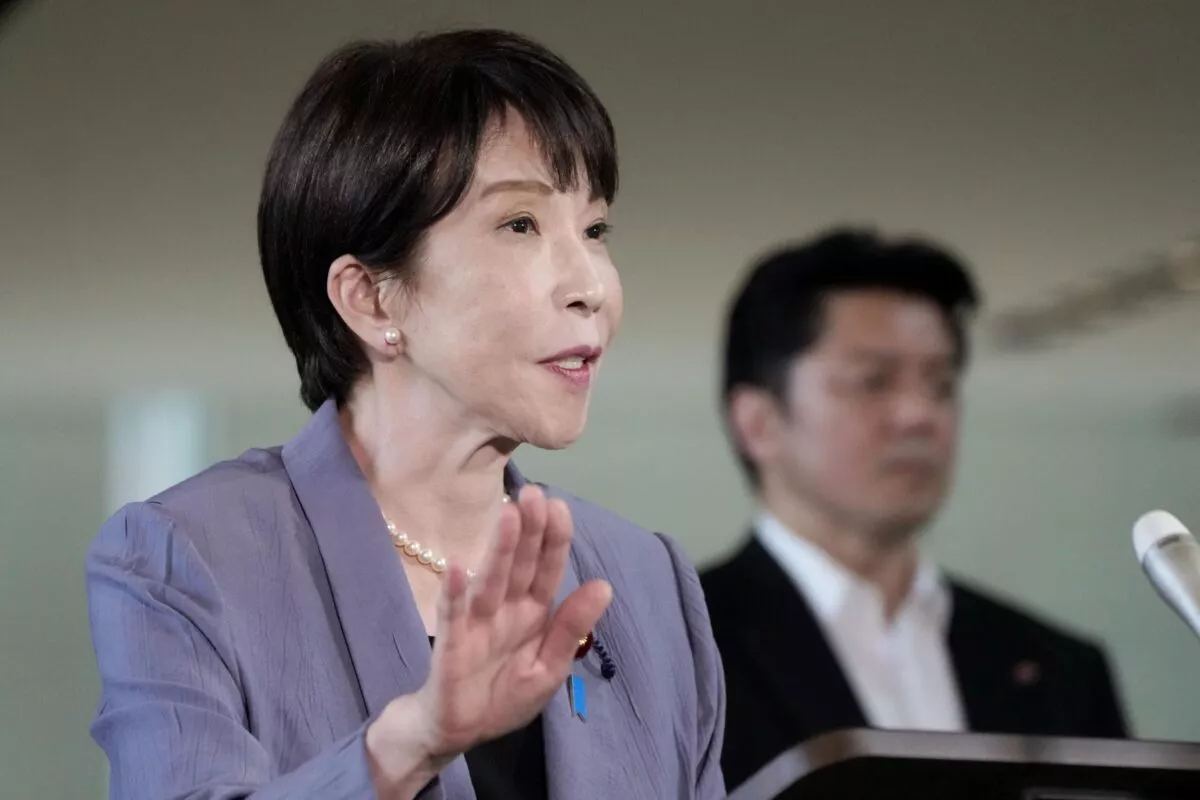
The promise of cheaper groceries has confronted Japan's government with a question that cannot be answered at the supermarket checkout: where the money will come from to replace lost tax revenue. Prime Minister Sanae Takaichi told parliament on Monday, October 19, that she has not ruled out issuing bonds, on the eve of debate on her consumption tax cut.
The plan would lower the tax on the food and beverages covered by the measure from 8% to 1% for two years, starting in April 2027. Debate in the lower house begins on Tuesday, October 20. The proposal still has to complete the legislative process; the government's announcement does not mean consumers are already paying the reduced rate.
The remarks bring a central tension in Japanese economic policy into focus. Takaichi wants to help households facing a higher cost of living while maintaining confidence in public finances. Both can be promised, but legislation and the budget will have to explain how they can be reconciled.
The remarks on bonds, and the government's response
At a meeting of the upper house budget committee, the prime minister said the government would review revenue and spending and appropriately manage annual bond issuance. In that context, she said she was not completely ruling out the use of bonds, according to reporting by Reuters, Jiji and FNN.
Chief Cabinet Secretary Minoru Kihara sought to prevent those words being interpreted as a reversal. According to Jiji, he said policy had not changed and placed the remarks in the context of overall budget management, rather than any abandonment of the commitment on financing the tax cut.
That clarification matters because issuing debt to meet general budget needs is not the same as financing a particular measure with special deficit-financing bonds. Takaichi's statement leaves a government funding tool available; it is not, in itself, a detailed announcement of new debt to pay for the entire tax cut.
At her September 17 press conference, whose transcript was published by the prime minister's office, Takaichi had said funding for the food tax cut would be secured without relying on those special bonds. She had also linked her policy to a budget review and control of bond issuance across the full year, including both initial and supplementary budgets.
Temporary relief on an everyday expense
The measure targets spending that is difficult to postpone. Households can defer some major purchases, but they still need to buy food. Cutting the tax reduces the tax burden on covered products; the ultimate effect on each household budget will depend on how much it buys and how prices change before tax.
That last point limits expectations. A tax cut does not, on its own, stop increases in the cost of raw materials, transport or other inputs that determine prices. It can cushion the bill, but does not guarantee that every product will become cheaper by the same proportion or permanently.
The package also includes cash assistance. Jiji puts the combined measures at approximately 10 trillion yen over two years. That figure covers the package described by the agency, rather than just lost revenue from the food tax. The government still needs to publicly specify the resources that will fund it.
The opposition asks what comes next
Yoshifumi Hamano of the Democratic Party for the People questioned Takaichi about the possibility of borrowing if necessary. He also raised the risk that spending cuts used to offset the tax relief could end up counteracting its economic effect, according to Jiji and FNN.
The debate extends to the end of the two-year period. A temporary reduction provides immediate help, but leaves open the tax burden consumers will face when it expires. FNN reported opposition questions about maintaining a lower rate afterward and the effect its withdrawal would have on lower-income households.
Takaichi noted that consumption tax revenue helps finance social security, without committing to a permanent reduction. That connection explains the political difficulty: reducing a revenue source requires deciding whether to replace it, cut some spending or accept an additional financing need. None of those decisions disappears because the measure has an expiry date.
The budget will test confidence
The prime minister again presented a stronger economy as part of the answer and advocated a sustained reduction in the debt-to-GDP ratio. That indicator depends on both debt and the size of the economy; it is not a promise that the amount of debt will fall immediately.
The next step will be legislative debate, followed by budget details. For households, the practical questions are when relief will arrive and how long it will last. For the government, the test will be to set out sufficiently clear funding so that a promise to reduce grocery bills does not create further uncertainty over public finances.