Chan Chan: a Chimu elite tomb stayed sealed for 600 years
An intact burial platform holding 38 individuals at the Utzh An compound gives Peruvian archaeology something it almost never gets: a high-status tomb the looters never found
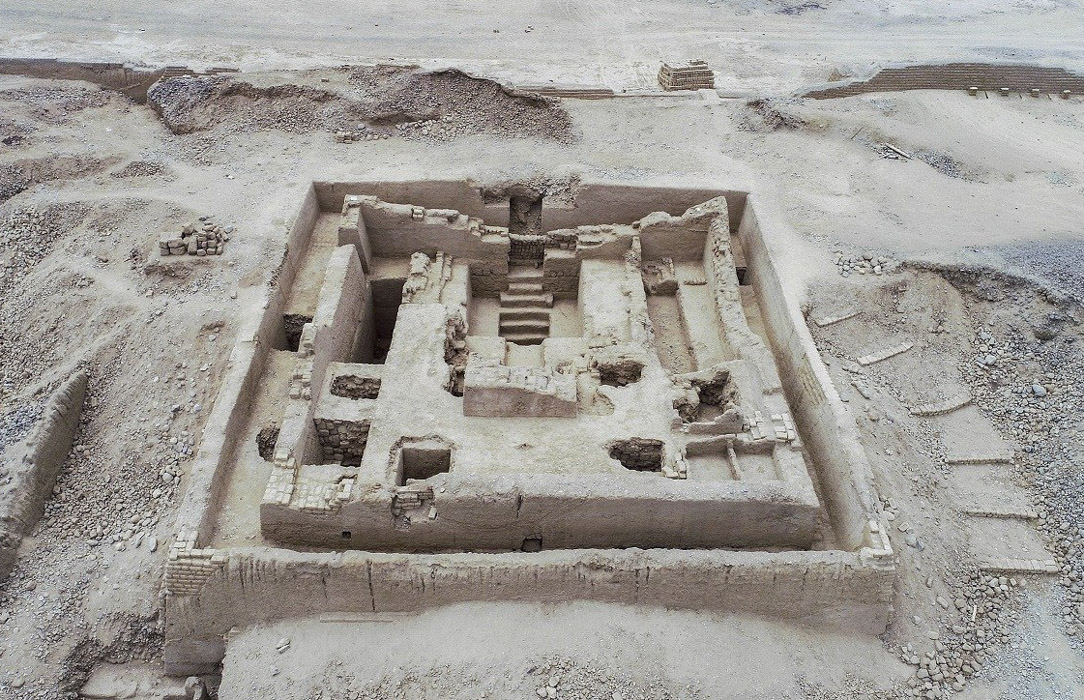
A team of archaeologists working for Peru's Ministry of Culture has uncovered a roughly 600-year-old burial platform at the Chan Chan archaeological complex, in the La Libertad region, holding the remains of at least 38 individuals along with a set of objects tied to the nobility of the Chimu kingdom. The ministry called the find exceptional and presented it on Tuesday at the site, a few kilometers from Trujillo.
The discovery was made inside the walled compound of Utzh An, the former Gran Chimu Palace and the largest of the ten monumental enclosures at Chan Chan. The work is part of the research and conservation program run by the Chan Chan Archaeological Complex Special Project, which as of July reported roughly 79 percent progress in that sector.
What sets this find apart is not only its contents but its condition. At Chan Chan, nearly every elite burial documented so far has been disturbed by looting, much of it during the colonial period, when the search for precious metals systematically dismantled the city's burial platforms. This one remained sealed.
The structure has a central chamber measuring 1.2 meters wide by 5 meters deep, reached through an entrance and a stairway that descends about 2.5 meters from the working level. Inside there is also a wall niche. Two lateral chambers open at either side, with clearly distinct contents.
In the main chamber, archaeologists found the remains of an individual belonging to the Chimu nobility, accompanied by numerous pieces worked in shell and metal. The arrangement of the body and the offerings will be central to the analysis that follows, since it allows researchers to establish precisely how this figure related to the highest ranks of that society.
One of the lateral chambers held metal weapons and emblems. The other contained some twenty buried individuals who, added to another 18 previously identified in the same platform, bring the total to 38 people.
Researchers determined that the skeletal remains belong to individuals connected to distinguished groups within the Chimu nobility. Fine ornaments and ceremonial goods were found on and around the skeletons, including applications of cinnabar, a deep red mercury pigment that in the pre-Hispanic Andes was reserved for ritual contexts and high-status figures, and whose use also implied long-distance exchange networks.
One of the burials departs from the known pattern. At the bottom of one chamber, the body was laid fully extended, an unusual arrangement compared with Chimu burials, which are characterized by flexed or seated flexed positions. For the Ministry of Culture, that detail raises questions about the circumstances of the death, including the possibility of a sacrificial ritual or an extreme difference in rank relative to the rest of the group. All of these hypotheses will have to be tested through ongoing research.
The recovered materials include around 200 black ceramic vessels with red pigments, a hallmark of late Chimu production. Alongside them are some 60 pieces, among them stirrup-spout bottles and other vessels, showing clear Inca stylistic influence. That detail matters more than it might seem: it would confirm that the platform was in use during the period of interaction and eventual annexation of the Chimu kingdom by the Inca empire, which took place around 1470.
The assemblage also includes copper and gold objects, metal weapons and wooden elements. Among the latter are a totem originally placed in one of the chambers and a wooden box between 10 and 15 centimeters in size that contained textiles of extremely fine workmanship, a material that rarely survives in condition good enough to study.
Chan Chan was the capital of the Chimu kingdom, a pre-Inca society that developed on Peru's northern coast between roughly 900 and 1470 AD. At its greatest extent, its territory stretched about a thousand kilometers along the Pacific shoreline, from what is now the Peru-Ecuador border down to the Lima valley. The city, built entirely of earth, is the largest of its kind in pre-Hispanic America and has been on the UNESCO World Heritage list since 1986, in the category of sites in danger due to erosion and heavy rainfall.
Archaeologist Jorge Meneses, who leads the investment project at the complex, stressed that the find carries exceptional value for Peruvian archaeology because it will make it possible to understand the funerary patterns of these individuals. Because it was never looted, he said, the assemblage brings researchers much closer to the late Gran Chimu period, including the years of Inca occupation.
Culture Minister Alberto Beingolea noted that the discovery allows individuals and artifacts to be studied exactly as they were deposited some six centuries ago, and said research and conservation would be the next stages of the work.
Subsequent studies will focus on two fronts: the funerary patterns of the Chimu elite, and the Inca occupation that followed the conquest of the Moche valley. For a city excavated for decades and looted for centuries, finding a closed context of this rank is not an isolated episode but the result of sustained research and conservation work built up over years.