Alberta votes on its future in Canada, with another referendum potentially ahead
The province is choosing between remaining in the federation and starting the legal process for a future vote on separation. The ballots also propose changes to immigration and government powers, with Smith and Carney at odds over nine of the ten questions.
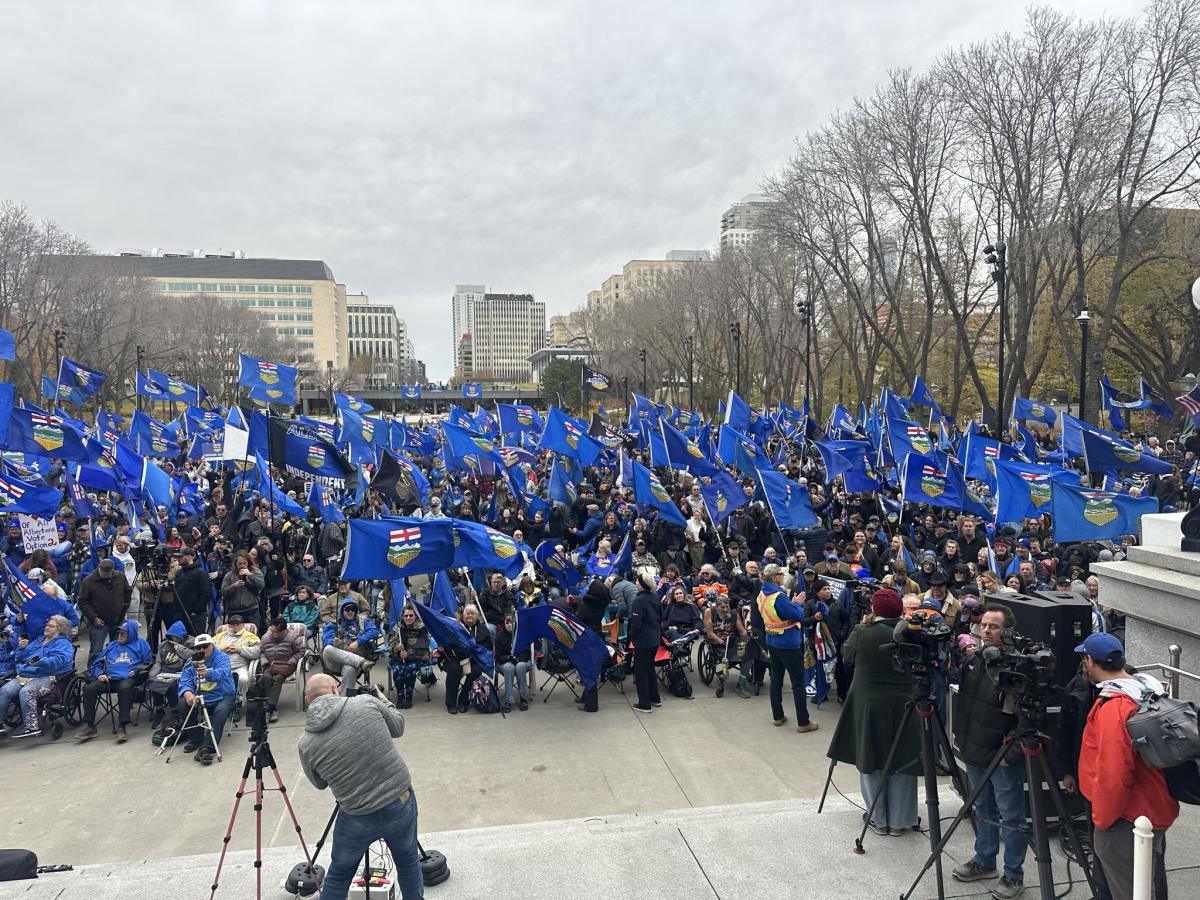
Alberta is voting this Monday, October 19, on the direction of its relationship with Canada. The referendum offers two options: remain a province or ask the provincial government to begin the legal process needed to hold a binding referendum on separation at a later date. Today's vote is explicitly non-binding and will not make Alberta an independent country.
That distinction defines the scope of a politically significant day for the oil-producing province and the federation as a whole. Voters choosing to move toward another referendum would be endorsing the start of a process. Further decisions and procedures would still be required before a possible vote directly asking whether Alberta should leave Canada.
More than 1.3 million people had already voted in advance or by mail, according to Elections Alberta information reported by The Canadian Press. That early turnout does not reveal how support is divided: the ballots still have to be counted.
The question drawing the most attention is not the only one
The question about remaining in Canada is number ten and offers a choice between two options. The other nine require a yes or no answer. Each question appears on a separate ballot, allowing voters to take different positions on issues being put to them in the same referendum.
Five of those questions concern immigration and citizenship-related requirements. They include expanding provincial control over the arrival of workers, changing access to services and benefits for certain categories of temporary residents, and requiring proof of citizenship to vote in provincial elections.
The other four propose constitutional changes or negotiations over government powers. They address the selection of judges for certain courts, the abolition of the federal Senate, and the relationship between provincial and federal programs and laws. CBC's guide to the ten questions illustrates how far the vote extends beyond the separation debate.
Elections Alberta specifies that the questions are non-binding. Endorsing a proposal does not automatically amend the Constitution or bring every measure described into force the next day. The referendum seeks political direction for steps that would each require their own procedures.
Smith wants to stay, but seeks more provincial power
Premier Danielle Smith called the referendum and says she voted to remain in Canada. At the same time, she is seeking support for the other nine questions to secure a mandate to negotiate with Prime Minister Mark Carney, according to The Canadian Press.
That position separates two debates that are often conflated: remaining in the federation and changing the distribution of power within it. A voter can oppose separation while supporting some reforms, or disagree with both separatism and the provincial government's proposals.
Carney visited Alberta to defend national unity, but also urged voters to reject the other nine questions. His agreement with Smith on staying in Canada therefore does not remove their differences over the package of changes accompanying the referendum.
The Canadian news agency notes that Smith's party did not campaign for a separation vote in the 2023 provincial election. Smith argues that petitions and campaigning in recent months have made it necessary to settle the debate. The referendum turns that discontent into an electoral decision whose meaning will need to be assessed question by question.
Indigenous communities also have a stake
The debate involves more than the governments in Edmonton and Ottawa. Associated Press reports the position of Chief Sheldon Sunshine of the Sturgeon Lake Cree Nation, who argues that separation could not take place without the consent of First Nations and points to their treaties.
That is an Indigenous leader's position on rights and interests that do not disappear when a political reorganization is proposed. Today's ballots do not, on their own, settle those questions or establish the terms of any future process.
For observers in the United States and elsewhere, Alberta's importance is also tied to its energy industry. However, treating any result as an immediate prediction about oil, borders or trade relations would go beyond what is being decided this Monday.
When the results will be known
Polling places are scheduled to open from 9 a.m. to 8 p.m. Alberta time, equivalent to 11 a.m. to 10 p.m. in New York. Elections Alberta will release preliminary results as counts are completed; the official announcement is scheduled for October 29.
Voting day follows difficulties at some advance polling locations. The election agency reported temporary closures due to strong winds on Saturday, October 17, and the closure of the Wainwright location because of a fire. Those notices describe incidents during advance voting, rather than results or a general suspension of the referendum.
The political outcome will depend both on the answer about Canada and on the other nine ballots. Support for remaining would reject the separation option in this referendum, but would not erase differences over government powers. Support for starting the process would open the way to further decisions; it would not bring about independence overnight.