Macy’s Parade moves to Saturday: the history behind its 100th march
Extreme winds pushed the 2026 parade to November 28. What began in 1924 with costumed employees and zoo animals grew into a holiday tradition shaped by puppetry, cinema and television.
The Macy’s Thanksgiving Day Parade will arrive after Thanksgiving this year. Severe weather threatening New York forced organizers to move the event from Thursday, November 26, to Saturday, November 28, the first postponement in a tradition dating back more than a century. Its 100th edition will take place on an exceptional date, with the safety of participants and spectators determining the schedule.
NBCUniversal confirmed Saturday coverage on NBC, Peacock and Telemundo. The announced broadcast times are 8:30 a.m. in the Eastern, Central and Mountain time zones and 7:30 a.m. Pacific. On Thursday, NBC and Peacock aired an encore of the 2025 parade.
The problem goes beyond rain making spectators uncomfortable. Giant balloons must be guided between buildings and along crowded streets. The extreme winds forecast for the city prompted Macy’s, New York officials and NBC to postpone the celebration. Macy’s said it was the first such delay in the parade’s history.
A Christmas celebration created by employees
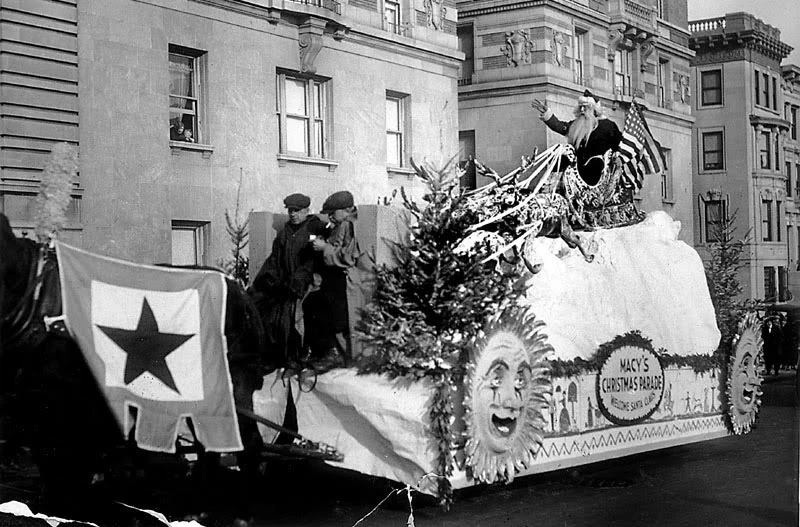
The first procession crossed Manhattan on November 27, 1924. Its name was the Macy’s Christmas Parade: although held on Thanksgiving, it heralded Christmas and the holiday shopping season. The retailer had expanded its Herald Square store and wanted to draw attention to its windows and enlarged premises.
According to the Library of Congress account, employees organized the celebration with animals from the Central Park Zoo. Bands, floats and costumed workers filled out the procession. It brought the department store window’s fantasy into the street, offering storybook characters, theatrical scenery and a celebration that families could enjoy together.
Many participants were immigrants or first-generation Americans. Macy’s traces their inspiration to European carnivals and festivals. Customs carried from other countries came together with retail promotion and street entertainment, helping create a recognizable celebration in a city made up of people from many backgrounds.
The route began in Harlem at 145th Street and Convent Avenue and continued to Herald Square. Santa Claus supplied the Christmas finale. The response encouraged Macy’s to hold it again, turning a department store promotion into an annual fixture of New York life.
Tony Sarg’s puppets take to the sky
The decisive change came with the balloons introduced in 1927. Tony Sarg, a Guatemala-born illustrator and puppeteer, was already working on Macy’s windows. His experience with marionettes offered a different approach to entertaining the crowd: replace live animals with fantastic creatures that spectators could see from a distance.
Felix the Cat became a defining figure of that early period. The link between balloons and puppet theatre remains essential to understanding the parade. At the University of Connecticut’s Ballard Institute, parade historian Robert M. Grippo described the principle as an upside-down marionette, with the strings controlled from below instead of supporting the figure from above.
Macy’s dates the introduction of helium to 1928, following the first air-filled inflatables. That change raised the characters above the crowd and created the parade’s familiar skyline. Over the years, film and comic-strip characters found an enormous showcase in Manhattan. Mickey Mouse made his debut in 1934.
Early experiments also brought hazards. For a time, balloons were released after the parade, with rewards offered for their recovery. Some landed in water; others disappeared. An encounter involving an airplane in 1932 ended the practice, according to the Library of Congress. The balloons’ journey would no longer continue uncontrolled after the procession finished.
War interrupted the parade; film widened its audience
The parade was canceled in 1942, 1943 and 1944 during World War II, when rubber and helium were needed for the war effort. Those three missing editions explain why the centenary of its founding fell in 2024 while its 100th procession falls in 2026.
It returned in 1945. Two years later, Miracle on 34th Street introduced its imagery to a wider audience. The film incorporated footage of the 1946 parade and strengthened the connection between Macy’s, Santa Claus and Christmas in the heart of Manhattan.
Television subsequently turned an experience enjoyed at the curb into a household ritual. Families who had never visited New York could watch the balloons together. Cameras also helped establish the performance area outside Herald Square, adding a show for viewers at home alongside the procession moving through the city.
The Rockettes joined in 1957, according to the dance company’s official history. School and university marching bands supplied another connection to the rest of the country: entire communities could recognize their musicians in a national celebration. New York theatre, popular culture and hometown pride found a shared stage.
Wind and a pandemic reshaped the event
The parade’s history includes accidents that changed its safety arrangements. In 1997, the Cat in the Hat balloon struck a lamppost, and falling debris seriously injured a spectator. Tighter controls on balloons and wind followed. Bad weather had already grounded the balloons in 1971.
The pandemic required a different kind of transformation. In September 2020, Macy’s and New York City announced a television production concentrated around Herald Square, without the usual parade route. Participation was reduced by approximately 75 percent, and specially equipped vehicles replaced the traditional balloon-handling teams. The celebration survived, but without its familiar street crowds.
That version demonstrated how much of the parade’s identity could travel through a screen. Its characters, music and finale remained recognizable even when the movement of spectators and performers had to change. The event’s continuity depended on adapting its production to the conditions surrounding it.
The 100th edition looks back at its own archives
For 2026, Macy’s announced 100 inflatable elements and a float celebrating Tony Sarg’s marionettes. The return of the early Blue Hippopotamus connects today’s program to the years when characters could disappear after being released. New figures and memories from earlier generations will share the celebration.
The postponement means this edition cannot accompany the customary Thanksgiving morning, but it adds a chapter to a history of adaptation. The parade moved from live animals to balloons, from Harlem to a shorter route, and from store windows to cinema and television. On Saturday, its next chapter will again depend on a practical judgment: finding the right moment to bring the spectacle into the street.