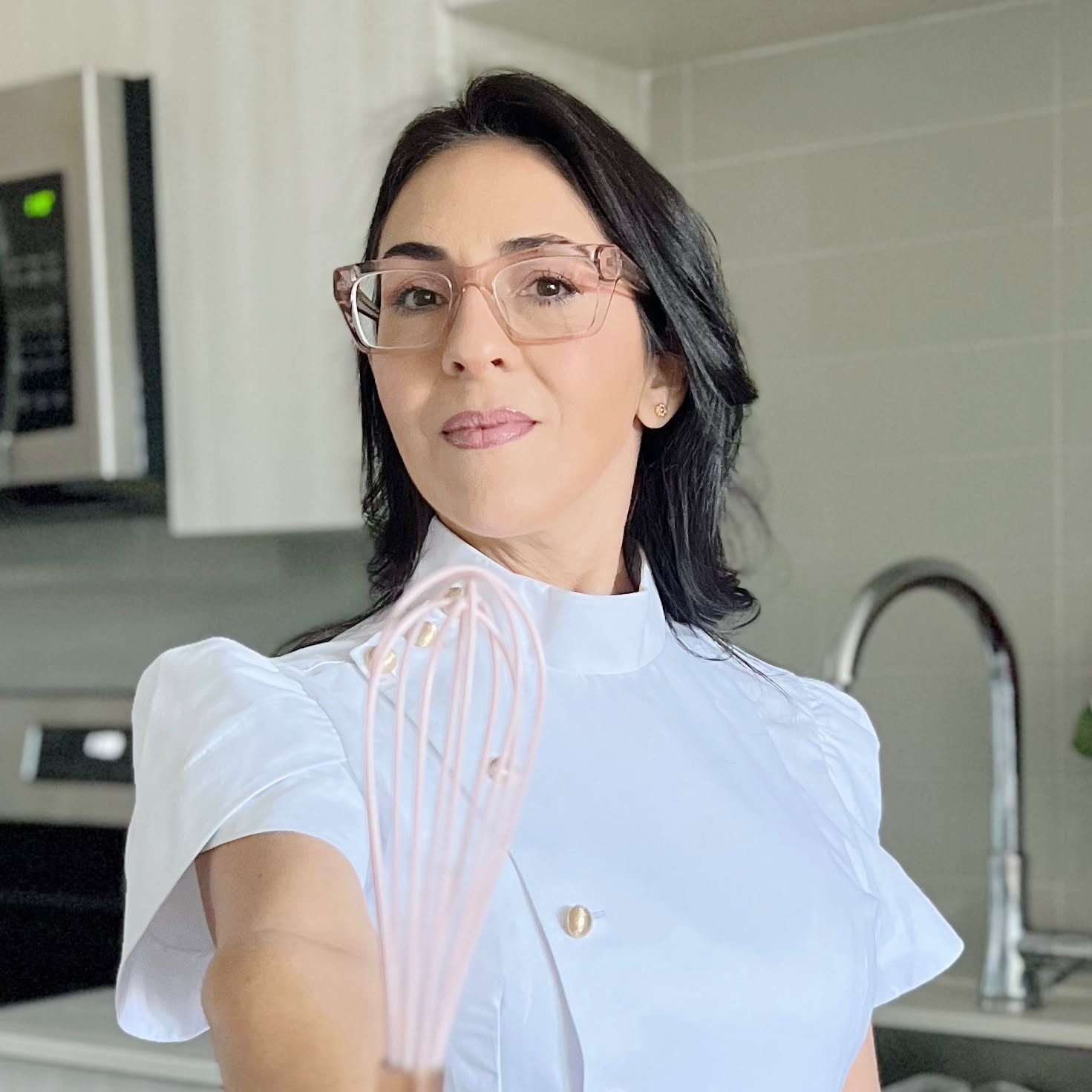
I do believe in a good recipe. Of course I do. I have spent years studying ingredients, testing techniques and understanding why a dough or batter changes when we alter just one thing. But I have also learned something many women entrepreneurs struggle to accept at first: a good recipe, by itself, does not build a good business.
We can make the best product in the world and still not know how to sell it. We can receive praise, hear relatives tell us everything is delicious and have customers come back, yet still have no idea how much we are actually earning. That is one of the most uncomfortable truths about starting a business from home: we often work incredibly hard, sell, fill orders and feel as though the business is working, but when we look at the account, we cannot tell where the money went.
When I started Artin Sweet in 2013, I knew how to make things. I knew how to create, pay attention to detail and push myself until I achieved the result I wanted. But knowing how to make a product and knowing how to build a company are two completely different kinds of knowledge. No one explains that when you begin. You assume that if the dessert is good, people will simply come. Then you discover that you also have to learn about costs, pricing, packaging, service, communication, social media and, above all, your own confidence.
Because charging for your work is not simply a matter of doing the math. It also confronts us with what we believe about ourselves. We can calculate the right price and still be afraid to say it out loud. We can know exactly what our work costs and immediately lower the price when someone replies, “That's expensive.” Then we start justifying every ingredient, explaining the size, offering discounts no one asked for or adding something extra because we want to feel the customer received enough.
But when a customer thinks our product is expensive, that does not necessarily mean the price is wrong. Maybe that person simply is not our customer. Understanding this changes many things. It does not mean becoming insensitive or setting prices without reason. It means knowing our numbers and accepting that a business has to generate a profit. If every sale only gives us enough money to buy the ingredients again, we do not have a business. We have a cycle of work that keeps us busy but does not allow us to move forward.
Behind a cookie there is more than flour, butter and sugar. There are also hours of practice, failed tests, electricity, equipment, packaging, time spent answering messages, cleaning and delivery. There is even the time it took us to learn how to solve a problem that now seems simple. All of that has value, even if the customer cannot see it inside the box.
And precisely because the customer cannot see it, we have to learn how to communicate it. That is where branding comes in. A brand is not just a pretty logo or a color palette. It is what someone feels when they see our product, receive a reply, open the box and taste what we make. It is the promise we repeat so consistently that customers begin to recognize us without needing to read our name.
I have changed Artin Sweet's boxes, colors and presentation many times. I began by making the best of what I had available: boxes bought on Amazon and small details that helped give them an identity. Later came custom packaging and a much clearer visual image. But the brand did not appear the day I printed a box. It was built every time I maintained the quality, answered a question, explained a process or delivered an experience consistent with what I had promised.
Building a community of more than ninety thousand people did not happen by posting one beautiful photograph and waiting, either. It happened through sharing, teaching, listening and allowing people to understand the way I work. Over time, I realized I was not simply showing desserts. I was also showing discipline, knowledge, aesthetics and a very particular way of seeing pastry. When a brand succeeds in communicating that, it stops competing only on price.
Today I see many women saying, “I just make desserts,” as if what they do were small because it happens inside a kitchen. I understand that phrase because many of us begin that way: balancing responsibilities at home, children, fear and the need to generate our own income. But a home kitchen can also be the first production space of a company. What makes something small is not where we begin; it is the way we choose to see what we are building.
For an immigrant woman, entrepreneurship can also be a way of rebuilding herself. We arrive in another country with experience, knowledge and a story no one knows. We often feel as though we are starting from zero, but that is not true. We are starting again, yes, but we are starting with everything we have already learned. Our experience does not disappear because the place changes. What we need is to find a new way to turn it into value.
That is why turning a recipe into a business requires working both outward and inward. Outwardly, we have to learn numbers, strategy, presentation and service. Inwardly, we have to work through the guilt of charging, the fear of putting ourselves out there and the belief that making money somehow takes the love out of what we do. Charging fairly does not eliminate passion. It protects it. It allows us to keep creating without exhausting ourselves or eventually resenting the very thing we once began because it made us happy.
I always say that in pastry, changing one ingredient never changes just one thing. If we remove sugar, we do not change only the flavor; we also change the moisture, color, spread and texture. Business works exactly the same way. Changing the price changes perception. Changing the packaging transforms the experience. Changing the message can attract a completely different customer. Everything is connected, which is why we cannot build our business by copying someone else's formula.
A good recipe does matter. It is the starting point and the promise we have to keep. But the real business begins when we stop saying, “I just make desserts,” and understand that we are creating something that also has to sustain us. That is when the recipe stops being only a mixture of ingredients and begins to become a company with numbers, identity, purpose and a story of its own.