Haitian police retake national stadium and hand security to Salvadoran troops
Sylvio Cator Stadium in Port-au-Prince had been under armed group control since 2024. Salvadoran troops are now responsible for protecting it.
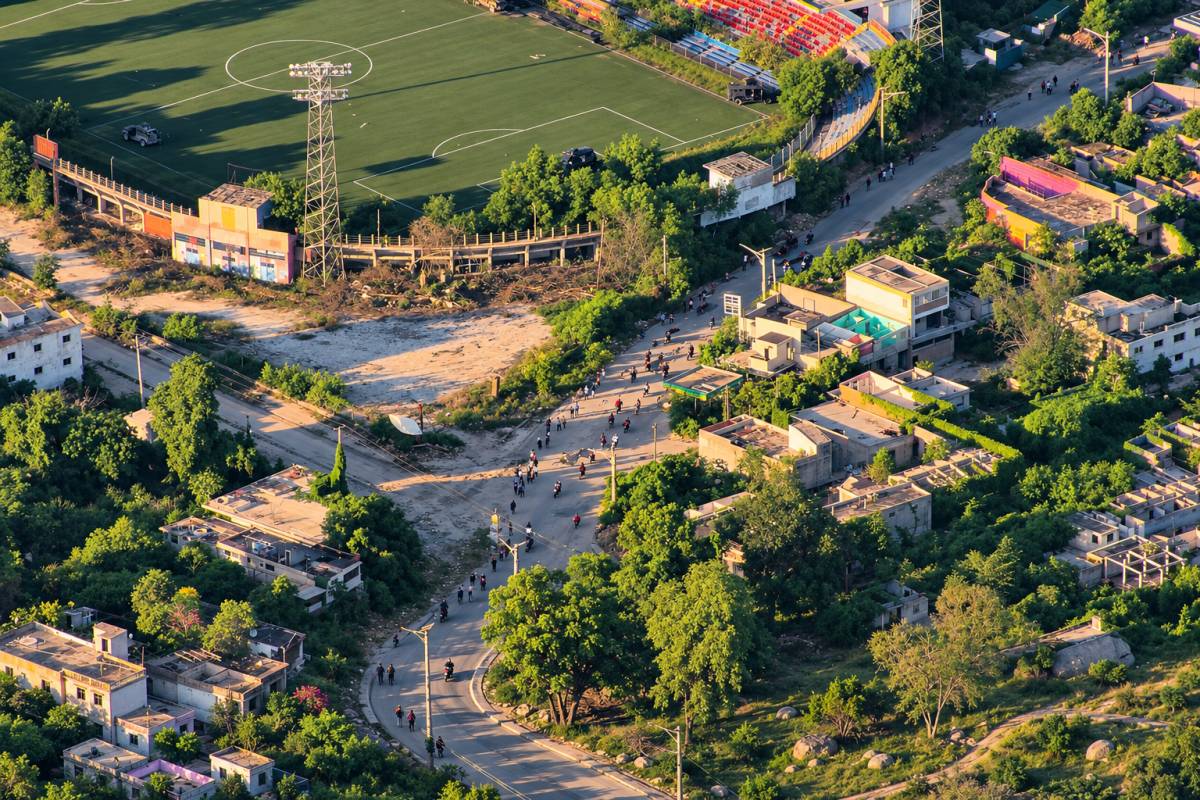
Haiti’s National Police said they regained control of Sylvio Cator Stadium and its surroundings in central Port-au-Prince on Thursday, in an operation with a task force supporting the government. The venue, formerly home to matches played by Haiti’s national soccer team, had fallen under the control of armed groups in 2024.
After the operation, Salvadoran troops took responsibility for security at the stadium, Haitian police said. An AFP photographer saw the soldiers at the site. El Salvador’s president, Nayib Bukele, later said the venue would serve as a base for further operations in areas under gang influence.
Retaking the stadium marks a concrete advance at one location in the capital. It does not establish that authorities have regained control of the entire city or that the venue is ready to host matches again.
An operation in the city center
According to the police account reported by Haitian media, National Police officers and the task force retook the stadium and surrounding area on Thursday, November 12. Salvadoran troops then assumed responsibility for protecting the site and consolidating the positions recovered.
Haitian newspaper Le Nouvelliste reported the presence of Salvadoran troops at the stadium, citing a source close to Haiti’s armed forces. Police did not release a casualty count for the operation, according to local outlet Nago.
The stadium lies in an area of Port-au-Prince affected by gang violence. The information available did not specify how long the military deployment would last or what conditions would need to be met before sporting events could return.
A sporting home forced out of use
Sylvio Cator Stadium was a landmark of Haitian soccer for years and hosted national team matches. As security deteriorated, the team had to play 2026 World Cup qualifying games outside the country, including matches in Curaçao, AFP reported.
The venue’s recovery has significance beyond sport: gangs have occupied neighborhoods, blocked roads and shaped daily life in the capital. A security presence at the stadium alone, however, does not remove the risks facing people who live or travel nearby.
Bukele said his forces would use the stadium as an operational base. El Salvador has deployed troops to Haiti following the October 18 disappearance of four Salvadoran aviation technicians who were working with a United Nations-backed mission and were attacked in a gang-controlled area.
The UN has said that most Salvadoran personnel deployed afterward are operating outside the framework of the UN-backed multinational Gang Suppression Force. Haitian Prime Minister Alix Didier Fils-Aimé has defended international cooperation to regain territory.
A continuing humanitarian crisis
Violence has affected Haitians for years and forced many families from their homes. In its report covering July through September 2026, the UN Integrated Office in Haiti documented at least 1,167 people killed and 459 wounded across incidents that included gang attacks and security operations.
Those figures cover the violence examined during the quarter, not the stadium operation. The report also documented abuses involving different actors and highlighted the scale of sexual violence.
Authorities now face the challenge of maintaining security around the stadium and protecting civilians as operations continue. The return of soccer to Sylvio Cator will depend on security conditions and the state of the facilities.