Jerry Jones backs Brian Schottenheimer as Cowboys confront another collapse
Dallas' owner does not expect immediate coaching changes after the 39-38 loss to Philadelphia, but his support comes with pointed criticism. The Cowboys are 5-7 heading into an extended break before visiting Seattle.
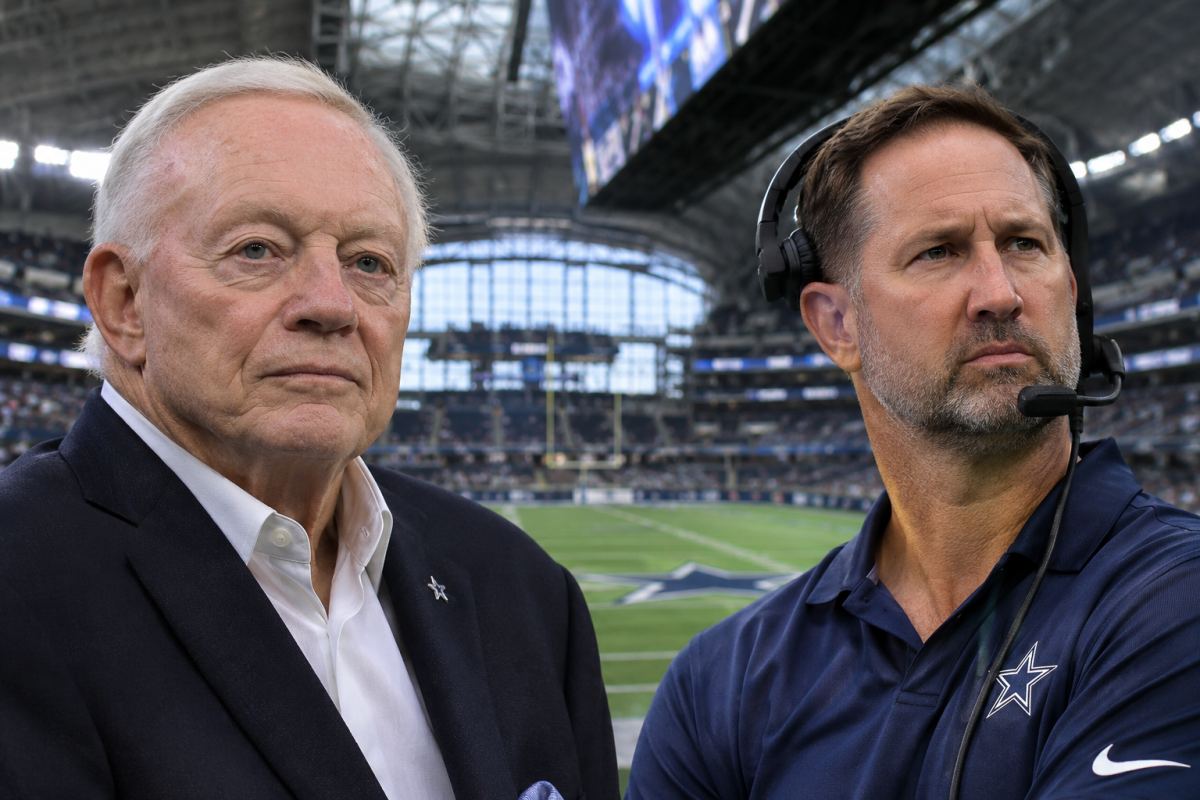
Jerry Jones continues to back Brian Schottenheimer as head coach of the Dallas Cowboys, but his support comes with criticism of how the team is losing. After Dallas squandered a 21-point lead and fell 39-38 to Philadelphia on Thanksgiving, the owner and general manager said he did not anticipate further coaching changes in the immediate future.
The Cowboys are 5-7 with five games remaining. Their next game is Monday, December 7, at Seattle, following an eleven-day gap between appearances. The break provides time to examine mistakes involving defense, special teams and late-game management, along with an offensive decision that placed the head coach at the center of the postgame discussion.
The team's own reporting records Jones saying he still believes Schottenheimer can take Dallas to a Super Bowl. It also records his acknowledgment that these losses represent serious setbacks. Keeping the staff in place does not end the evaluation: Jones included coaches, players, personnel and ownership among those responsible for the outcome.
A collapse involving every phase
Dallas led 31-17 at the end of the third quarter. Philadelphia outscored the Cowboys 22-7 over the final fifteen minutes. The comeback included a blocked punt returned for a touchdown, a Joe Milton touchdown run, a scoring pass from Milton to Makai Lemon and Jake Elliott's winning field goal from 59 yards.
The range of those plays helps explain why Jones resisted placing the loss on one decision. Special teams surrendered a direct score and a long kickoff return that made the defense's task harder. The defense could not preserve a lead that had brought Dallas close to its first consecutive wins of the season.
On Friday's conference call, Schottenheimer identified the returns and blocked punt as areas to examine during the break. According to his remarks published by the Cowboys, the review will cover all twelve games played. That broader approach addresses patterns that have persisted through productive offensive stretches and recent changes within the coaching staff.
The fourth-down decision
With 55 seconds remaining and Dallas ahead by two points, the Cowboys faced fourth-and-one at Philadelphia's 39-yard line. Schottenheimer kept the offense on the field. Ty Robinson sacked Dak Prescott for a nine-yard loss, giving the Eagles possession from a position that allowed them to build their final scoring drive.
The call drew particular scrutiny because a conversion would have helped Dallas protect possession in the closing seconds. Its failure returned the ball to Philadelphia and improved the Eagles' starting position compared with the line of scrimmage. Elliott completed the comeback with two seconds left on the clock.
Schottenheimer explained Friday that he wanted to put the play in Prescott's hands. The quarterback had acknowledged changing the concept from the left side to the right after reading the defensive alignment, without communicating the adjustment to everyone. He also said taking a sack was unacceptable in that situation. The explanation addresses the call, communication and execution while leaving the head coach responsible for the operation as a whole.
Defensive play-calling has already changed
Jones pointed out that the Cowboys had recently made a significant change in coaching duties. Mike Pettine took over defensive play-calling from coordinator Christian Parker. Parker remains on the staff as defensive coordinator. The move redistributed responsibilities rather than replacing every coach involved in the unit.
Thursday was the second game with Pettine calling the defense, Schottenheimer said. He praised communication between the two coaches and some of the pressure applied to opposing quarterbacks. He also acknowledged that Dallas failed to contain Milton outside the pocket and lost individual matchups downfield. Improvements in one area have not removed the problems elsewhere.
The Associated Press reported that Dallas had allowed at least one touchdown of 50 or more yards in five consecutive games. That run helps explain why a productive offense has not delivered a winning record. Scoring becomes less decisive when opponents can cover much of the field in a single play or change the shape of a possession with a long return.
Prescott's production has not settled the results
AP's Friday assessment credited Prescott with 20 touchdowns over his previous six games: 17 passing and three rushing, with two interceptions. The Cowboys went 3-3 during that stretch. The gap between the quarterback's individual production and the team's results captures one of the central problems of this portion of the season.
The offense also sustained a productive stretch from the 51-30 win over Tennessee into the first half against Philadelphia. AP identified KaVontae Turpin's return as one factor restoring explosiveness to the unit. Yet the advantage built before halftime did not prevent another damaging finish, leaving Dallas with fewer opportunities to turn offensive output into wins.
Schottenheimer defended his players' commitment and the culture inside the locker room during Friday's call. He cited Quinnen Williams' effort and a Prescott touchdown run among his examples. That was a defense of the roster's work and engagement; the remaining task is to turn that effort into reliable execution throughout the entire game.
Five games to answer the backing
Schottenheimer said he spoke with Jerry Jones and Stephen Jones after the defeat. He described shared disappointment and a readiness to return to work. The owner, meanwhile, said he believed the Cowboys could improve their competitiveness over the remaining games without making further immediate changes to the coaching staff.
The Seattle trip will provide the first chance to assess the response. An extended break allows the staff to study twelve games, address special teams details and continue adjusting the defense. Dallas needs results alongside explanations, with only five regular-season opportunities left to change a pattern that has already reduced its room for error.
Jones has chosen to retain Schottenheimer for that stretch. His own comments leave the assessment open and spread responsibility across the organization. The Cowboys' answer must come in specific situations: protecting leads, limiting explosive plays and carrying out a clear plan when the next decision can determine the outcome of a game.